10 Bedroom Desk Organization Ideas for Everyday Productivity
A cluttered desk can make even the coziest bedroom feel chaotic. Whether you’re carving out a study corner, a creative nook, or a small work-from-home setup, a well-organized desk brings calm to your whole room. Below are 10 practical, stylish, and easy-to-copy desk organization ideas to transform your space.
Perfect for students, parents setting up a homework station, or anyone craving a tidier Bedroom Desk Organization, these ideas mix smart storage with real style. Pick one — or combine a few — and enjoy a desk that actually helps you focus instead of adding to the mess.
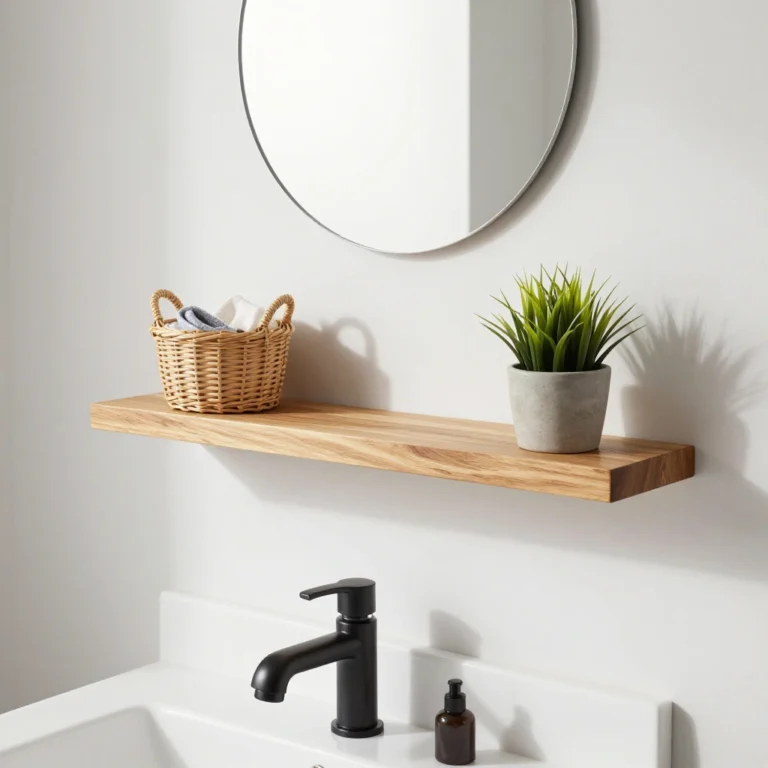
1. Floating Wall Shelves Above the Desk
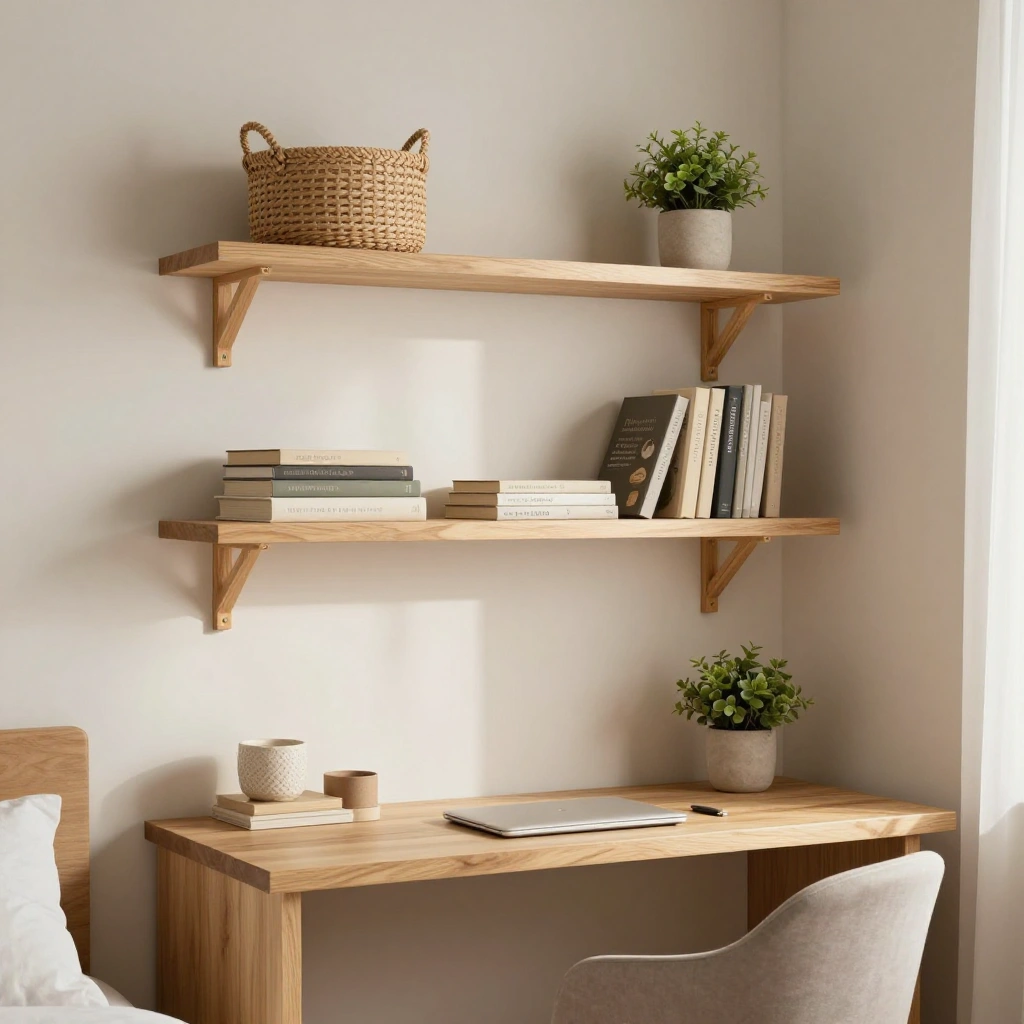
Free up desk surface by taking storage vertical. A few floating shelves mounted above your desk keep books, folders, and decorative baskets within reach without crowding your workspace.
How to Style It:
- Mix open shelves with a couple of closed baskets to hide small clutter
- Add a plant or a framed print between shelves for warmth
- Keep the heaviest items on the bottom shelf for safety and balance
Where to Use It: Small or narrow bedrooms where floor and desk space are limited.
Pro Tip: Leave a little breathing room between items — a shelf packed edge to edge feels busier, not tidier.
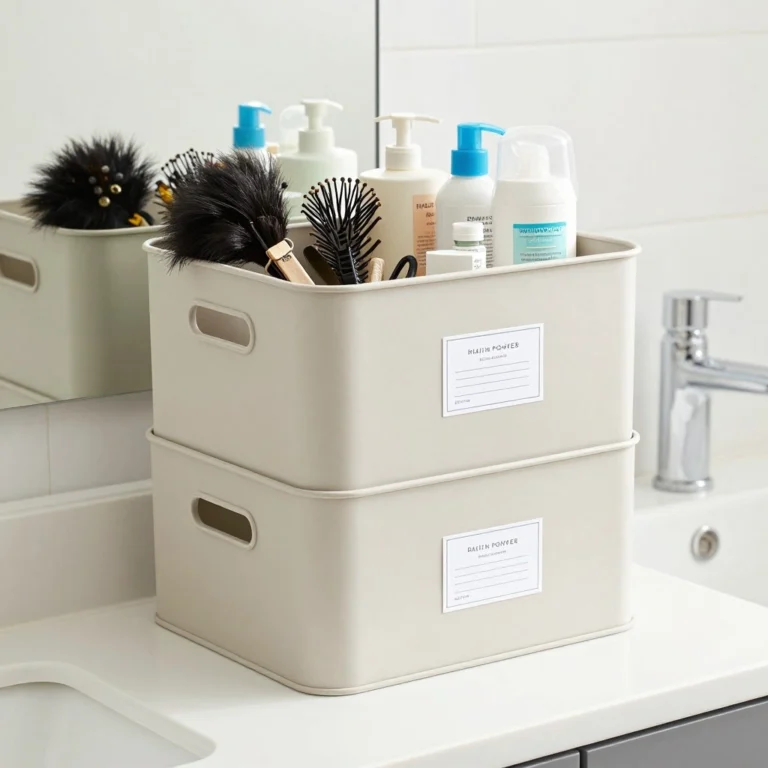
2. Desktop Drawer Organizer Trays
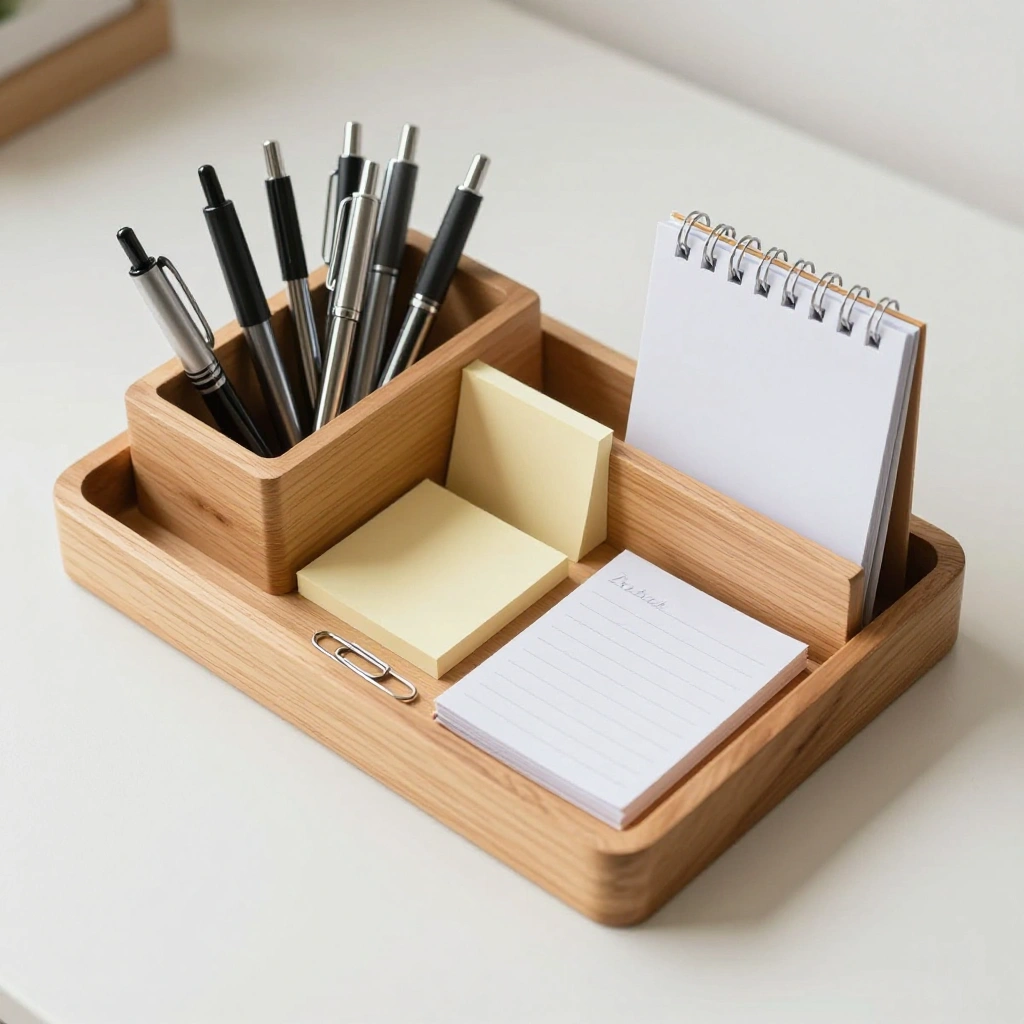
A simple stackable tray system inside or on top of your desk keeps pens, sticky notes, and small supplies sorted by category instead of tossed in one messy pile.
How to Style It:
- Choose trays in one material (wood, bamboo, or matte acrylic) for a cohesive look
- Label each tray so everyone in the house knows where things belong
- Stack a shallow tray on top of a taller one to add levels without using more space
Where to Use It: Desks with limited drawer space or shared family study desks.
Pro Tip: Group items by how often you use them — daily tools up front, occasional supplies toward the back.
3. Pegboard Wall Organizer
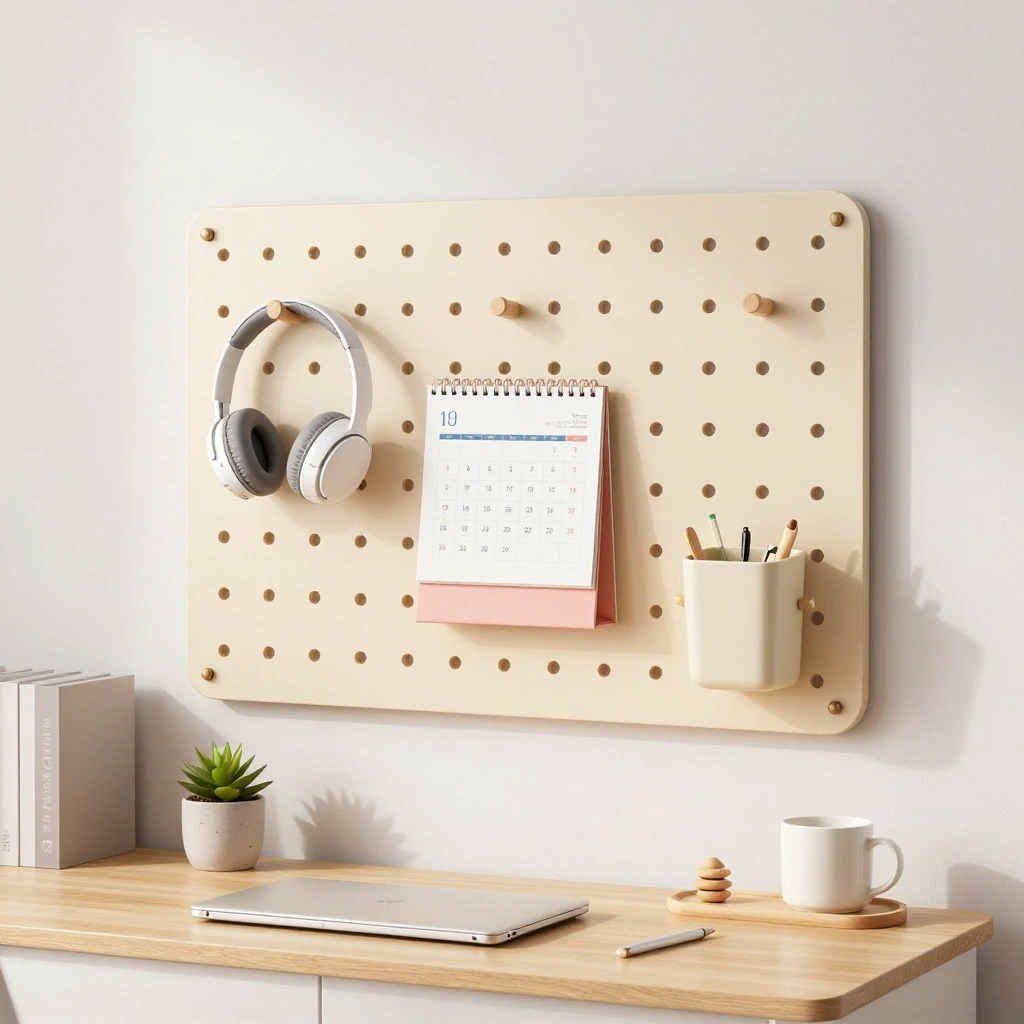
A pegboard mounted behind or beside the desk turns a blank wall into flexible, movable storage — perfect for scissors, headphones, small tools, or a hanging calendar.
How to Style It:
- Paint the pegboard a soft color to match your room’s palette
- Use hooks, small shelves, and cups in matching finishes
- Rearrange pieces seasonally to keep the setup useful, not just decorative
Where to Use It: Bedrooms with an empty accent wall near the desk, great for kids’ or teens’ rooms too.
Pro Tip: Leave a few pegs empty — it makes it easy to add new items later without a full rearrange.
4. Cable and Charger Management Box
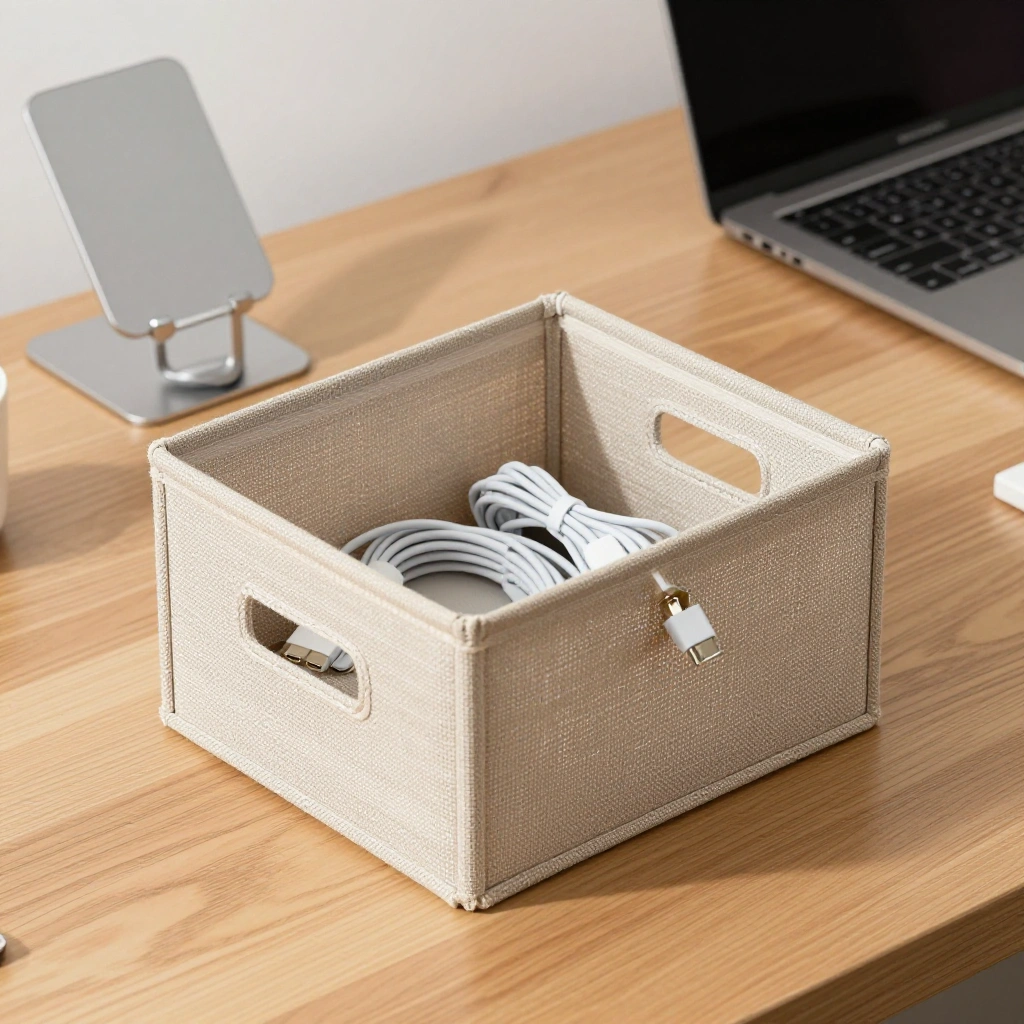
Tangled cords are one of the biggest desk clutter culprits. A cable box or a simple woven basket with a small cutout keeps chargers and cords together and out of sight.
How to Style It:
- Pick a woven or fabric box that blends with your decor style
- Bundle cords with soft velcro ties before placing them inside
- Keep it directly under or beside your monitor or laptop stand
Where to Use It: Any desk with multiple devices — laptops, lamps, phone chargers.
Pro Tip: Label each cord at the plug end so you never have to trace a tangled mess again.
5. Corkboard or Magnetic Memo Wall
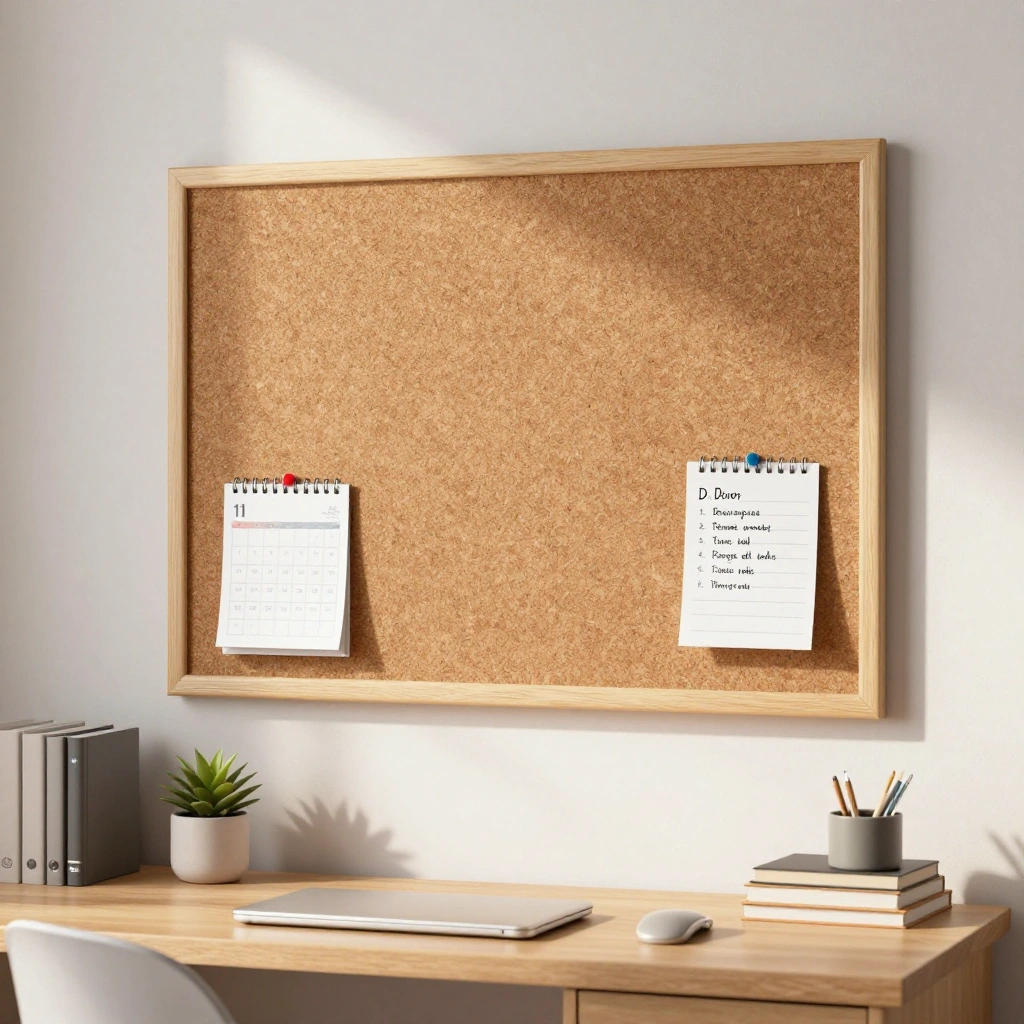
A corkboard or magnetic panel above the desk keeps reminders, photos, and to-do lists visible without piling up loose papers on your workspace.
How to Style It:
- Frame the board with a simple wood or painted border
- Use matching pins or magnets in one or two colors
- Rotate notes weekly so it never feels overcrowded
Where to Use It: Homework stations, study nooks, or creative corners where reminders matter.
Pro Tip: Reserve one small section just for “this week only” notes so old reminders don’t pile up.
6. Rolling Cart Side Storage
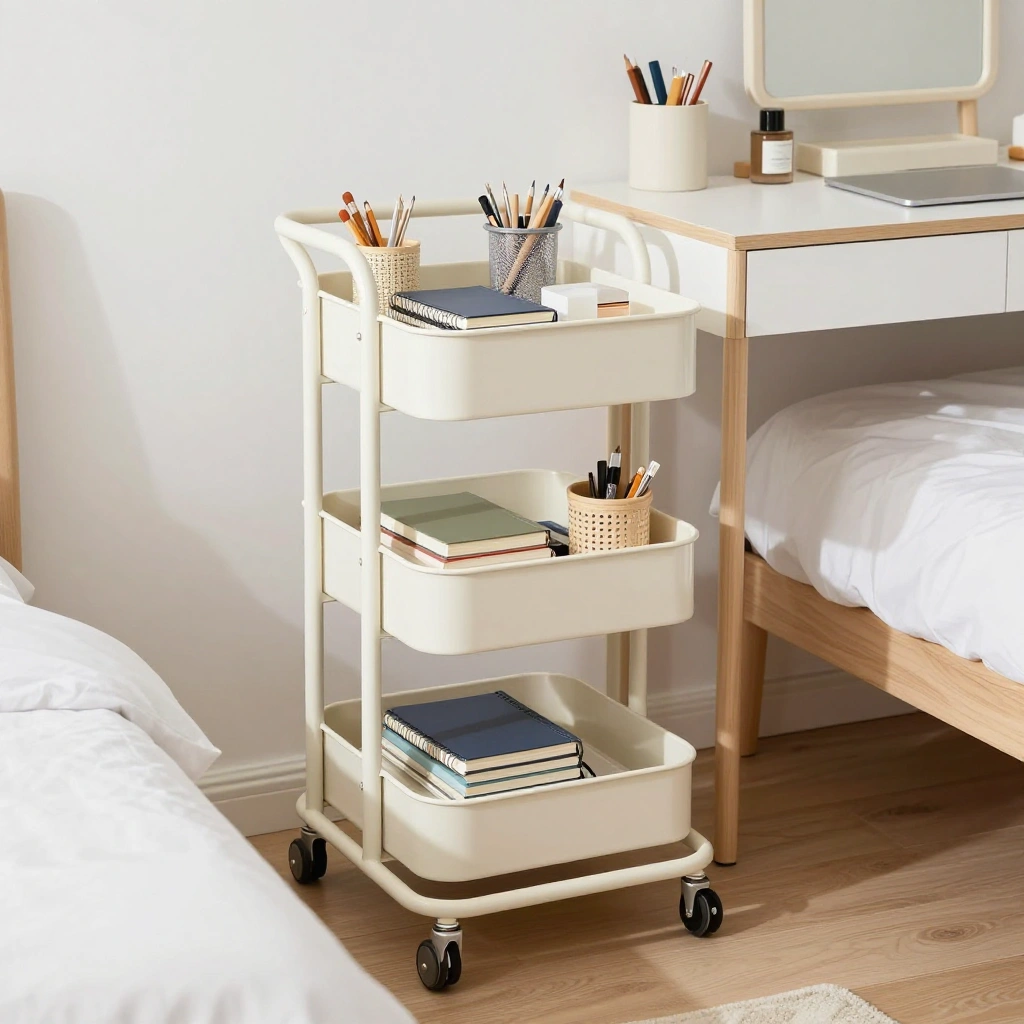
A slim rolling cart next to the desk adds extra storage that can move wherever you need it — perfect for craft supplies, notebooks, or extra stationery.
How to Style It:
- Choose a cart with 2–3 tiers for sorting by category
- Add small baskets or bins inside each tier to prevent shifting
- Match the cart’s finish to your existing furniture (wood, matte black, or white)
Where to Use It: Bedrooms where desk drawer space is limited or nonexistent.
Pro Tip: Keep the top tier for daily essentials and the bottom for bulkier or less-used items.
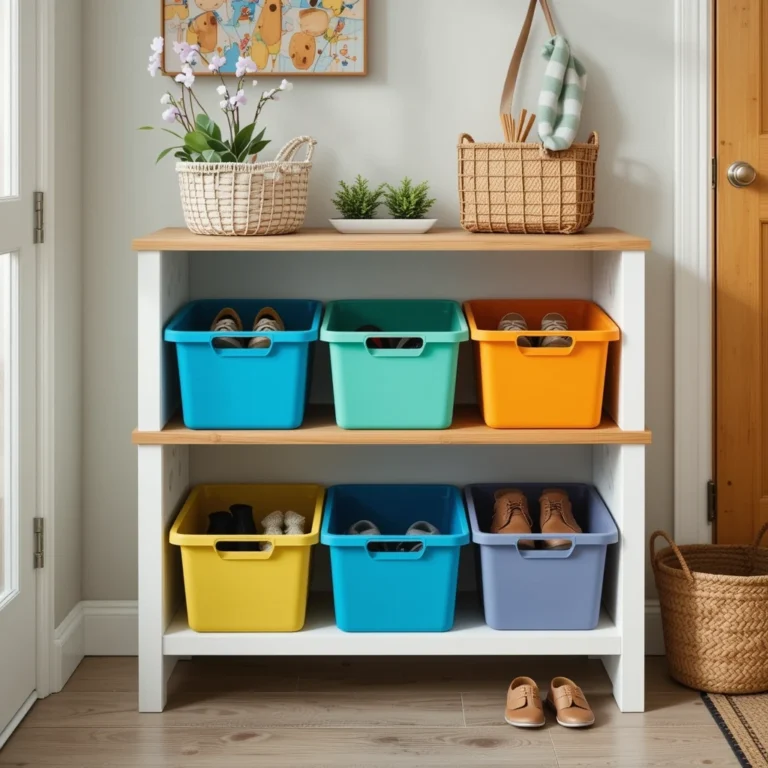
7. Under-Desk Storage Bins
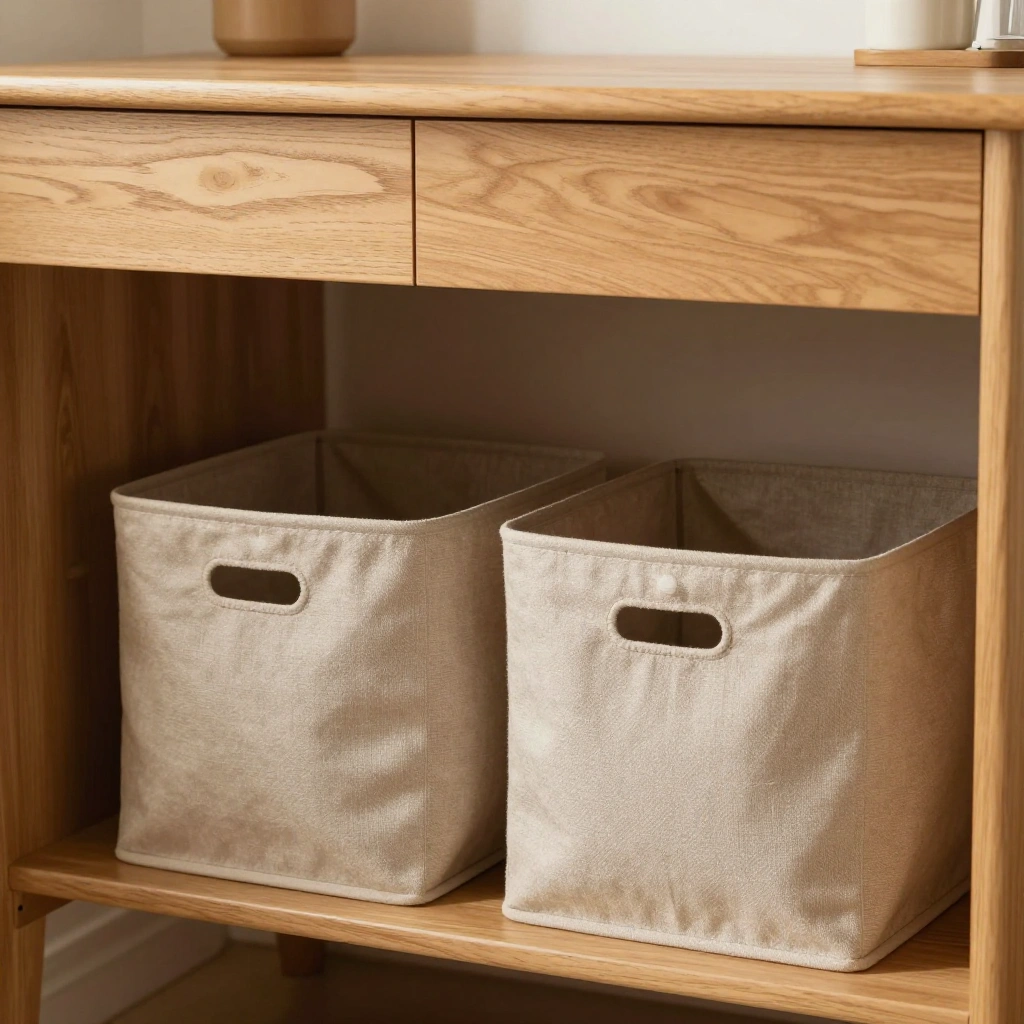
The space beneath your desk is often wasted. Slim bins or baskets tucked underneath keep bulkier items — like books or craft supplies — organized and out of the way.
How to Style It:
- Use matching bins in a neutral tone so they blend rather than stand out
- Add small wheels to bins for easy sliding access
- Reserve one bin exclusively for seasonal or rarely used items
Where to Use It: Smaller bedrooms where every inch of floor space counts.
Pro Tip: Leave enough legroom in the center so the space still feels comfortable to sit and work.
8. Vertical File and Document Sorter
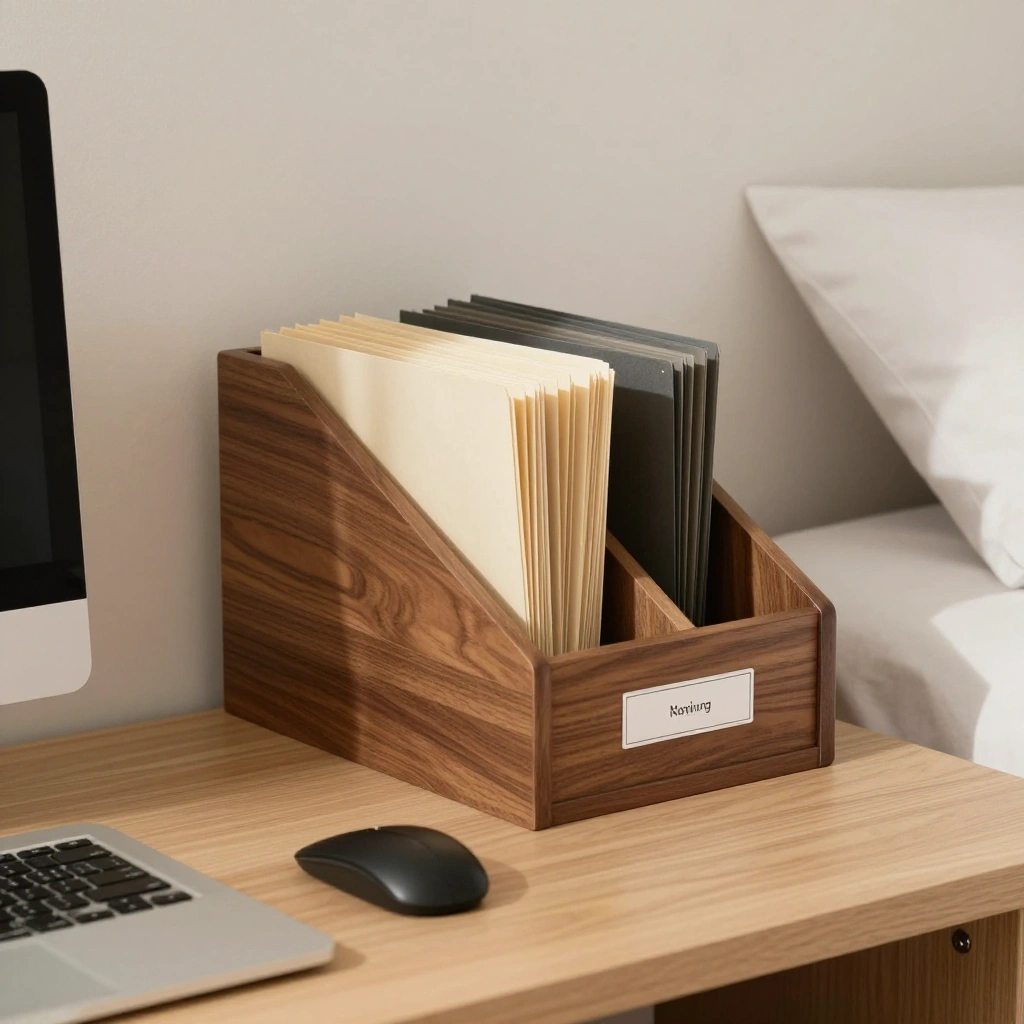
Loose papers are one of the fastest ways a desk becomes messy. A vertical file sorter keeps documents, folders, and notebooks upright and easy to flip through.
How to Style It:
- Choose a sorter in wood, metal mesh, or woven material to match your desk
- Label each slot by category — school, bills, personal projects
- Keep it at the back corner of the desk so it doesn’t block your work area
Where to Use It: Desks used for schoolwork, budgeting, or general household paperwork.
Pro Tip: Do a five-minute weekly sort so papers never build up past a manageable stack.
9. Desk Caddy with Hidden Compartments
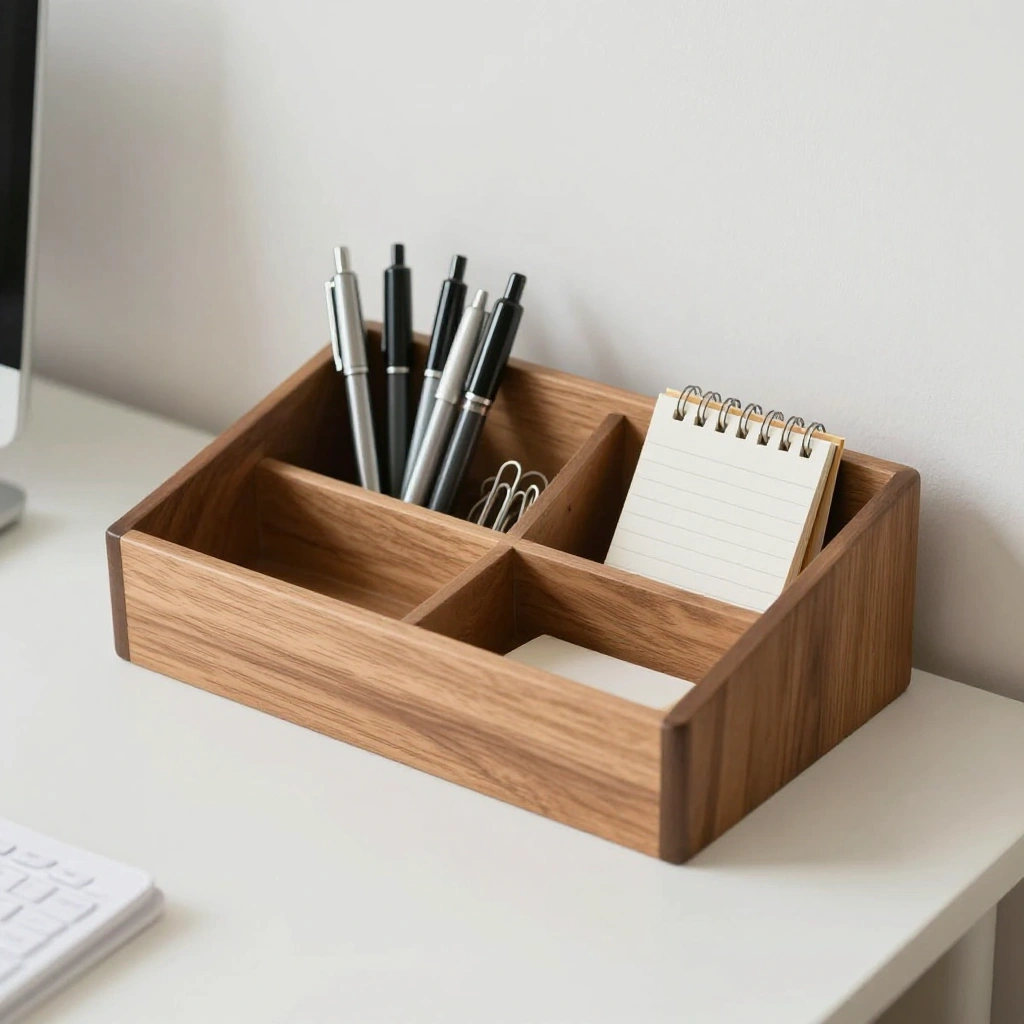
A single multi-compartment caddy can replace several loose containers, corralling pens, chargers, sticky notes, and small tools into one attractive piece.
How to Style It:
- Pick a caddy with a mix of open and lidded sections
- Place it within arm’s reach, ideally at the desk’s back-left or back-right corner
- Add a small tray on top for daily-use items only
Where to Use It: Compact desks that need everything consolidated into one spot.
Pro Tip: Do a monthly “reset” — empty the caddy completely and only put back what you actually used that month.
10. Command Center Wall Calendar and Planner Station
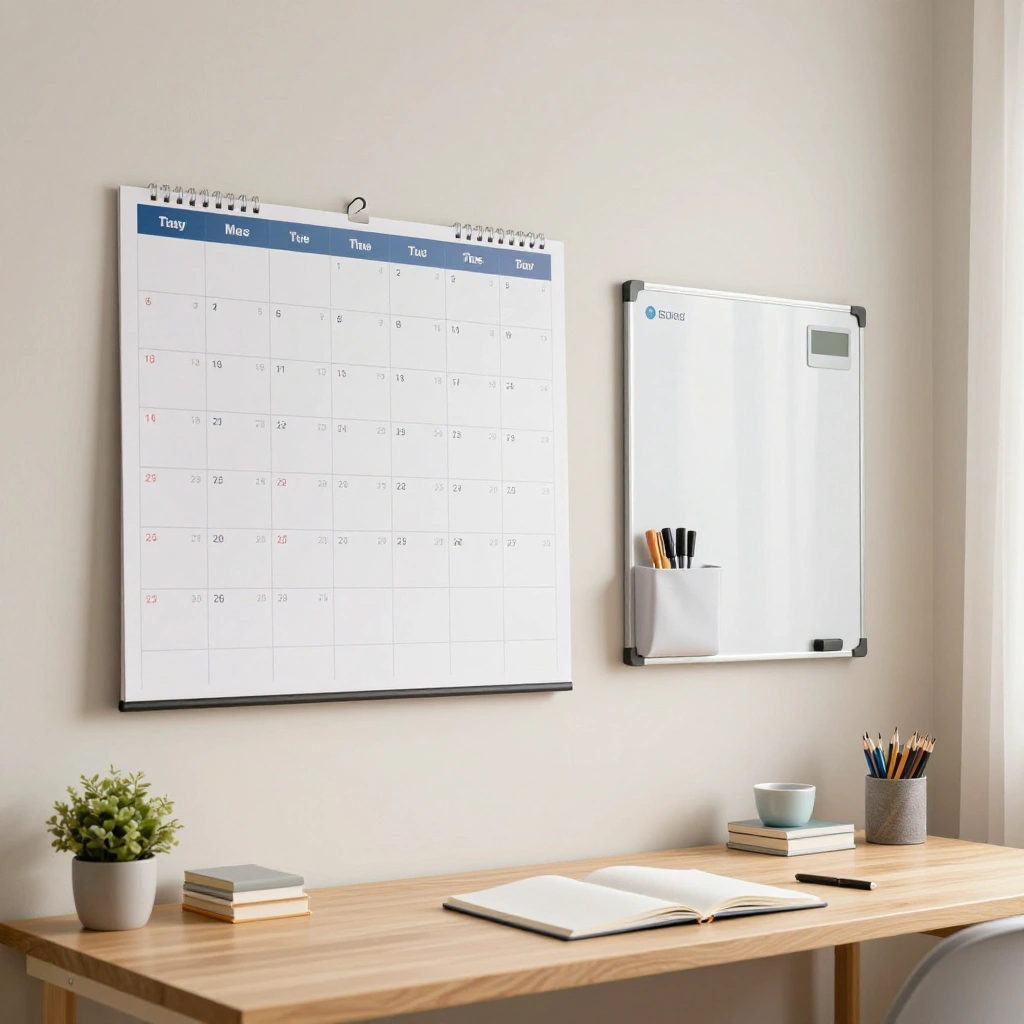
Turn the wall space beside your desk into a mini command center with a large wall calendar, a small whiteboard, and a slim planner holder — ideal for keeping the whole family’s schedule visible.
How to Style It:
- Hang the calendar at eye level, with the whiteboard just below it
- Use a slim wall pocket for loose papers, permission slips, or reminders
- Coordinate colors with your Bedroom Desk Organization existing palette for a built-in look
Where to Use It: Shared or family bedrooms, homework corners, or multi-use study spaces.
Pro Tip: Assign each family member a color-coded marker or sticker so schedules stay clear at a glance.
Common Mistakes to Avoid for Bedroom Desk Organization
- Overbuying organizers before decluttering — sort and remove what you don’t need first, then organize what’s left.
- Ignoring vertical space — a cluttered desktop often means walls and shelves above are being wasted.
- Choosing mismatched storage pieces — too many colors and materials can make an organized desk still look chaotic.
- Hiding everything in closed bins — you’ll forget what’s inside; label bins clearly or keep frequently used items visible.
- Forgetting cable management — even a perfectly organized desk looks messy with tangled cords in plain sight.
- Skipping regular resets — organization fades over time without a quick weekly or monthly tidy-up.
Frequently Asked Questions about Bedroom Desk Organization
1. What is the best way to organize a small Bedroom Desk Organization? Start vertical. Floating shelves, a pegboard, or a wall-mounted memo board free up desk surface while keeping supplies close at hand.
2. How do I keep my desk organized long-term, not just after a big clean-up? Build in a quick weekly reset — five minutes to return items to their spot and toss anything you no longer need.
3. What desk organizers work best for kids or shared family desks? Labeled trays, color-coded bins, and a simple command center calendar work well since they make it easy for everyone to know where things belong.
4. Should I hide all my desk supplies or keep some visible? A mix works best. Keep daily essentials visible for easy access, and tuck occasional-use items into labeled bins or drawers.
5. How much desk storage do I actually need? Less than you think. Start with one or two organizing pieces (like a tray and an under-desk bin) and add more only if you find you’re still short on space.