12 Genius Desk Organization Ideas You’ll Want to Copy
A cluttered desk can make even simple tasks feel overwhelming, whether you’re working from home, helping the kids with homework, or paying bills at the kitchen table. The good news is that organizing your workspace doesn’t require a full renovation — just a few smart tools and a little creativity.
In this guide, you’ll find 12 practical and stylish desk organization ideas that work for any space, big or small.
From simple DIY solutions to clever storage upgrades, each idea comes with easy styling tips, ideal placement suggestions, and a pro tip to help you get the most out of it.
1. Wooden Desktop Organizer Tray
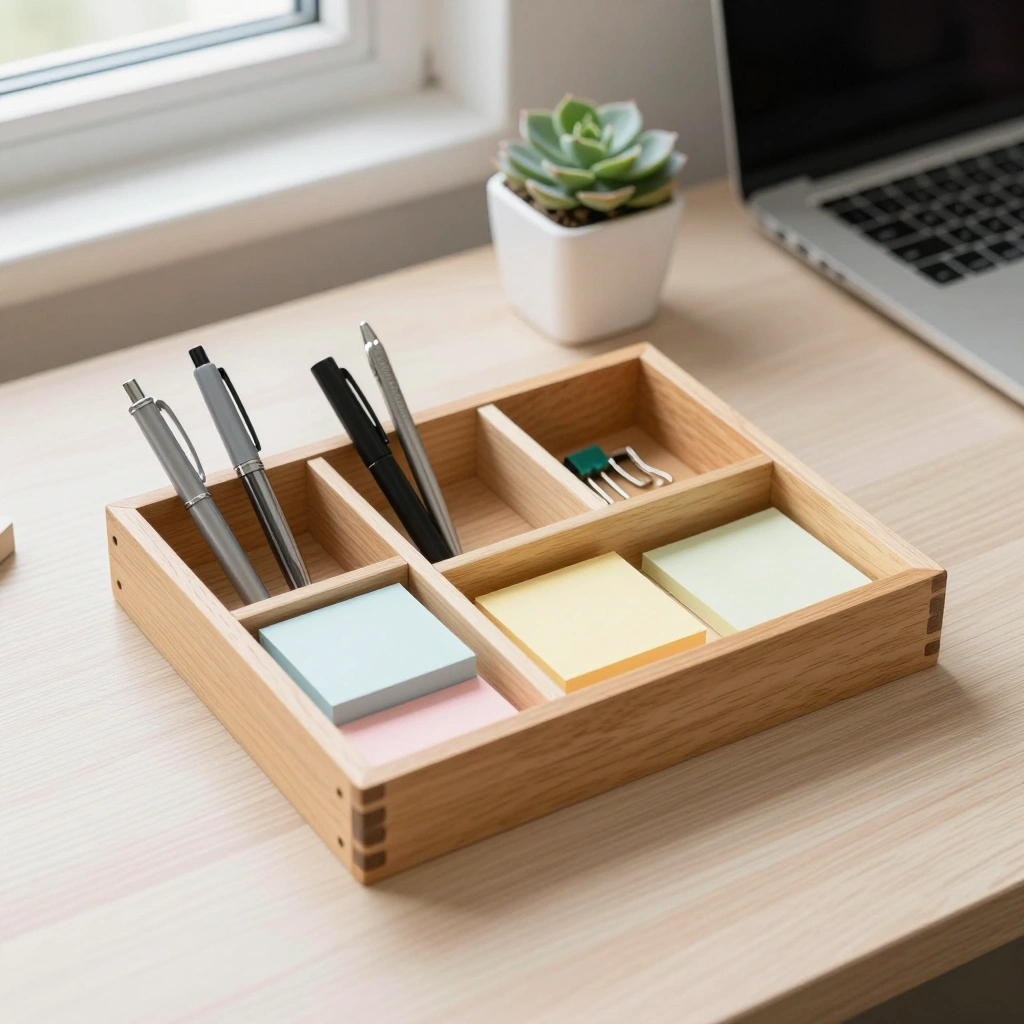
A multi-slot wooden tray is one of the simplest ways to corral pens, sticky notes, paperclips, and small office supplies into one tidy spot. It keeps your most-used items within arm’s reach while adding a warm, natural touch to your desk.
How to Style It:
- Choose a light oak or walnut finish to match a neutral or Scandinavian-style room
- Line the compartments with small dishes for tiny items like paperclips or pins
- Add a small potted succulent in one corner for a fresh touch
Where to Use It: Perfect for home offices, study nooks, and shared family desks where supplies need to stay put.
Pro Tip: Assign each compartment a single category (pens, notes, clips) so cleanup takes seconds, not minutes.
2. Floating Wall Shelves Above the Desk
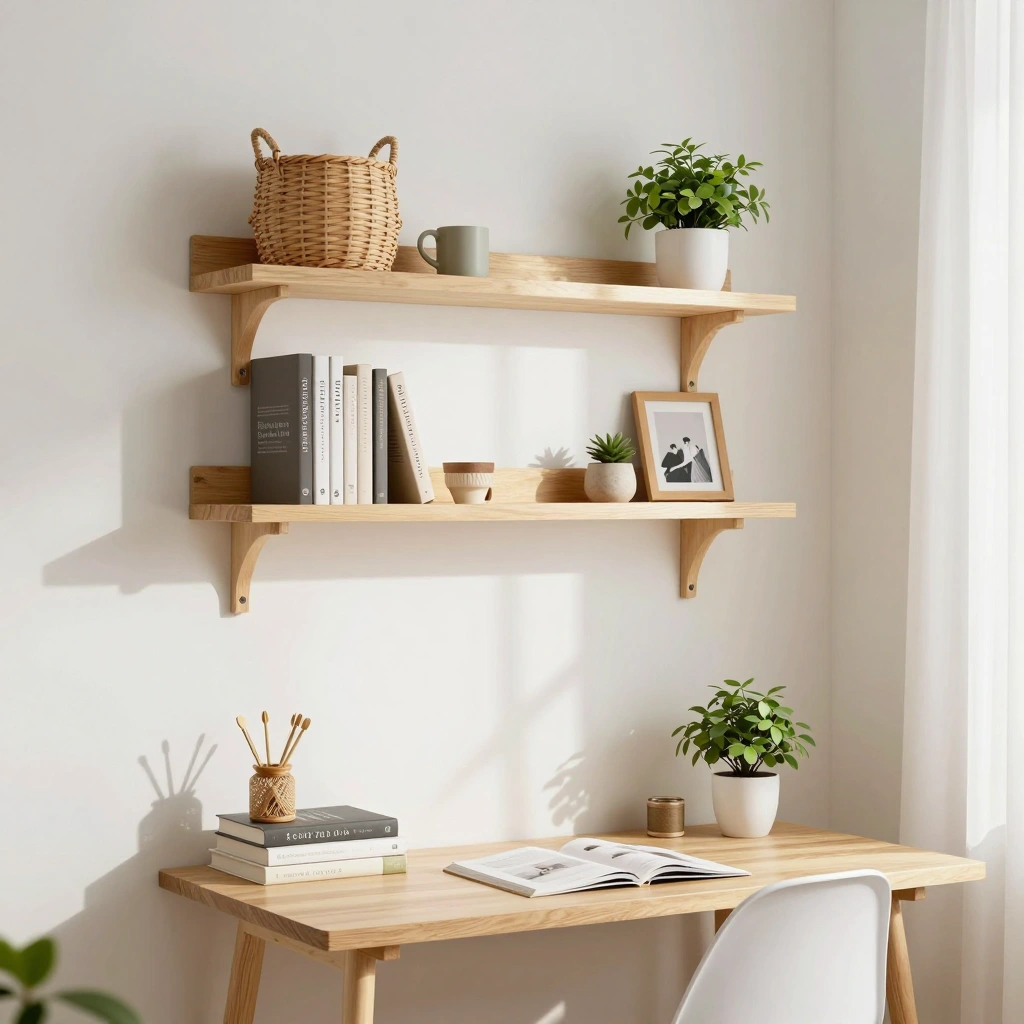
Vertical storage is a game-changer for small desks. Floating shelves mounted above your workspace free up surface area while keeping books, folders, and decor items visible and accessible.
How to Style It:
- Alternate books lying flat and standing upright to add visual rhythm
- Use woven baskets on lower shelves for loose papers or kids’ art supplies
- Add a few framed photos or a small plant for a personal touch
Where to Use It: Ideal for small bedrooms, apartment corners, or a child’s study area where floor space is limited.
Pro Tip: Keep only frequently used items on the lowest shelf, and reserve higher shelves for décor or seasonal items.
3. Rolling Under-Desk Storage Cart
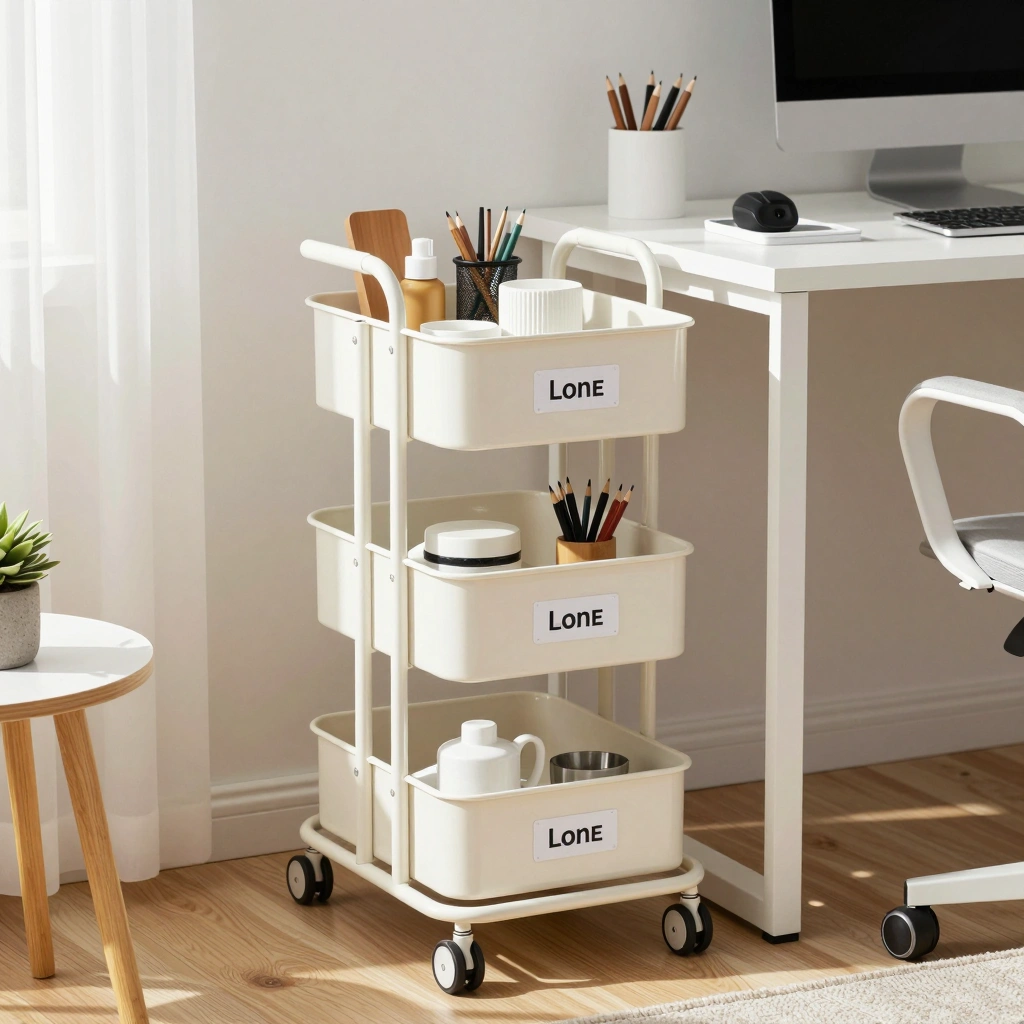
A slim rolling cart tucks neatly under or beside your desk, offering multiple tiers for files, craft supplies, or tech accessories without taking up permanent floor space.
How to Style It:
- Pick a cart with 3 tiers to separate categories like “daily,” “weekly,” and “archive”
- Add small labeled bins to each tier for quick identification
- Choose a matte black or soft pastel finish depending on your room’s palette
Where to Use It: Great for shared home offices, craft rooms, or family homework stations where supplies need to move between spaces.
Pro Tip: Add caster locks so the cart stays put while you’re working, then wheel it away when you need extra floor space.
4. Pegboard Organization Wall
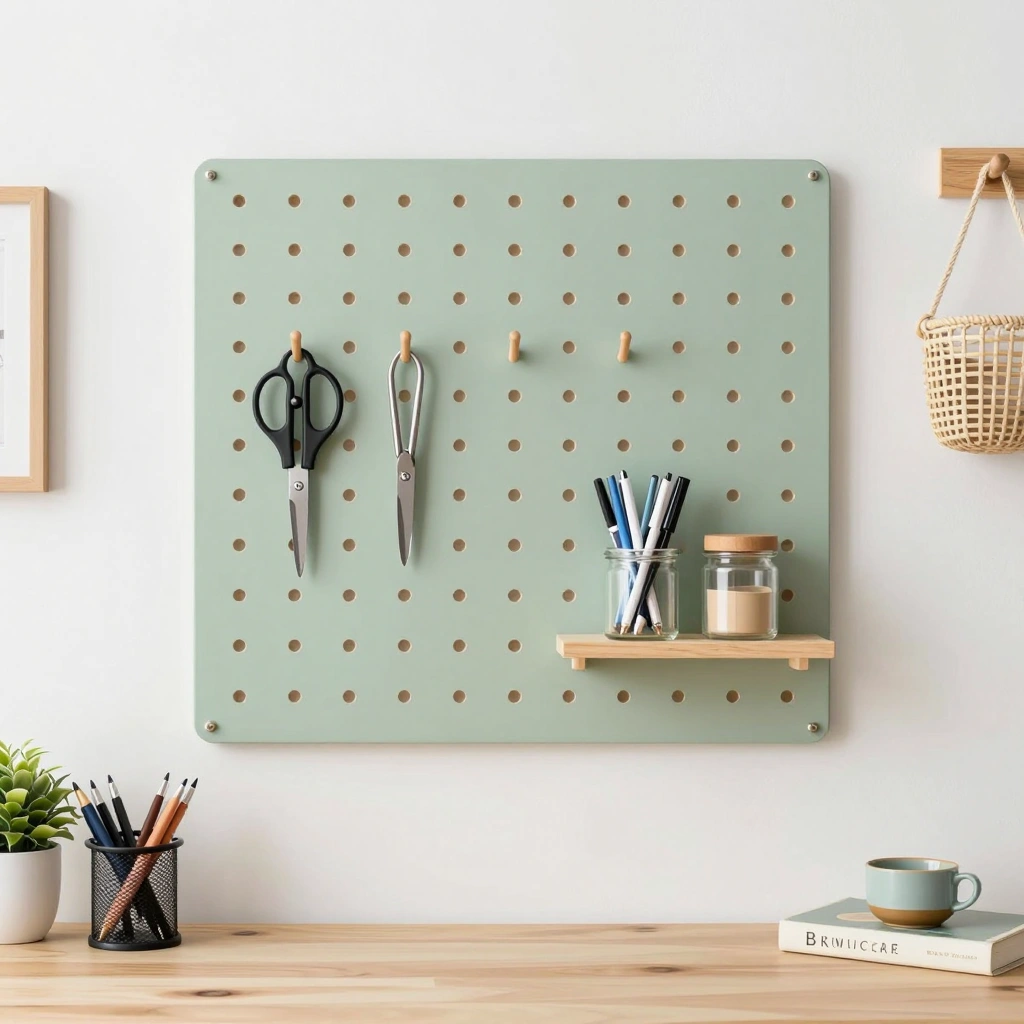
A pegboard mounted above or beside the desk turns a blank wall into flexible, customizable storage. Hooks, small shelves, and baskets can be rearranged anytime your needs change.
How to Style It:
- Paint the pegboard a soft color to match your room instead of leaving it plain
- Mix hooks, small shelf pegs, and a hanging cup for scissors or markers
- Keep spacing even and uncluttered for a clean, curated look
Where to Use It: Best for craft rooms, kids’ study corners, or small home offices where wall space outweighs desk space.
Pro Tip: Trace an outline around each tool with a marker so everything has a clear “home” and gets put back correctly.
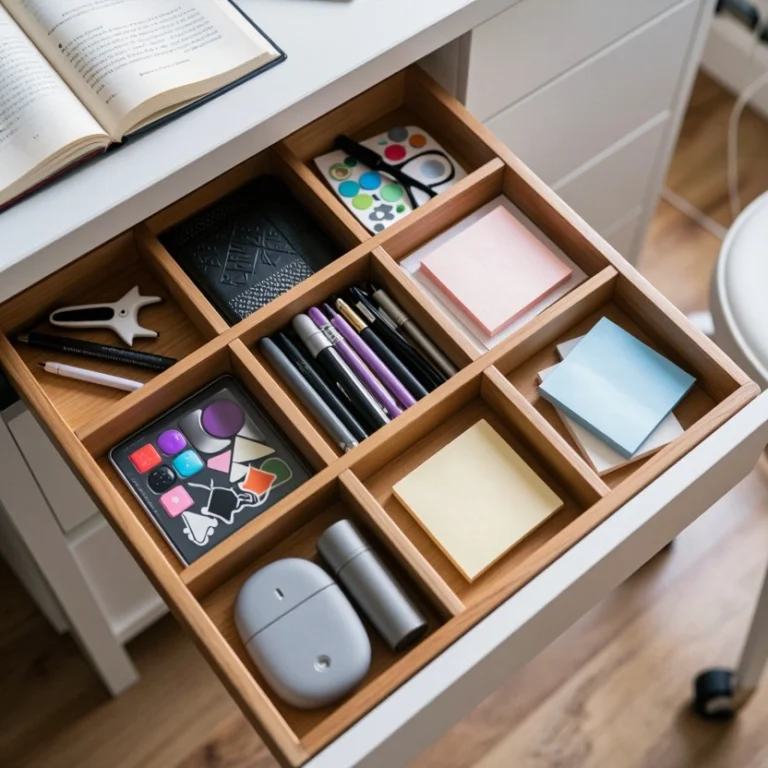
5. Drawer Divider Inserts
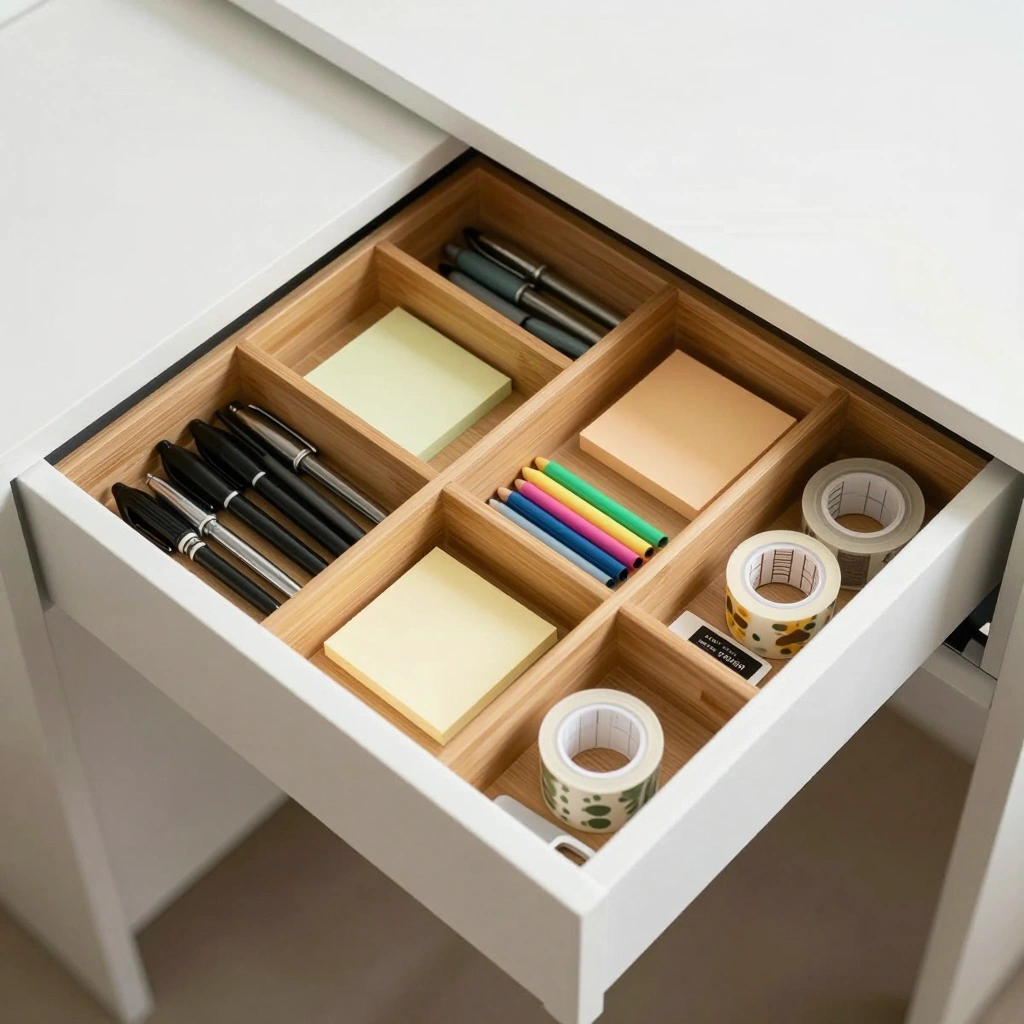
If your desk has drawers, dividers instantly stop the “junk drawer” effect. They create small, defined sections for sticky notes, chargers, tape, and other everyday items.
How to Style It:
- Use adjustable bamboo or acrylic dividers so sections can be resized as needed
- Group items by size first, then by category
- Add small labels inside the drawer for younger family members to follow
Where to Use It: Works in any desk drawer — home office, kids’ study desk, or a family command center drawer.
Pro Tip: Do a five-minute reset each week to return stray items to their designated section before clutter builds up again.
6. Vertical File Sorter
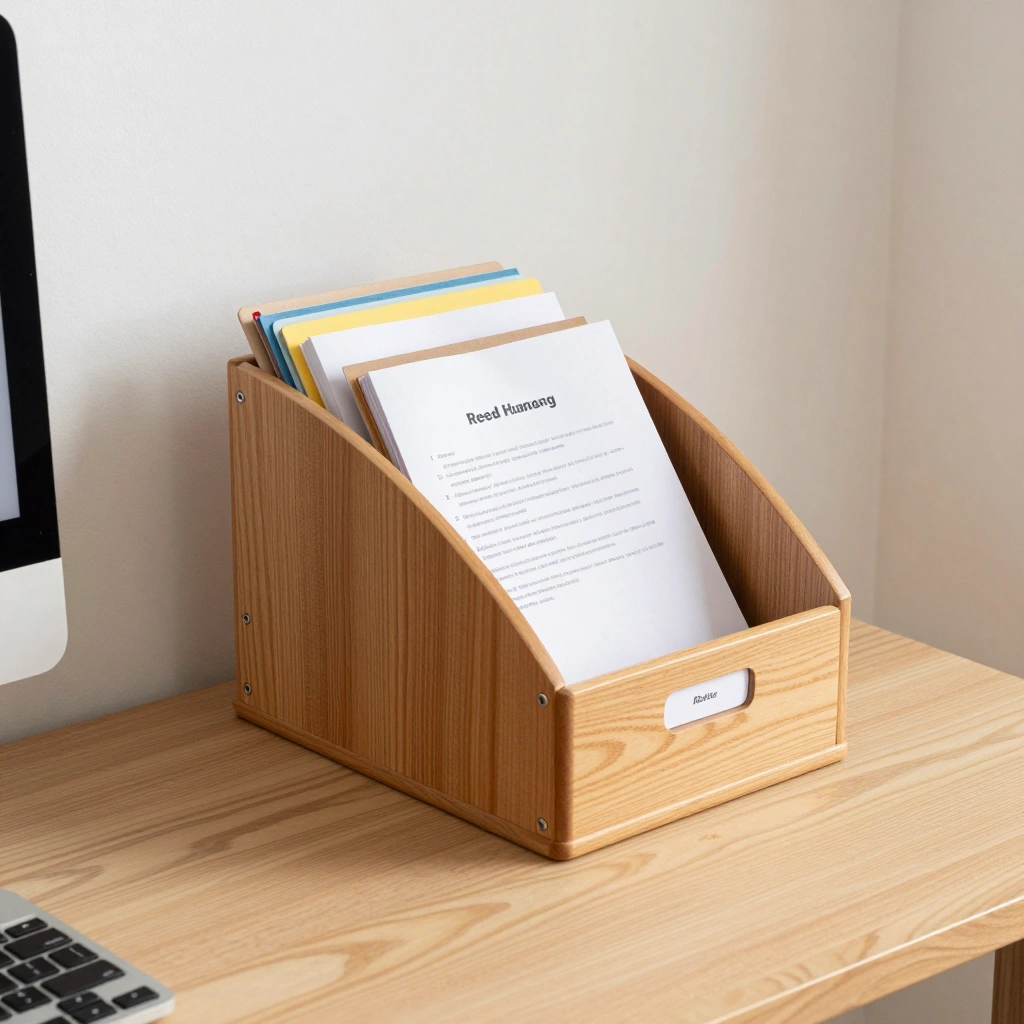
A vertical file sorter keeps important papers upright and visible instead of buried in a stack. It’s an easy way to separate bills, school papers, and to-do items at a glance.
How to Style It:
- Choose a sorter with 4-6 slots and label each one clearly
- Match the material (wire, wood, or acrylic) to your desk’s existing finish
- Place your most urgent folder in the front slot for easy access
Where to Use It: Perfect for a family command center, home office corner, or entryway desk where mail and school papers pile up.
Pro Tip: Sort papers into the correct slot the moment they arrive, rather than setting them down “for later.”
7. Cable Management Box
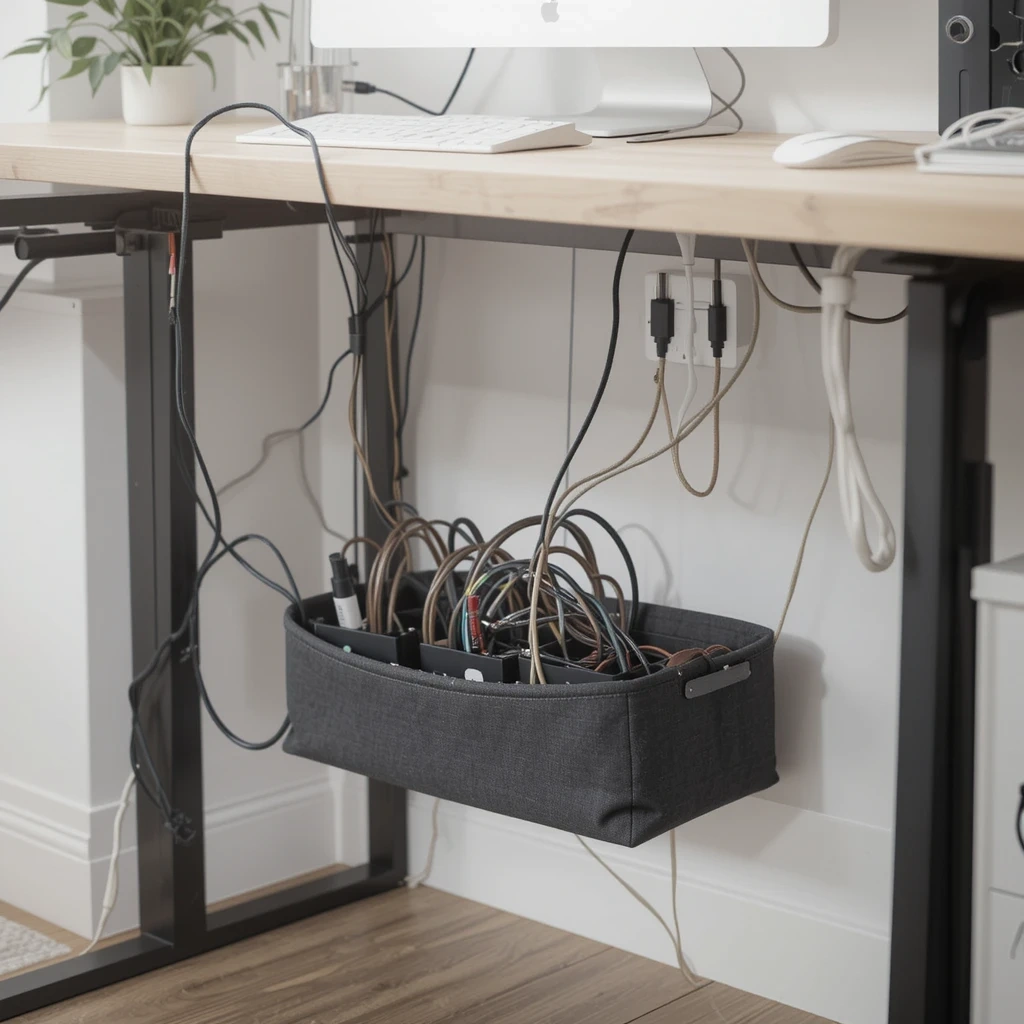
Tangled cords under a desk are one of the biggest eyesores in any workspace. A simple cable box or clip system hides power strips and cords while keeping everything accessible.
How to Style It:
- Choose a box that matches your desk color so it blends in rather than stands out
- Use adhesive clips along the back of the desk to guide cords neatly
- Label each cord at the plug end for easy identification later
Where to Use It: Essential for any desk with a computer, monitor, or charging station — especially shared family workspaces.
Pro Tip: Bundle similar-length cords together with velcro ties before boxing them up, so everything stays untangled long-term.
8. Monitor Stand with Built-In Storage
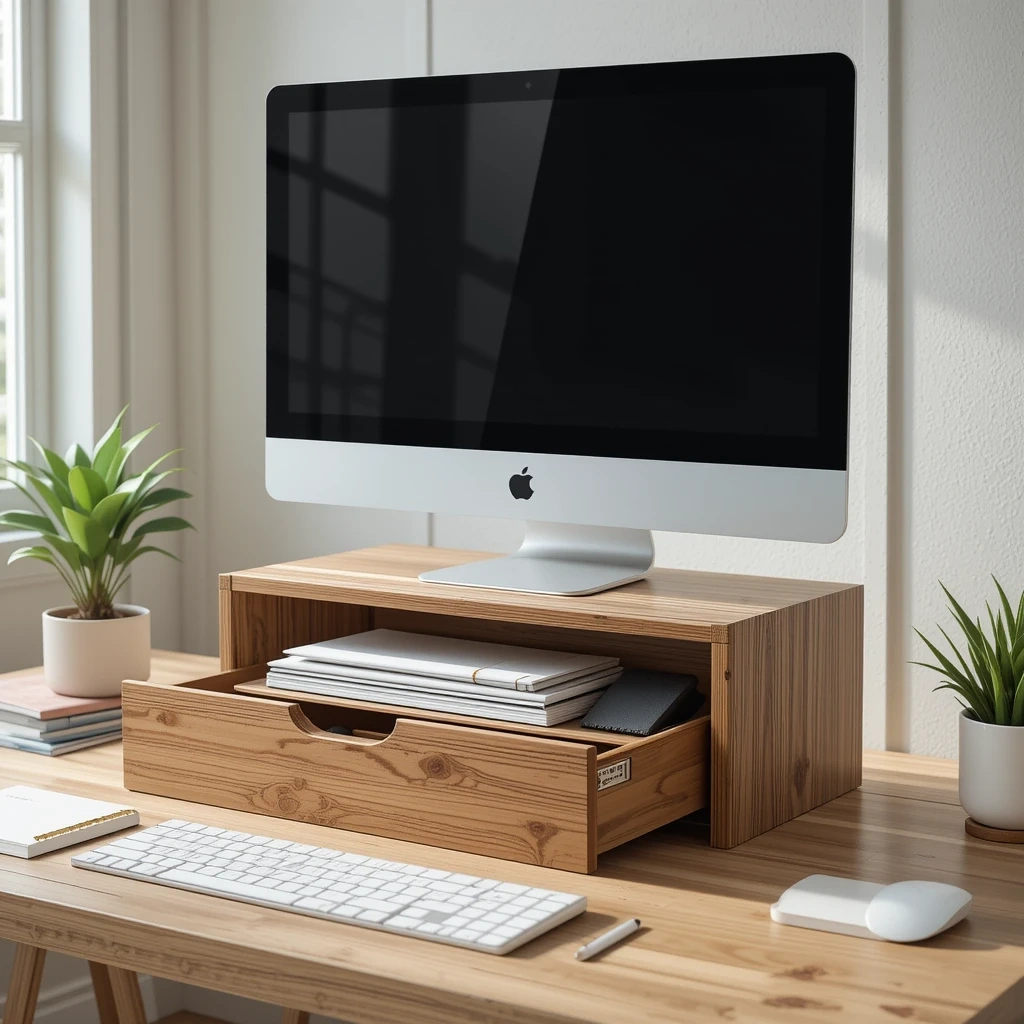
A monitor stand that doubles as a storage shelf raises your screen to eye level while creating hidden space underneath for notebooks, a keyboard, or small supplies.
How to Style It:
- Pick a stand with a drawer or open shelf underneath for extra function
- Keep the surface on top clear except for the monitor itself
- Add a small tray beside the keyboard for daily-use items
Where to Use It: Ideal for desks with limited surface space, especially in apartments or shared home offices.
Pro Tip: Use the hidden compartment for items you need daily but don’t want visible, like spare batteries or a notepad.
9. Hanging Desk Organizer Pockets
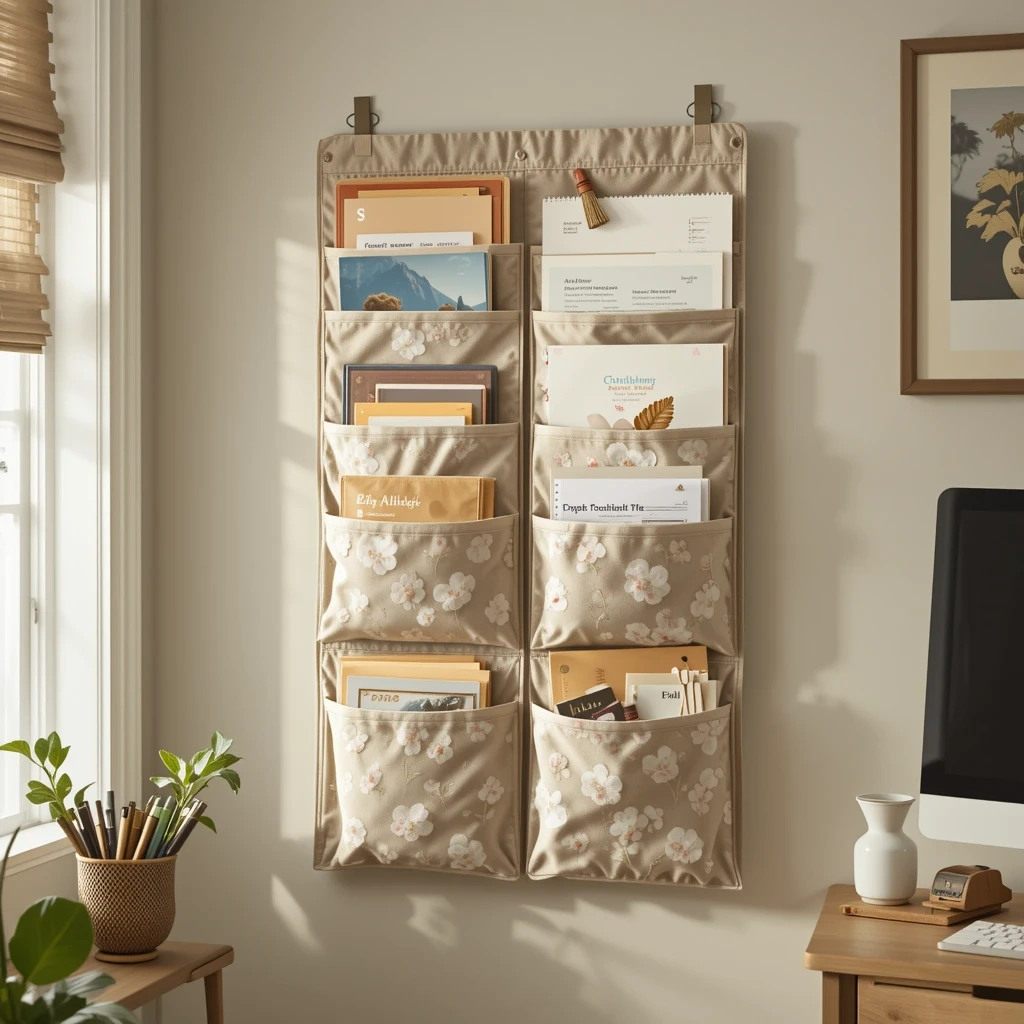
Fabric or canvas pocket organizers hang directly on the wall or side of a desk, offering soft storage for notebooks, mail, or kids’ school folders without using any surface space.
How to Style It:
- Choose a neutral canvas or a fun printed fabric for a kids’ study space
- Assign one pocket per family member or per subject for school papers
- Hang it at a height that’s easy to reach for both kids and adults
Where to Use It: Great for small bedrooms, entryways, or family command centers with limited wall space.
Pro Tip: Empty and reset the pockets every Sunday evening to start the week with a clean organizational slate.
10. Rotating Desktop Caddy
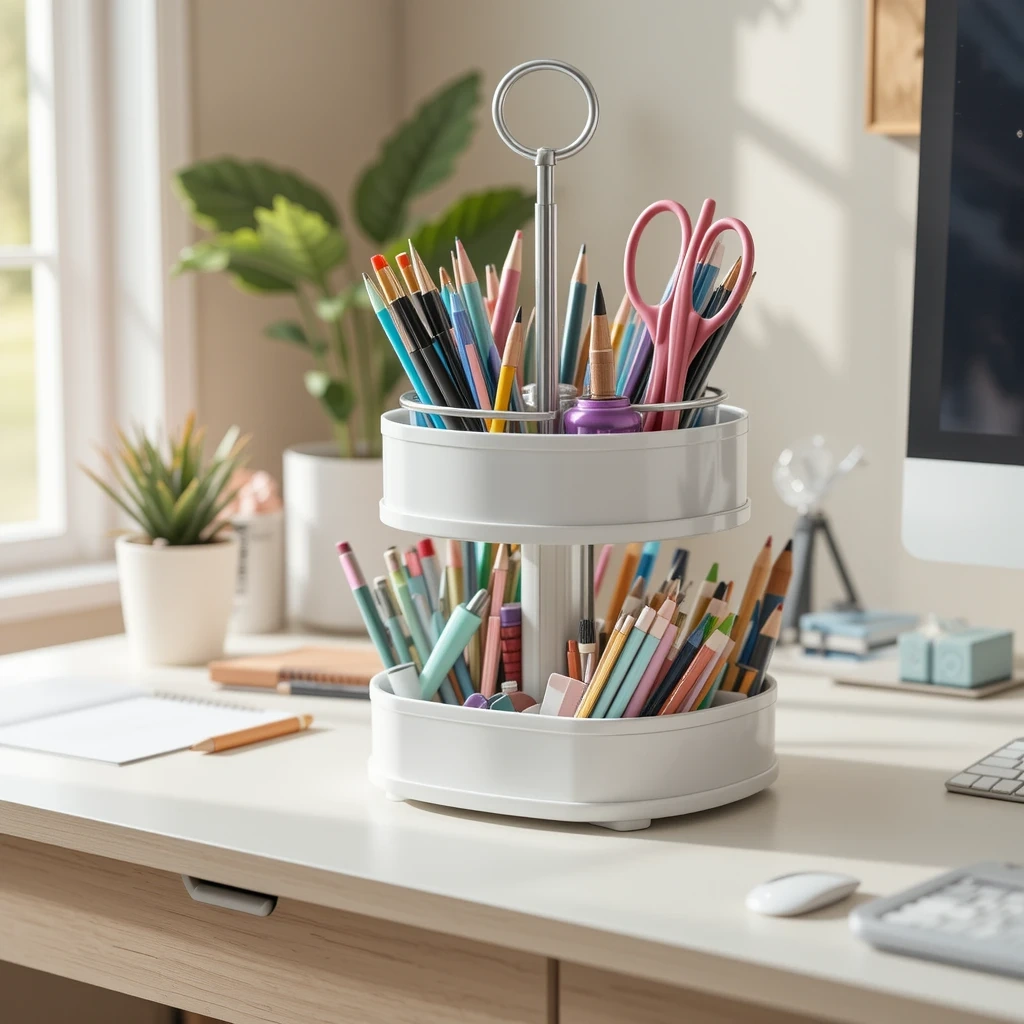
A rotating (lazy Susan style) caddy keeps pens, scissors, tape, and small tools all within a quick spin’s reach, making it especially handy for shared desks or craft stations.
How to Style It:
- Choose a two-tier caddy to separate frequently used items from backups
- Group by function: writing tools on one side, craft tools on the other
- Add a small cup insert for oddly shaped items like rulers or highlighters
Where to Use It: Perfect for craft desks, kids’ homework stations, or any shared workspace where multiple people need quick access to supplies.
Pro Tip: Place the caddy in the center of the desk so it’s equally reachable from any seat or angle.
11. Corkboard or Magnetic Memo Wall
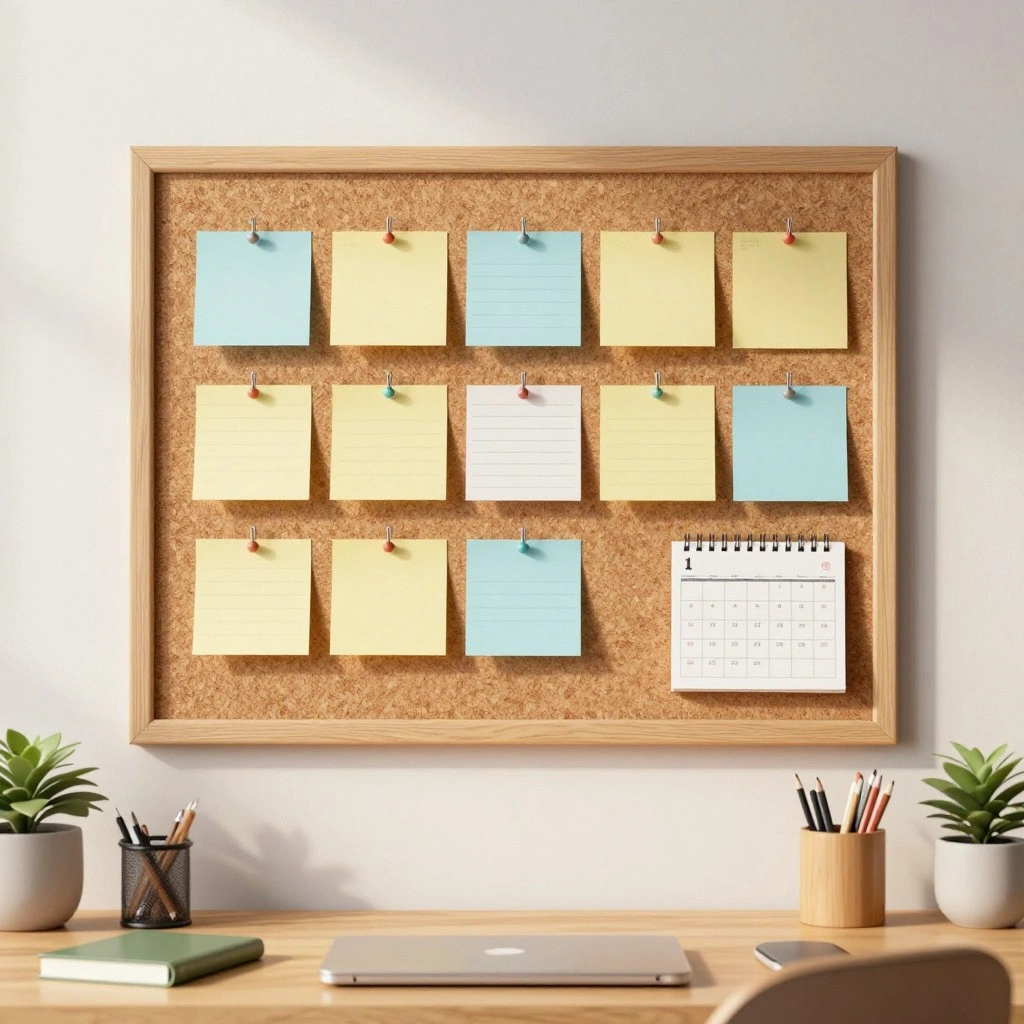
A corkboard or magnetic panel mounted above the desk gives you a visual home for reminders, school schedules, and inspiration without cluttering your workspace with loose papers.
How to Style It:
- Frame the board with a simple wood or painted border for a finished look
- Use matching pins or magnets in one or two colors for a cohesive look
- Reserve one section for rotating “this week” items and another for long-term notes
Where to Use It: Works well in a home office, kids’ study space, or family kitchen command center.
Pro Tip: Do a monthly cleanout so the board only holds current, relevant reminders instead of becoming another cluttered surface.
12. Under-Desk Storage Bins
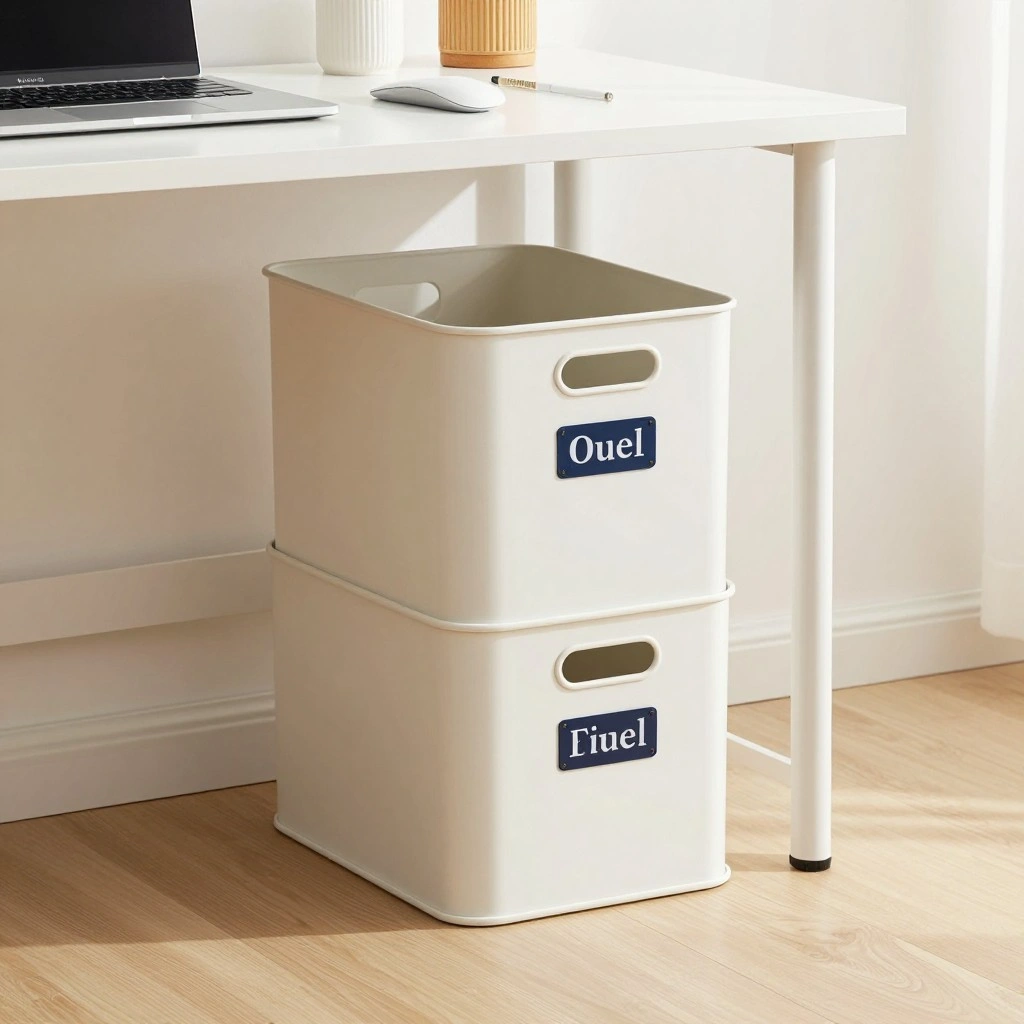
Slim bins or baskets that slide under the desk make use of otherwise wasted floor space, perfect for storing extra supplies, seasonal items, or kids’ craft materials out of sight.
How to Style It:
- Choose stackable, uniform bins so they look tidy even when full
- Label each bin clearly, especially if kids will be retrieving items themselves
- Slide bins in so handles face outward for easy access
Where to Use It: Ideal for small home offices, shared study areas, or any desk without extra drawer space.
Pro Tip: Reserve one bin exclusively for “overflow” items you’re not ready to part with, and review it every few months.
Common Mistakes to Avoid
- Organizing before decluttering: Sorting supplies into bins won’t help if you’re storing items you no longer need. Clear out first, then organize what’s left.
- Buying storage before measuring: A beautiful organizer is useless if it doesn’t fit your desk or drawer. Always measure your space first.
- Overcrowding the desktop: Too many organizers on the surface can create new clutter. Balance desktop tools with wall or under-desk storage.
- Skipping a maintenance routine: Even the best system breaks down without a quick weekly reset to return stray items to their place.
- Ignoring cord management: Tangled cables under or behind the desk can make an otherwise tidy space feel chaotic.
Frequently Asked Questions About Desk Organization
What is the best way to organize a small desk? Focus on vertical storage first — floating shelves, a pegboard, or a hanging organizer free up desktop space while keeping supplies accessible.
How do I keep my desk organized long-term? Build a simple weekly reset habit, like a five-minute Sunday tidy-up, and make sure every item has one clear, designated spot.
What desk organizers are best for kids or shared family spaces? Rotating caddies, labeled drawer dividers, and hanging pocket organizers work especially well since they’re easy for kids to use and keep tidy on their own.
Do I need to spend a lot of money to organize my desk? Not at all. Many effective solutions, like drawer dividers, a DIY pegboard, or repurposed jars and trays, are budget-friendly or things you may already own.
How often should I declutter my desk supplies? A quick check-in monthly, with a deeper declutter each season, helps keep your desk functional without letting unused items pile back up.