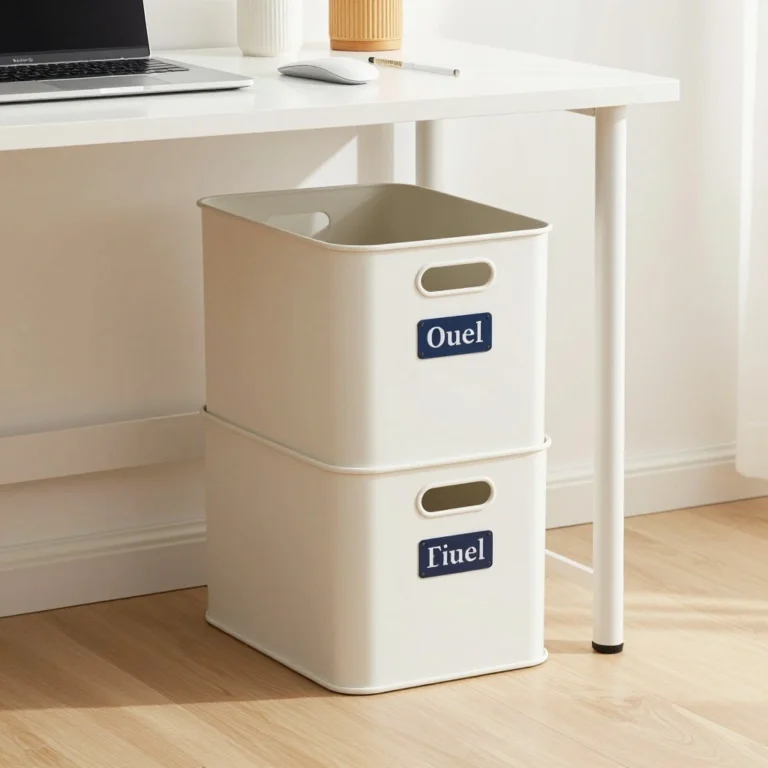
10 Desk Drawer Organization Ideas You’ll Wish You Tried Sooner
A cluttered desk drawer can turn a simple task — like finding a pen or a sticky note — into a daily frustration. Whether you’re setting up a home office, a study nook for the kids, or a shared family desk, smart drawer organization saves time, reduces stress, and keeps your space looking neat. Below are 10 practical and stylish desk drawer organization ideas the whole family can use and enjoy.
Good organization isn’t just about looks — it’s about function too. A well-organized drawer means less searching, less mess, and more focus on the work (or homework) that matters.
These ideas range from simple drawer trays to fun labeled bins that even young kids can use to keep their supplies tidy. Let’s dive into the best ways to organize your desk drawers today.
1. Adjustable Drawer Tray Dividers
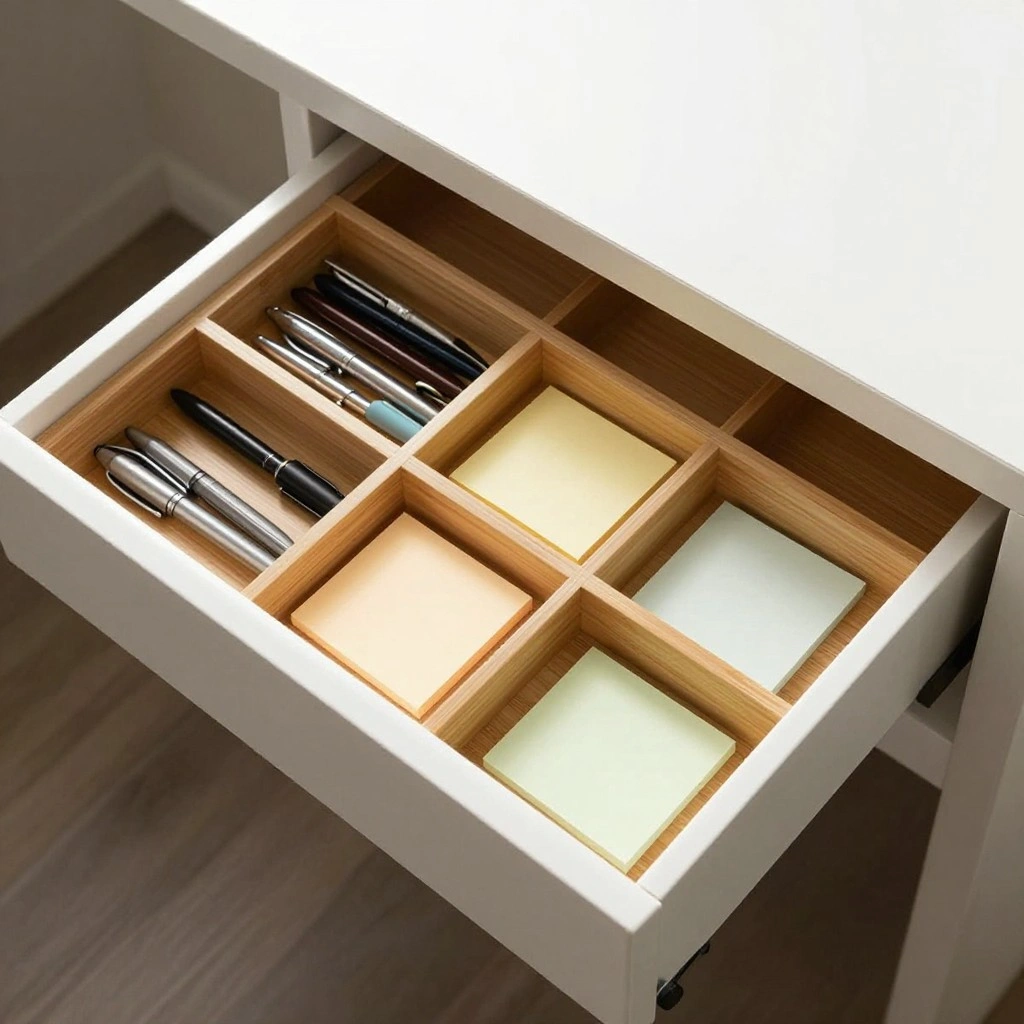
Overview: Adjustable trays split your drawer into neat, resizable sections so every item — from pens to sticky notes — has its own spot. They’re easy to install and can be rearranged anytime your storage needs change.
How to Style It:
- Choose bamboo or acrylic trays that fit the exact width of your drawer
- Group similar items together — pens in one section, sticky notes in another
- Leave one small compartment empty for random items that pop up during the week
Where to Use It: Perfect for the top drawer of any home office desk or a shared family desk where multiple people store their own supplies.
Pro Tip: Measure your drawer before buying trays — adjustable, expandable trays save you from awkward gaps or overcrowding.
2. Clear Labeled Bins for Small Supplies
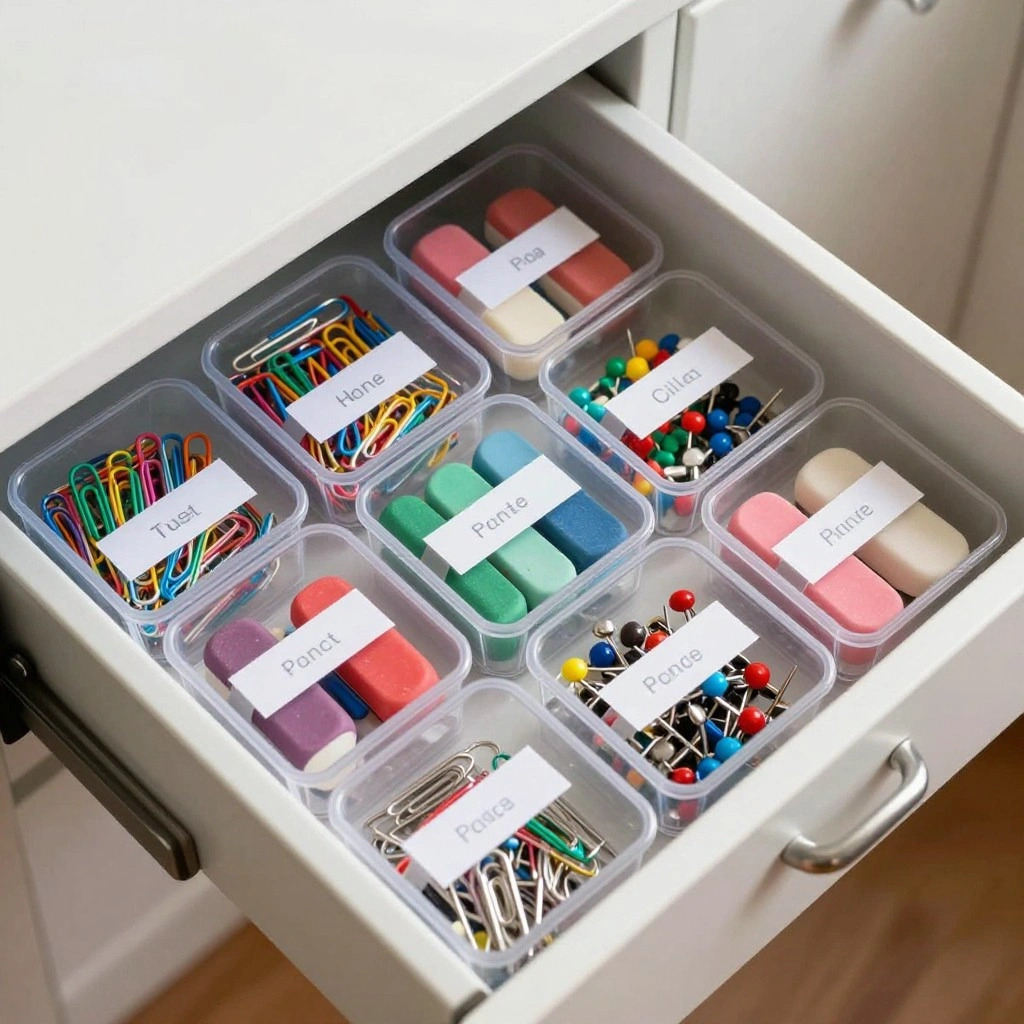
Overview: Small clear bins keep tiny supplies like paperclips and erasers from turning into loose clutter. Because you can see through them, finding what you need takes seconds instead of digging through the whole drawer.
How to Style It:
- Use small clear plastic bins for paperclips, erasers, and pushpins
- Add simple printed labels in a clean font so kids can read them easily
- Arrange bins by size, smallest in the back, largest in front
Where to Use It: Great for a kids’ study desk or a craft table drawer where quick identification matters.
Pro Tip: Clear bins let you see contents at a glance, which means less digging and more finding.
3. Fabric-Lined Drawer Inserts
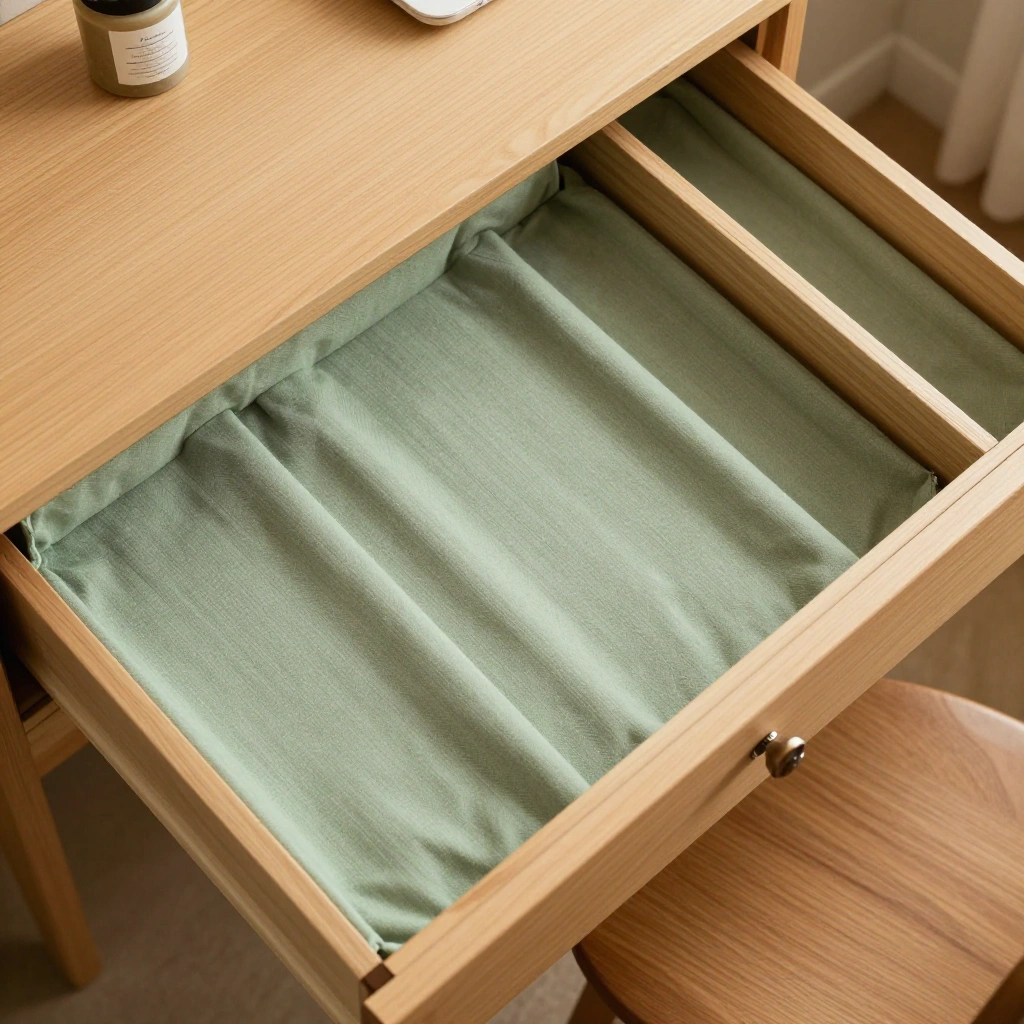
Overview: A soft fabric insert adds a cozy, finished look to any drawer while protecting delicate items from scratches. It’s a simple upgrade that instantly makes a drawer feel more polished.
How to Style It:
- Line the drawer base with a soft fabric insert in a calming color like sage or soft blue
- Fold the fabric neatly into the corners for a tailored look
- Pair with wooden dividers for a warm, cozy feel
Where to Use It: Ideal for a cozy home office or a reading nook desk where soft textures add warmth.
Pro Tip: Choose washable fabric so spills or dust are easy to clean.
4. Rotating Pen and Pencil Caddy
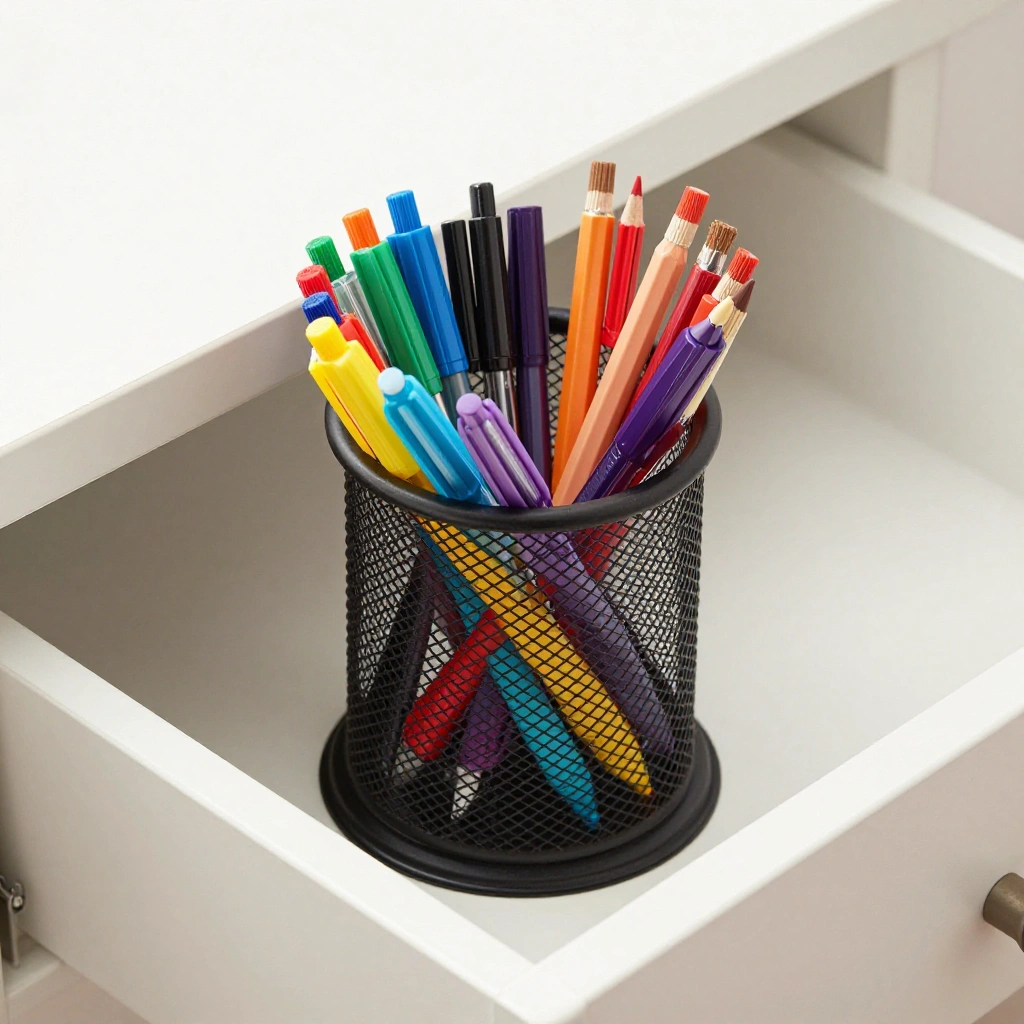
Overview: A rotating caddy keeps every pen, pencil, and marker within arm’s reach and sorted by color, turning a simple writing tool holder into a fun, functional centerpiece for the drawer.
How to Style It:
- Place a small rotating caddy in the front section of the drawer
- Sort pens, pencils, and markers by color for a rainbow effect
- Keep frequently used tools within easy reach
Where to Use It: Perfect for a children’s homework station or a busy family command desk.
Pro Tip: A rotating caddy makes cleanup fun for kids — spinning to find the right color becomes part of the routine.
5. Stackable Mini Drawer Boxes
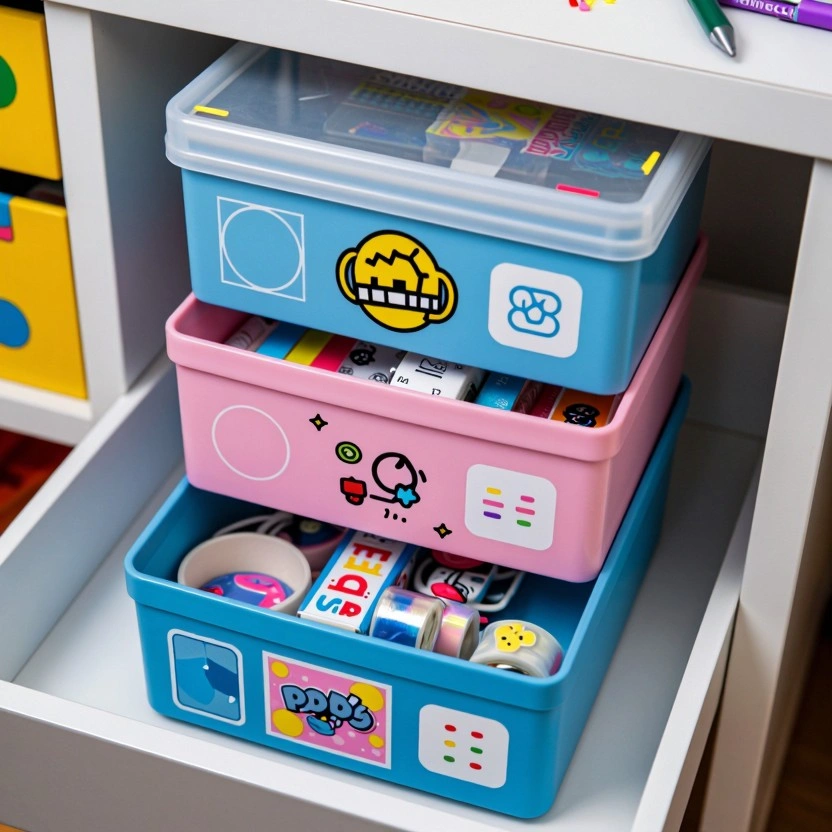
Overview: Small stackable boxes with lids make the most of vertical space, keeping loose items like stickers and tape contained and easy to grab without spilling into the rest of the drawer.
How to Style It:
- Use small stackable boxes with lids to store stickers, tape, and small craft items
- Stack no more than three high to keep the drawer easy to open
- Label each box with a picture or word for quick recognition
Where to Use It: Great for a shared family desk or a craft supply drawer in a playroom.
Pro Tip: Stackable boxes free up horizontal space, letting you fit more into a shallow drawer.
6. Wooden Compartment Organizer Tray
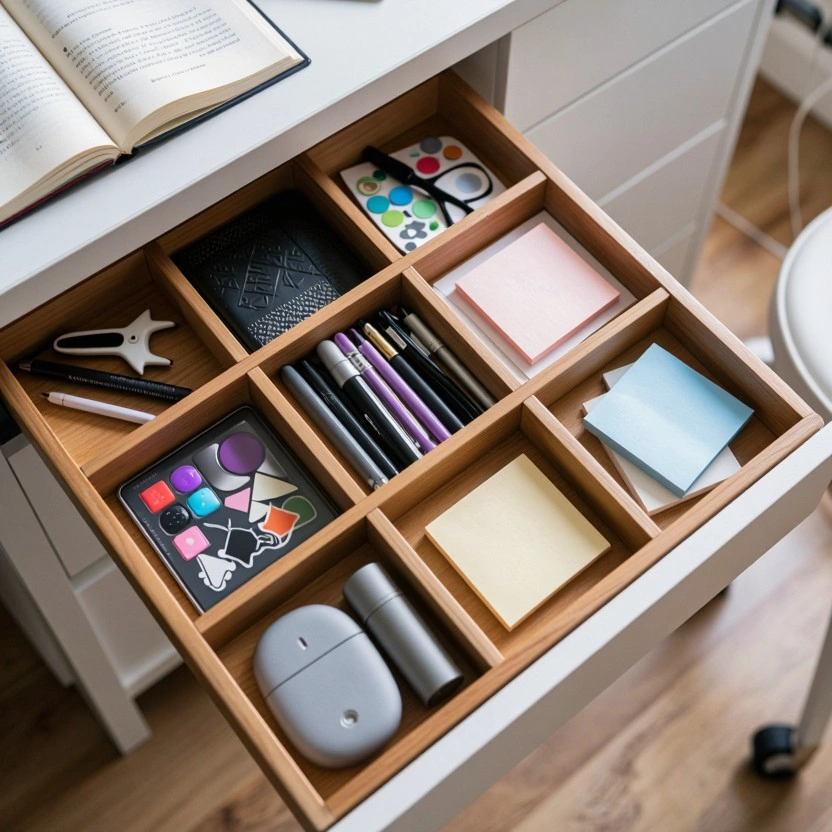
Overview: A natural wood tray with built-in compartments brings warmth and structure to any drawer, making it easy to sort supplies by category while adding a classic, timeless touch.
How to Style It:
- Choose a natural wood tray with multiple small compartments
- Sort by category: writing tools, sticky notes, tech accessories
- Add a small candle or sachet nearby for a pleasant scent (not inside the drawer)
Where to Use It: Suited for a classic or farmhouse-style home office desk.
Pro Tip: Sand and seal an unfinished wood tray yourself for a custom, budget-friendly upgrade.
7. Cable and Charger Organizer Pouch
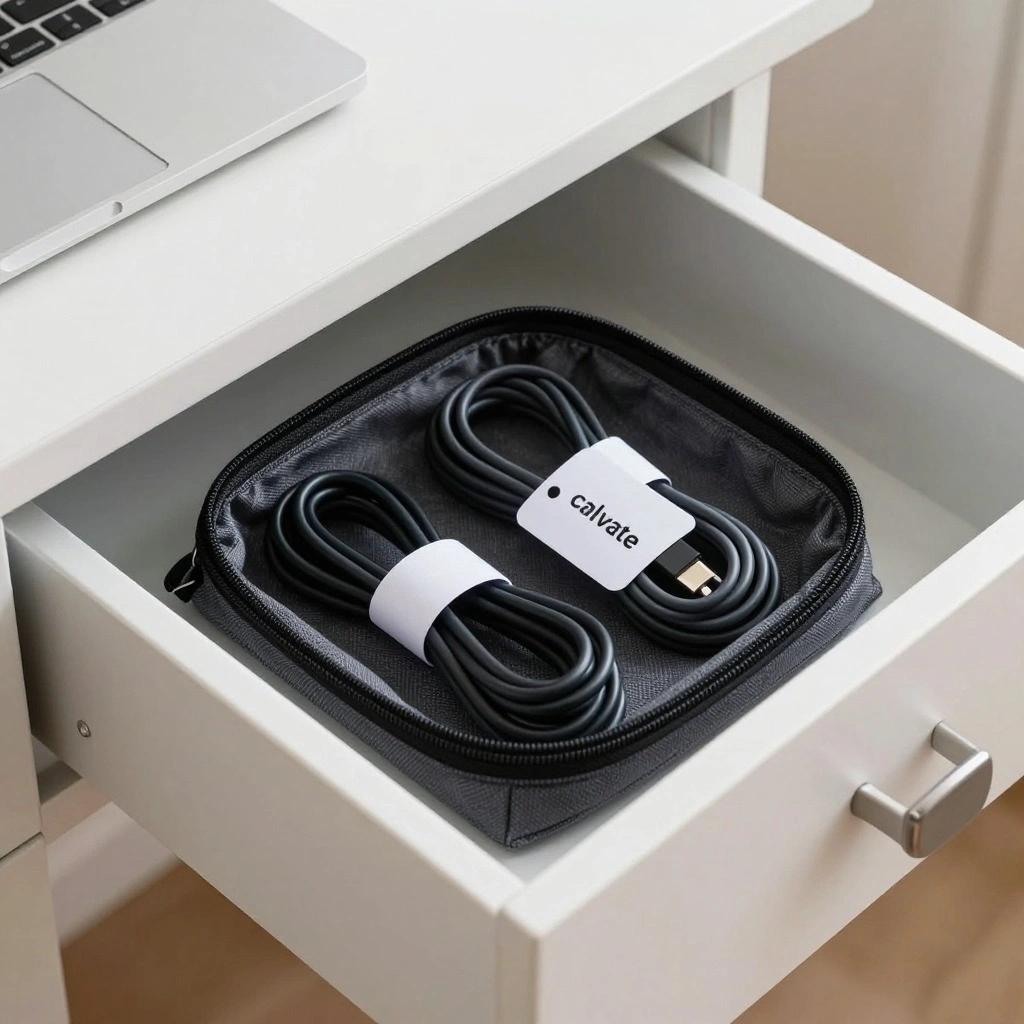
Overview: A small pouch or set of cable ties keeps tangled charging cords contained and easy to identify, solving one of the messiest parts of any modern desk drawer.
How to Style It:
- Use a small zippered pouch or Velcro cable ties to bundle charging cords
- Store the pouch in the back section of the drawer
- Label each cable with a small tag if you have several devices
Where to Use It: Best for a tech-heavy home office or a family desk that charges tablets and phones.
Pro Tip: Coil cables loosely before storing to prevent tangling and damage.
8. Chalkboard Label Drawer Dividers
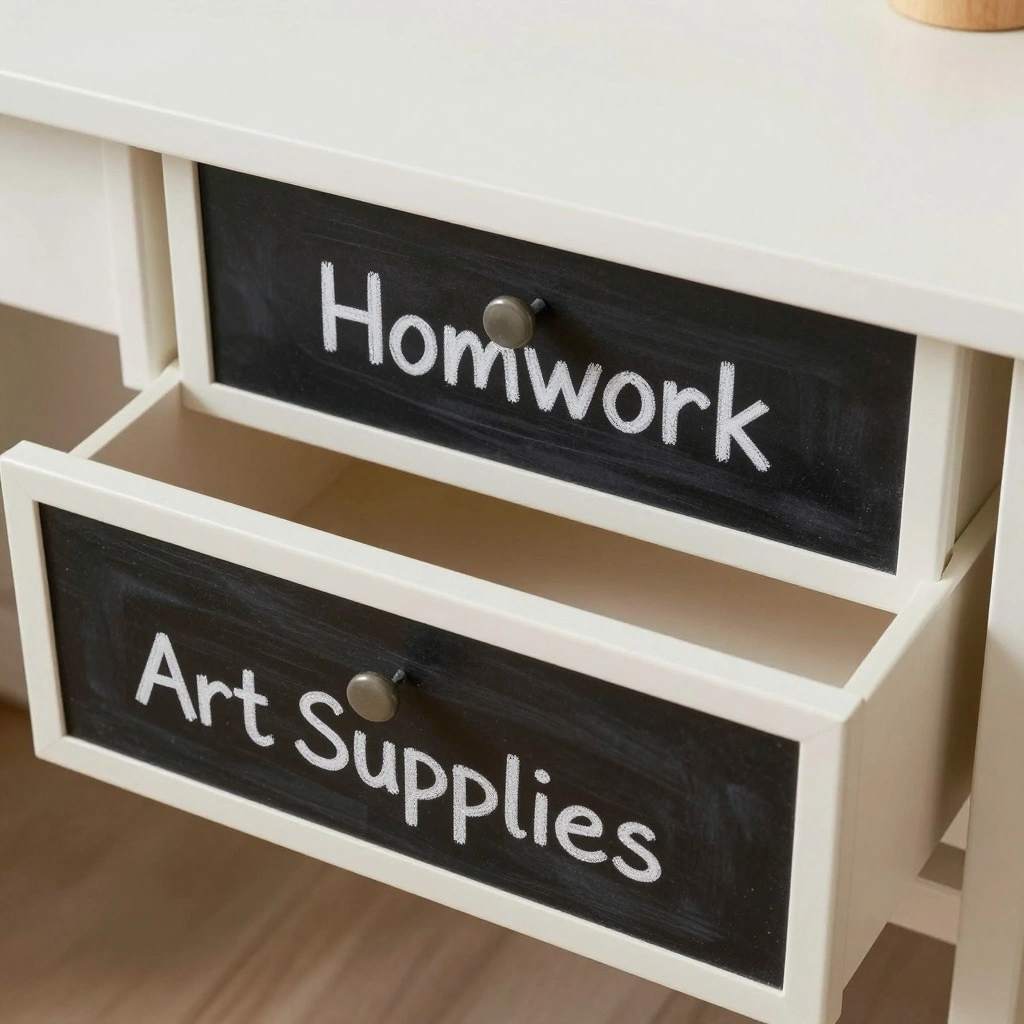
Overview: Chalkboard-style dividers let you rewrite category labels anytime, making this a flexible system that grows and changes along with your family’s needs.
How to Style It:
- Use small chalkboard-style dividers so labels can be changed anytime
- Write categories like “Homework,” “Art Supplies,” or “Notes”
- Update labels seasonally or as needs change
Where to Use It: Wonderful for a kids’ study desk where categories shift often, like school supplies changing each term.
Pro Tip: Keep a small piece of chalk taped to the side of the drawer so labels are always easy to update.
9. Vertical File and Notepad Slot
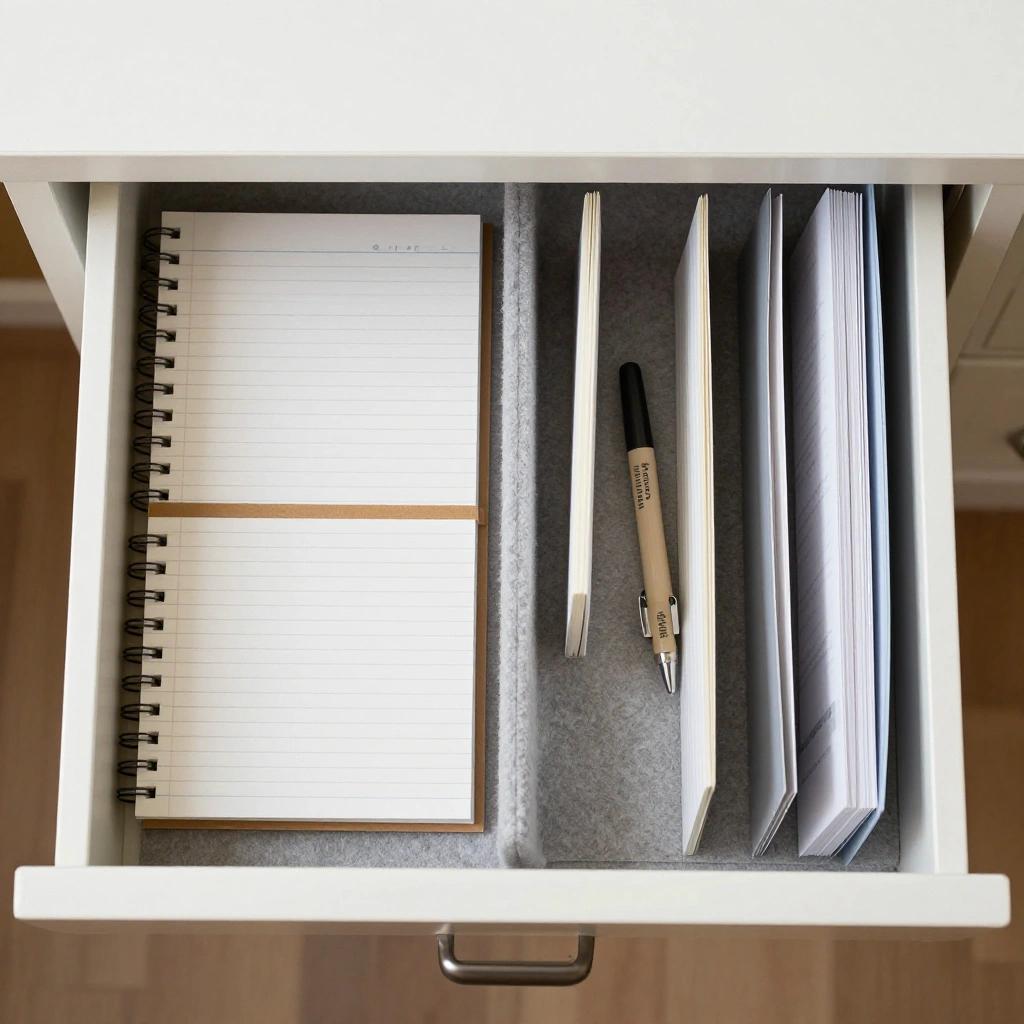
Overview: A slim vertical slot keeps notepads and folders upright instead of flat, preventing the paper pile-up that often takes over a desk drawer.
How to Style It:
- Add a slim vertical slot at the back of the drawer for notepads and folders
- Keep papers upright instead of stacked flat to prevent clutter
- Use a soft felt lining to protect paper edges
Where to Use It: Perfect for a home office desk that handles bills, school papers, or planning notes.
Pro Tip: Sort papers by urgency — today’s tasks in front, upcoming ones behind.
10. Multi-Tier Sliding Drawer Organizer
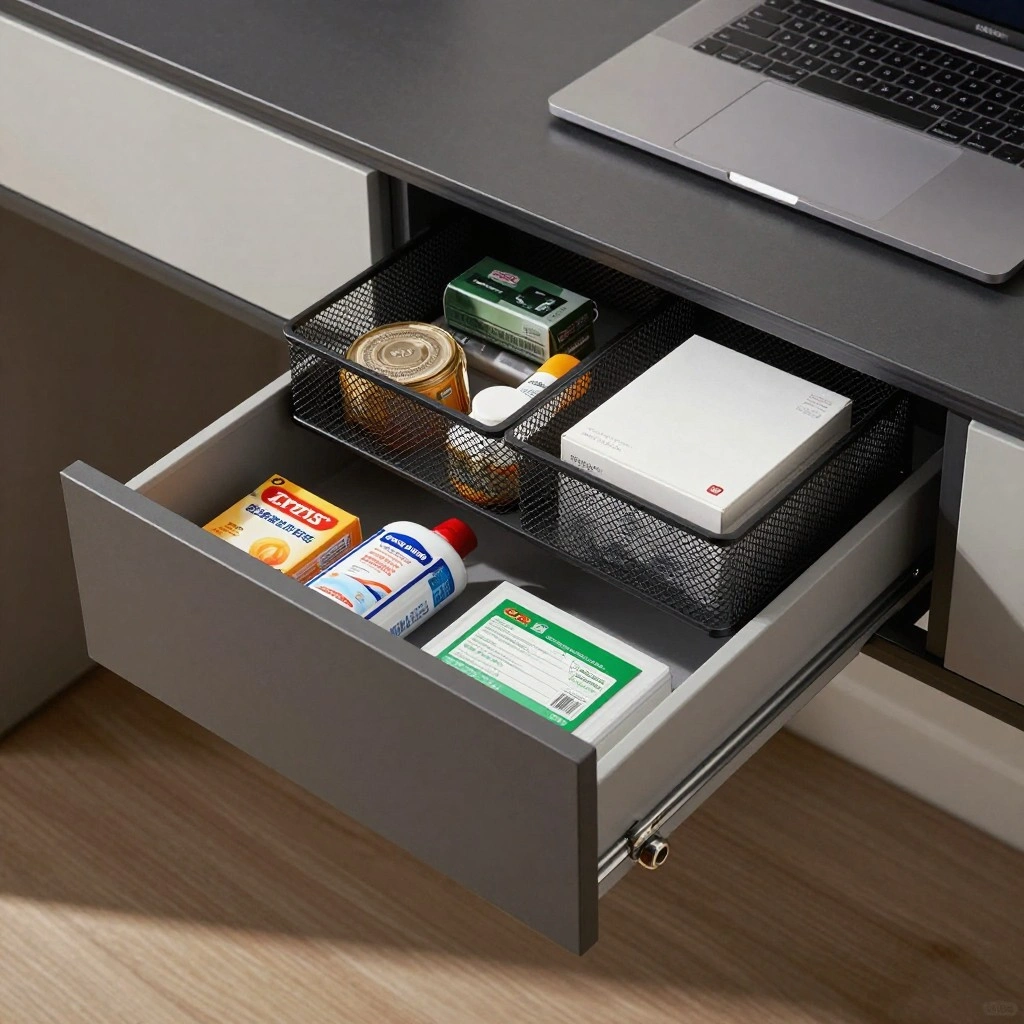
Overview: A two-tier sliding organizer effectively doubles your drawer’s storage capacity, giving you a dedicated spot for everyday items on top and backups tucked neatly below.
How to Style It:
- Install a two-tier sliding organizer to double your storage space
- Keep everyday items on the top tier and backups below
- Choose a soft-close slide mechanism for quiet operation
Where to Use It: Great for a small desk with limited drawer space, especially in shared or multi-use rooms.
Pro Tip: Sliding tiers work best in deeper drawers — measure the height before purchasing.
Common Mistakes to Avoid
- Overfilling the drawer: Packing too many items in makes it hard to find anything and can jam the drawer.
- Skipping labels: Without labels, organization systems fall apart quickly, especially with kids using the same drawer.
- Ignoring drawer depth: Buying organizers that don’t match your drawer’s exact size leads to wasted space or items that don’t fit.
- Mixing categories: Combining unrelated items (like snacks and office supplies) creates confusion and mess over time.
- Forgetting to declutter first: Adding organizers to an already-cluttered drawer just organizes the clutter — sort and remove unused items first.
Frequently Asked Questions About Desk Drawer Organization Ideas
Q: What is the best material for desk drawer organizers? A: Bamboo, acrylic, and durable plastic are the most popular choices because they’re sturdy, easy to clean, and fit most drawer sizes.
Q: How do I organize a desk drawer for kids? A: Use clear, labeled bins with simple words or pictures, keep frequently used items in front, and choose organizers with rounded, kid-safe edges.
Q: How often should I clean out my desk drawer? A: A quick declutter every month and a deeper clean every season helps keep the system working well.
Q: Can I use household items instead of buying organizers? A: Yes — small boxes, jars, or even repurposed containers can work well as drawer dividers if measured to fit.
Q: What’s the easiest way to keep a shared family desk organized? A: Assign each family member their own labeled section or drawer so supplies don’t get mixed up.
Conclusion
A well-organized desk drawer makes everyday life easier for the whole family — less searching, less stress, and more time for what actually matters. Whether you start with a simple tray divider or go all in with a multi-tier sliding organizer, small changes add up to a tidier, more functional workspace.
Pick one or two ideas from this list, try them out, and build from there until your drawer works exactly the way you need it to.