10 Creative Kitchen Organization Ideas for Easier Everyday Living
Is your kitchen constantly cluttered no matter how many times you tidy up? You are not alone. Between mismatched containers, overflowing drawers, and countertops covered in “stuff,” a busy family kitchen can get out of control fast. The good news is that a few smart organization ideas can completely change how your kitchen feels and functions.
In this guide, you will find 10 practical, stylish, and family-friendly kitchen organization ideas that work for real homes with real kids running through them. Each idea comes with styling tips, the best spots to use it, and a pro tip to help you get it right the first time. Let’s get your kitchen organized once and for all.
10 Amazing Kitchen Organization Ideas for Small Kitchens
1. Clear Pantry Bins for Snacks and Staples
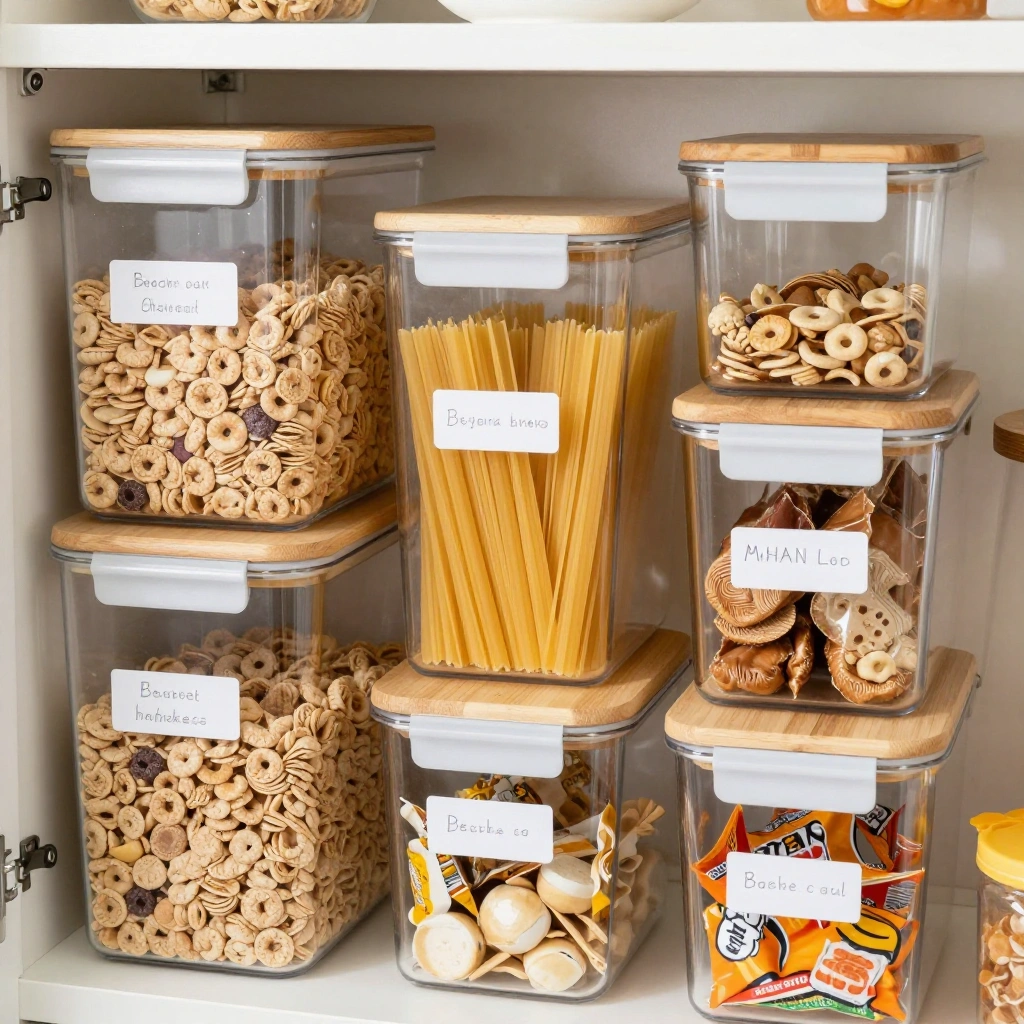
Swap out bulky cardboard boxes and bags for clear, uniform bins. Clear containers let you see exactly what you have at a glance, cut down on food waste, and make your pantry shelves look instantly neater. This is one of the easiest wins for busy families who need to know what’s on hand without digging through every shelf.
How to Style It:
- Choose clear acrylic or BPA-free plastic bins in matching shapes and sizes
- Add simple wood or bamboo lids for a warmer, more natural look
- Group similar items together (cereals, snacks, baking staples)
- Use printed or handwritten labels in a clean, matching font
Where to Use It: Pantry shelves, cabinet shelves near the fridge, or a dedicated snack cabinet within kids’ reach.
Pro Tip: Decant snacks into bins at kid height so children can grab their own snacks independently, which cuts down on mid-day kitchen chaos.
2. Drawer Dividers for Utensils and Tools
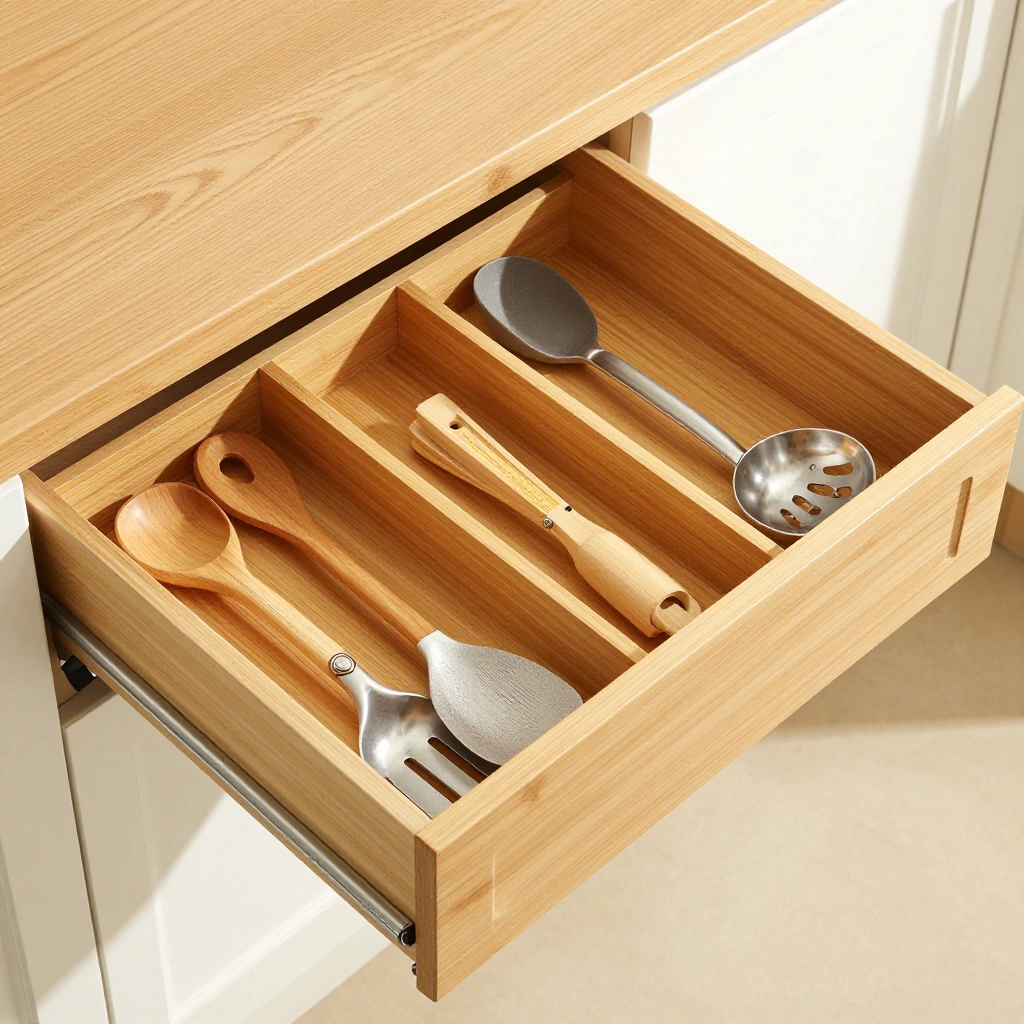
A junk drawer full of tangled spatulas and mismatched lids is a common kitchen struggle. Drawer dividers create defined spots for every utensil, so nothing gets lost and everything has a home. This idea instantly upgrades the function of even the smallest kitchen drawer.
How to Style It:
- Use bamboo or acrylic expandable dividers that fit your drawer size
- Separate utensils by type: cooking tools, cutlery, gadgets
- Add a small tray for kids’ plastic utensils and cups
- Keep the most-used tools in the front row for easy access
Where to Use It: The main utensil drawer near the stove, plus a secondary drawer for kids’ dishware near the table.
Pro Tip: Measure your drawer before buying dividers. Adjustable, expandable versions save you from awkward gaps or overcrowded rows.
3. A Rolling Cart for Extra Storage
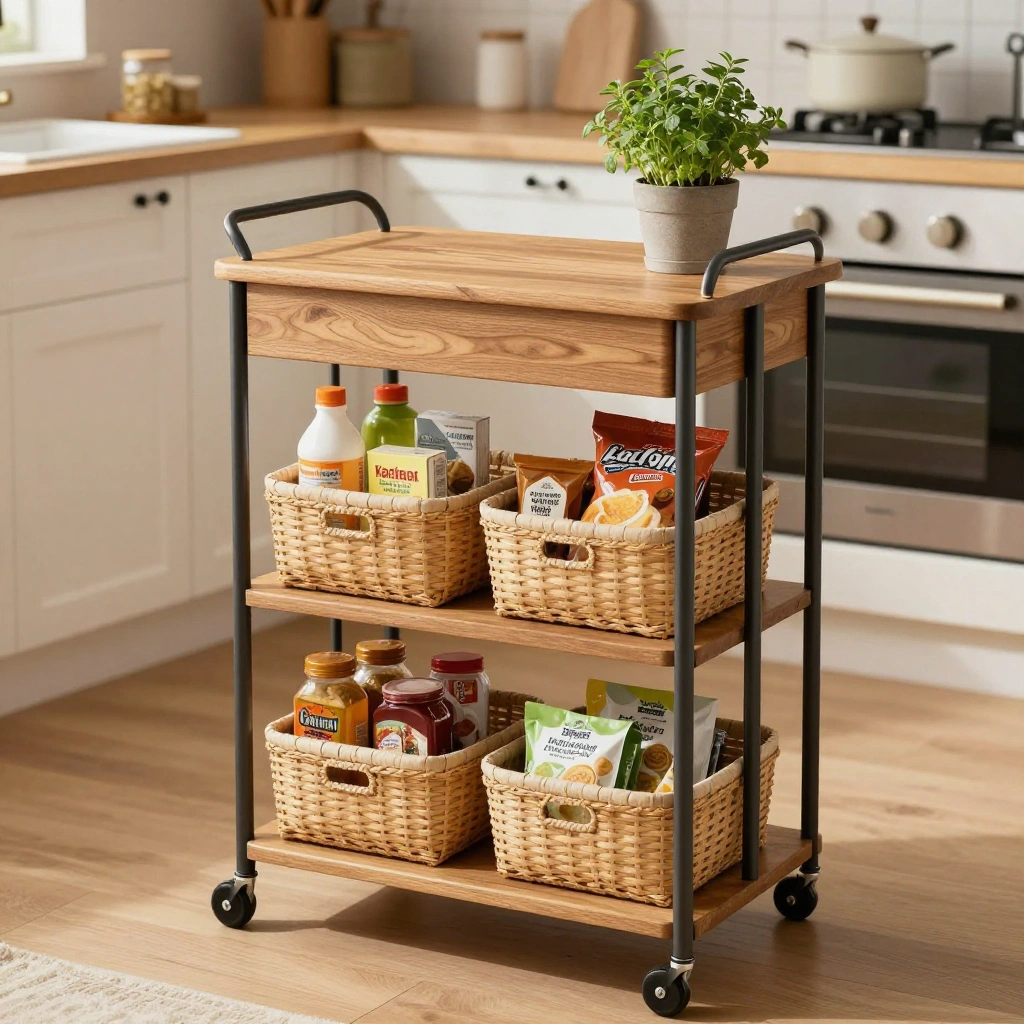
When cabinet space runs out, a rolling utility cart is the perfect flexible solution. It can hold extra pantry items, small appliances, or even double as a kids’ snack and juice station. Best of all, it moves wherever you need it.
How to Style It:
- Pick a two- or three-tier metal or wood cart
- Add woven baskets on each tier for a cozy, organized look
- Top it with a cutting board or small potted herb for charm
- Keep wheels visible for an easy-to-move, functional feel
Where to Use It: Beside the fridge, near the kitchen island, or tucked into a corner as an overflow pantry.
Pro Tip: Reserve the bottom tier for kids’ snacks and cups so little ones can help themselves without needing to reach high shelves.
4. Labeled Spice Drawer or Rack
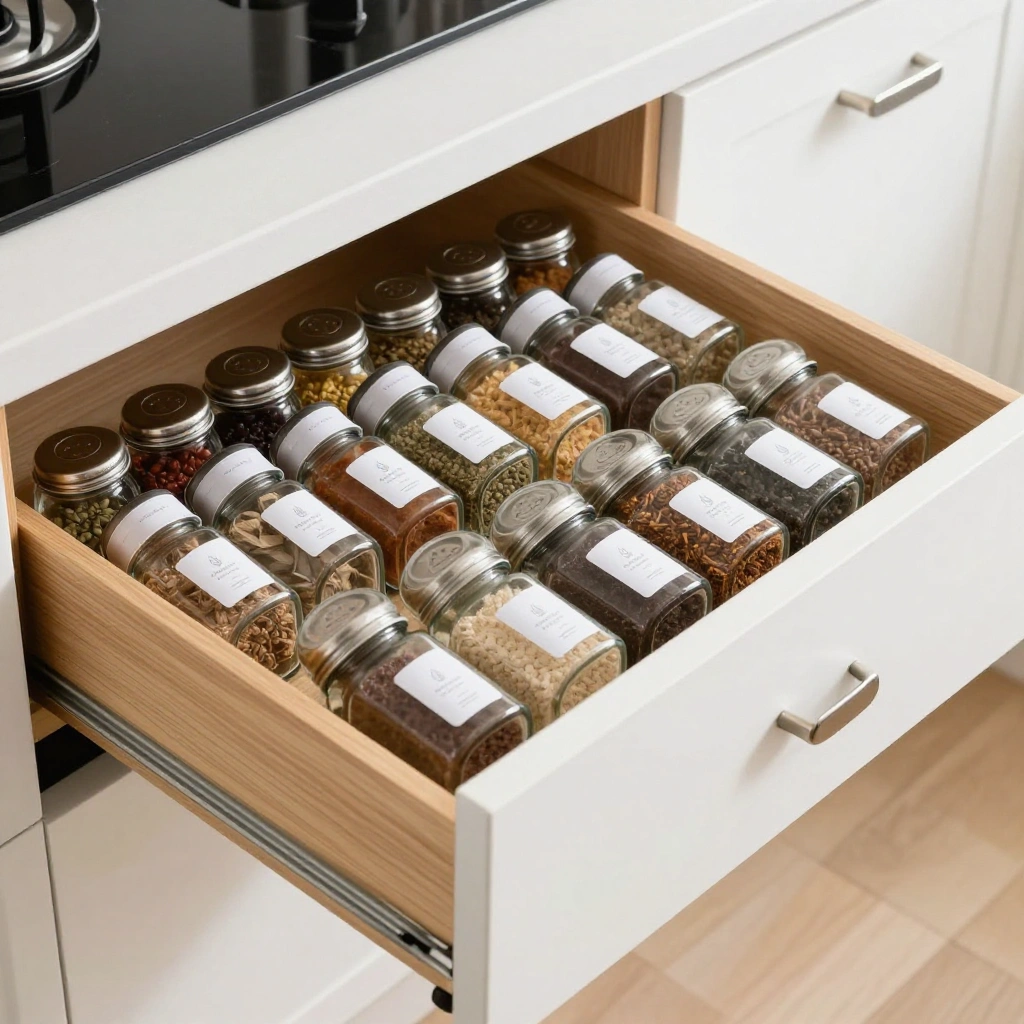
A labeled spice system saves time during meal prep and keeps countertops clear. Whether you use a drawer insert or a wall-mounted rack, matching containers and clear labels make a huge visual difference.
How to Style It:
- Decant spices into matching small glass jars
- Use a slanted drawer insert or tiered rack for visibility
- Add clean white or kraft-paper labels with spice names
- Arrange alphabetically or by cooking frequency
Where to Use It: A drawer near the stove, a wall-mounted rack beside the cooktop, or inside a cabinet door.
Pro Tip: Group spices by how often you use them, with everyday staples like salt, pepper, and cinnamon closest to the front.
5. Under-Sink Storage Bins
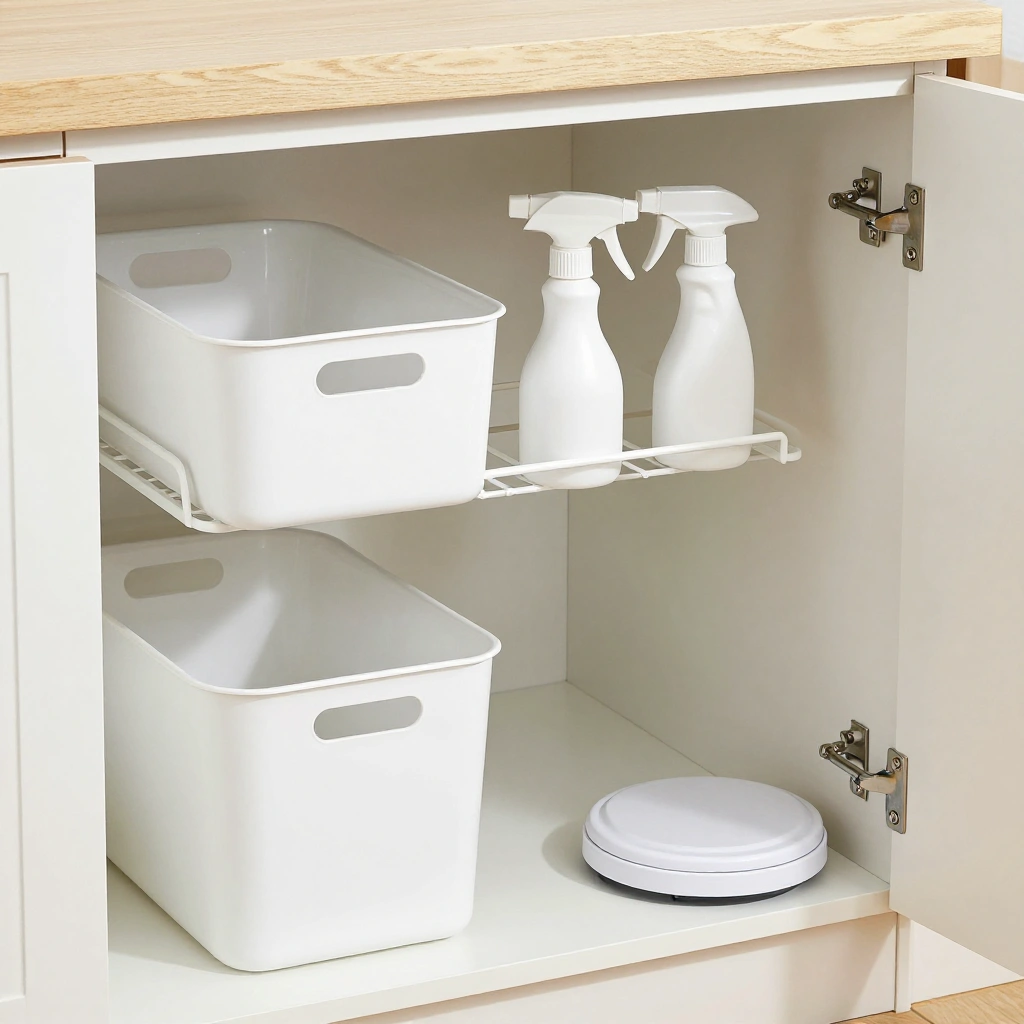
The area under the sink is often a tangled mess of cleaning supplies. Adding stackable bins or a slide-out organizer turns this awkward space into a tidy, functional zone that is still safely out of little hands’ reach when needed.
How to Style It:
- Use stackable clear or white bins to separate supply types
- Add a lazy Susan for taller bottles
- Attach a tension rod underneath to hang spray bottles
- Store child-safety locks on the cabinet if young kids are around
Where to Use It: Under the kitchen sink, or a secondary under-sink cabinet if you have one.
Pro Tip: Keep dish soap and everyday sponges in a front bin, and store deep-cleaning supplies toward the back.
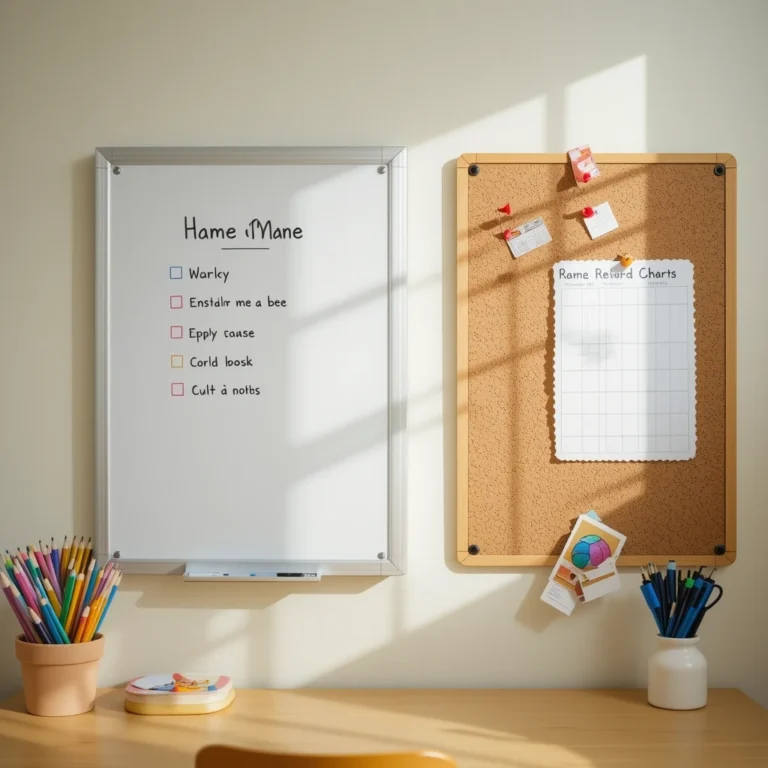
6. A Family Command Center
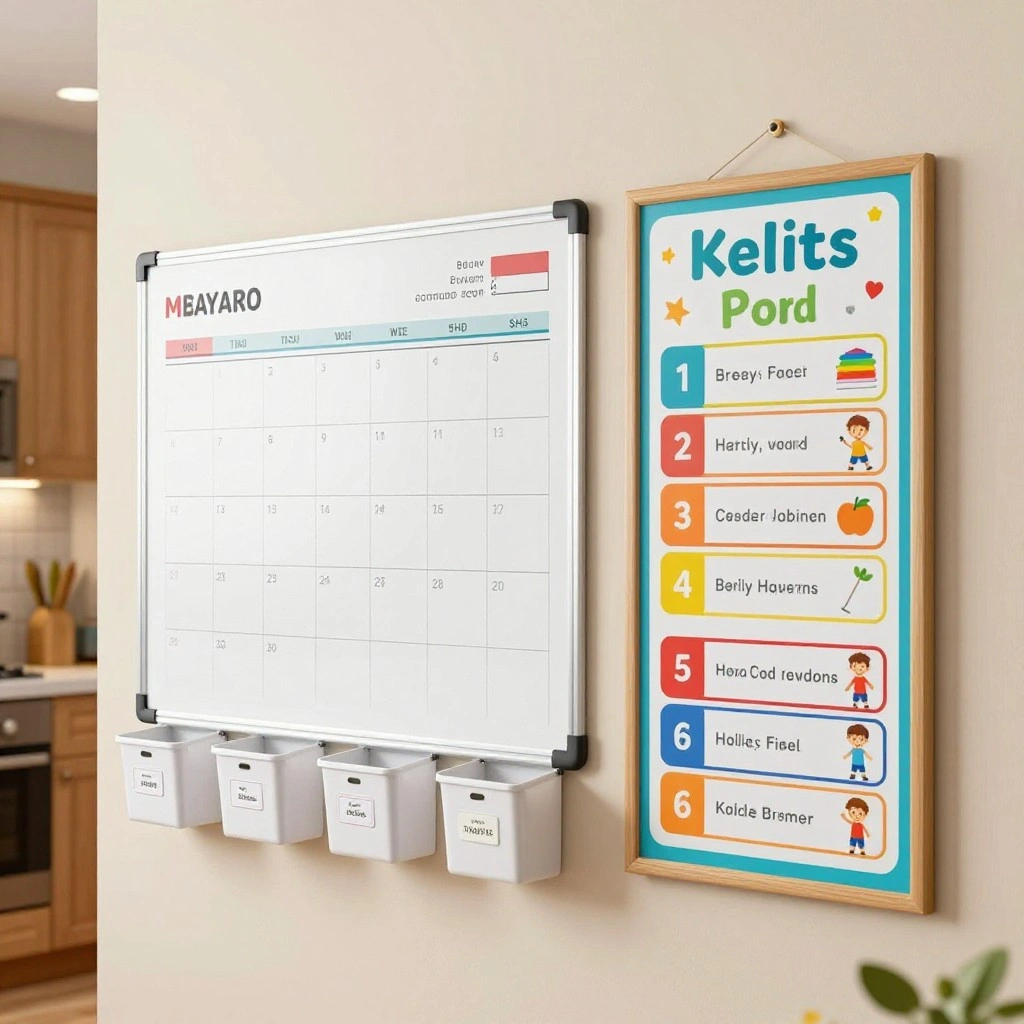
A command center keeps everyone’s schedules, chores, and notes in one visible spot instead of scattered across the counter. It is one of the best ways to bring order to a busy household right in the heart of the home.
How to Style It:
- Mount a chalkboard, corkboard, or magnetic whiteboard on the wall
- Add small labeled bins for mail, permission slips, and keys
- Include a family calendar and a simple chore chart for kids
- Keep colors coordinated with your kitchen’s palette
Where to Use It: A blank wall near the kitchen entrance or beside the fridge.
Pro Tip: Give each family member their own colored marker or magnet so everyone can see their tasks at a glance.
7. Vertical Cabinet Dividers for Trays and Boards
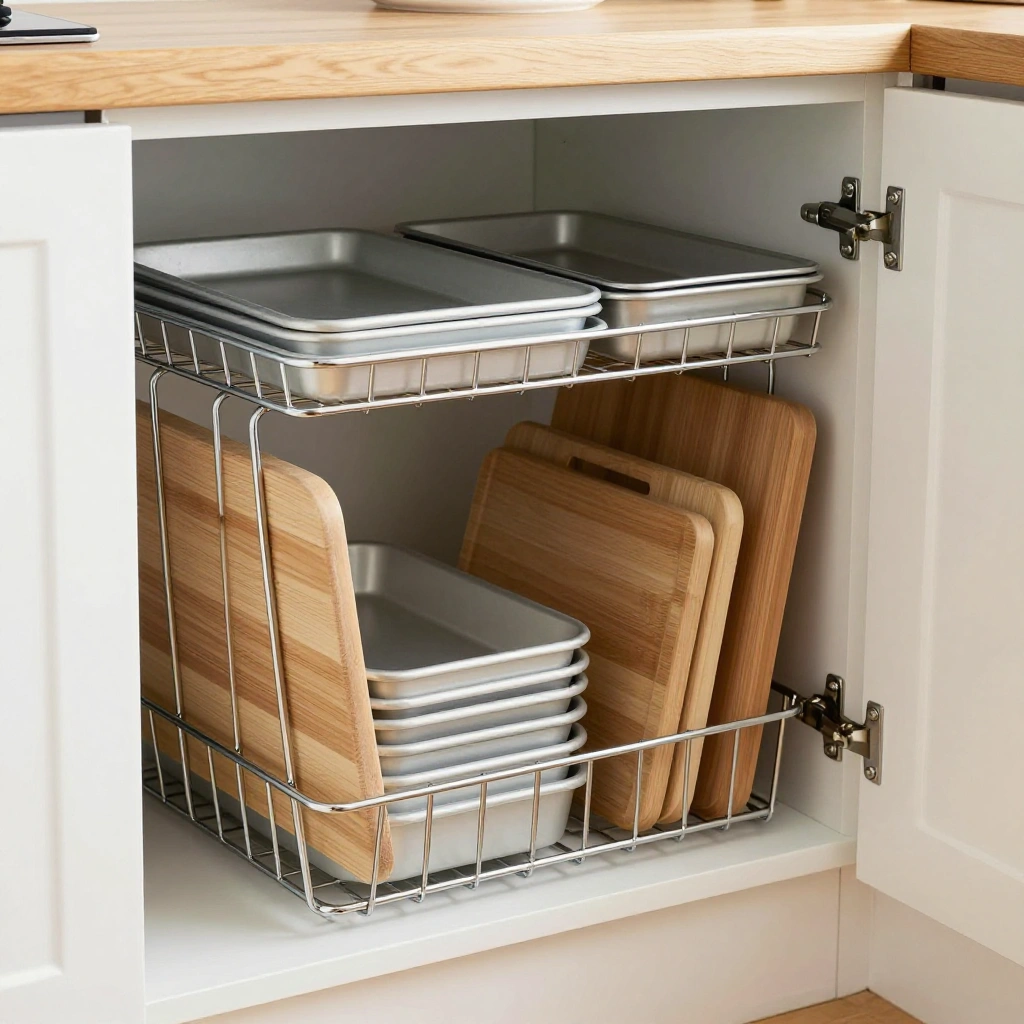
Baking sheets, cutting boards, and trays are notoriously hard to store flat. Vertical dividers let you slide them in upright, saving cabinet space and making it easy to grab exactly what you need without pulling out the whole stack.
How to Style It:
- Install a simple wire or wood vertical divider insert
- Sort by size: trays, cutting boards, muffin tins
- Choose a cabinet close to the oven for easy access
- Add a small label on the cabinet front if it helps the whole family find things
Where to Use It: A tall, narrow cabinet near the stove or oven.
Pro Tip: Leave one slot empty for oversized holiday trays or seasonal bakeware so everything still has a place.
8. A Kids’ Snack and Dish Station
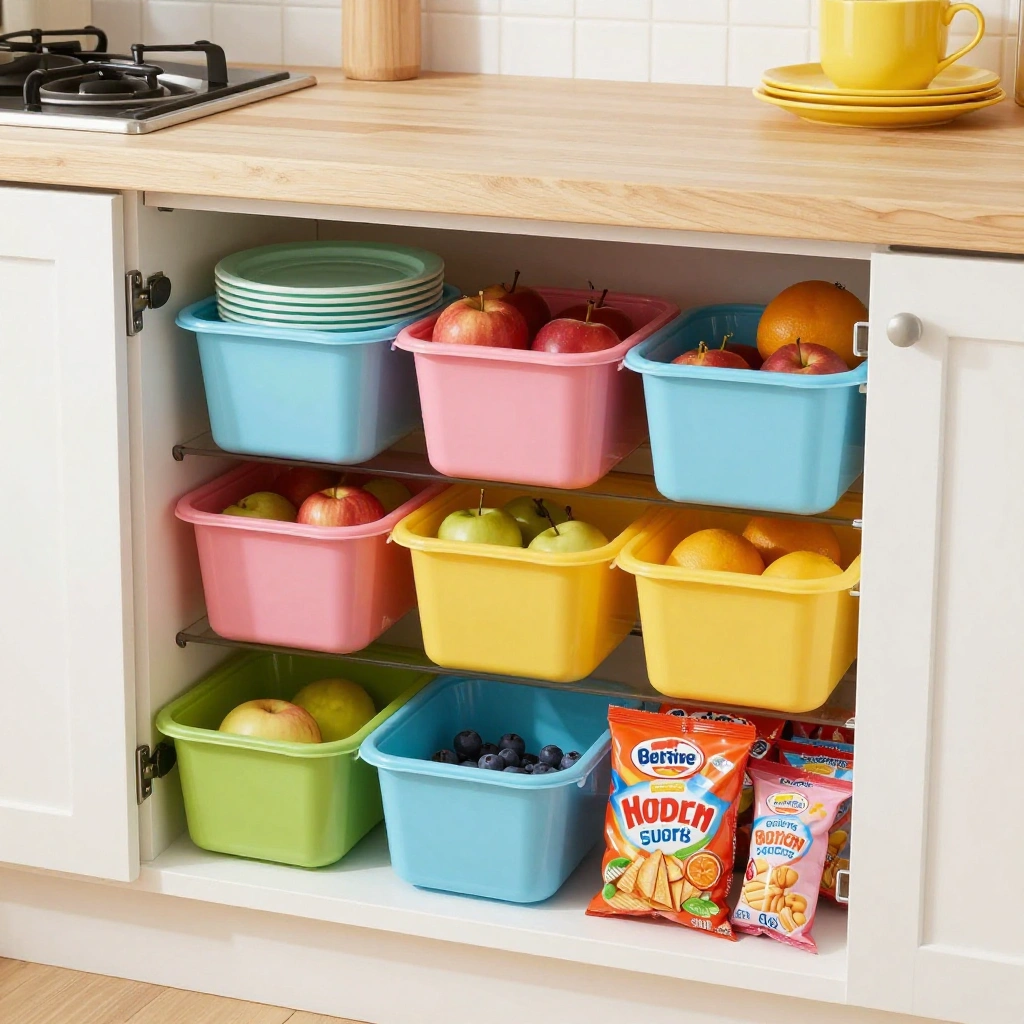
Give children their own low, reachable zone for snacks, plates, and cups. This encourages independence at snack time and mealtime while keeping little hands out of higher shelves where breakables or sharp tools are stored.
How to Style It:
- Choose a low drawer or cabinet near the kitchen entrance
- Fill it with plastic plates, cups, and easy-to-open snack bins
- Add a colorful bin or basket for fruit and healthy snacks
- Use fun labels with pictures for younger kids who can’t read yet
Where to Use It: A bottom drawer or low cabinet in the main kitchen or a nearby breakfast nook.
Pro Tip: Rotate snack options weekly so the station stays interesting and encourages kids to try new healthy foods.
9. Lazy Susans for Corner Cabinets and Countertops
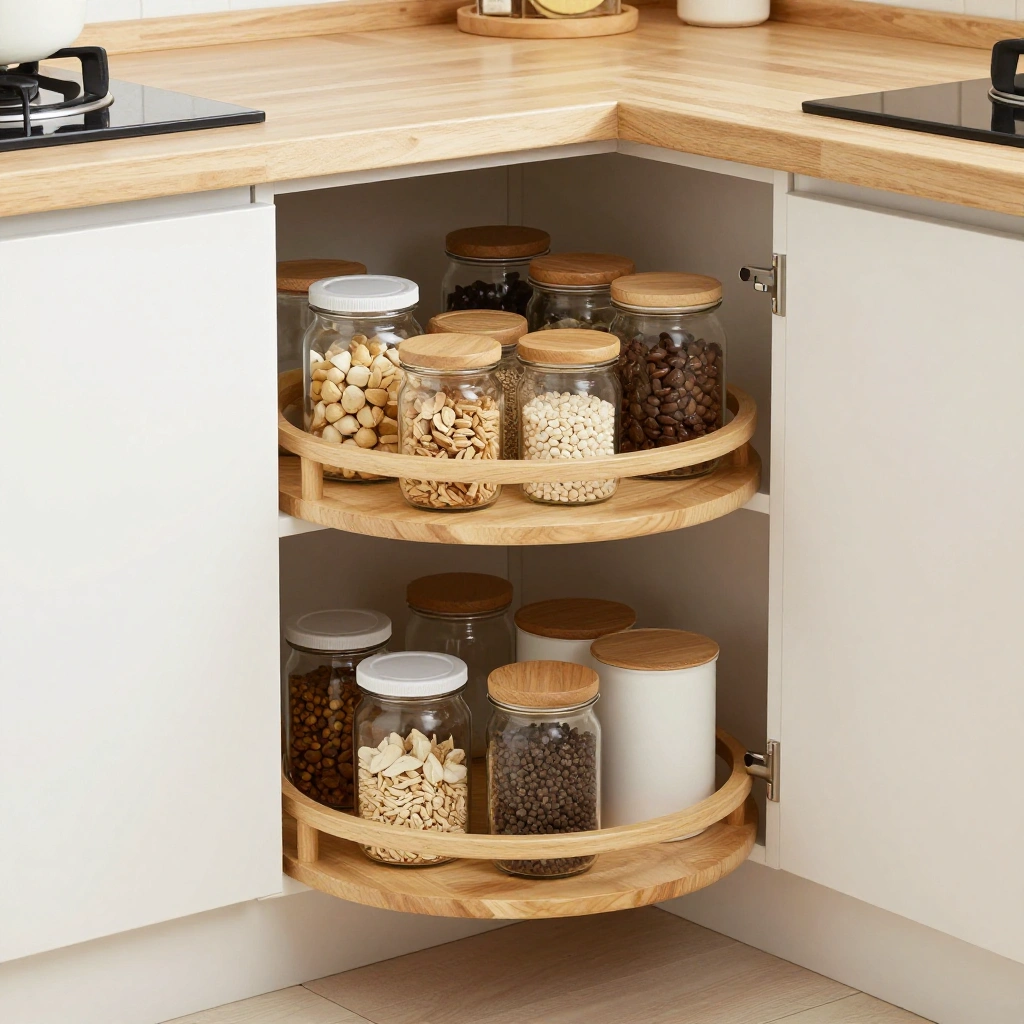
Corner cabinets are notorious for wasted space, and countertops can get crowded fast. A lazy Susan solves both problems by keeping items accessible with just a spin, instead of digging blindly into a dark corner.
How to Style It:
- Use a two-tier lazy Susan for deep corner cabinets
- Add a smaller wood lazy Susan on the counter for oils and condiments
- Group items by category on each tier
- Choose a finish that matches your cabinet hardware
Where to Use It: Corner base cabinets, pantry corners, or a countertop condiment station.
Pro Tip: Reserve the top tier of a cabinet lazy Susan for items used daily, since it is the easiest to reach.
10. Open Shelving for Everyday Dishes
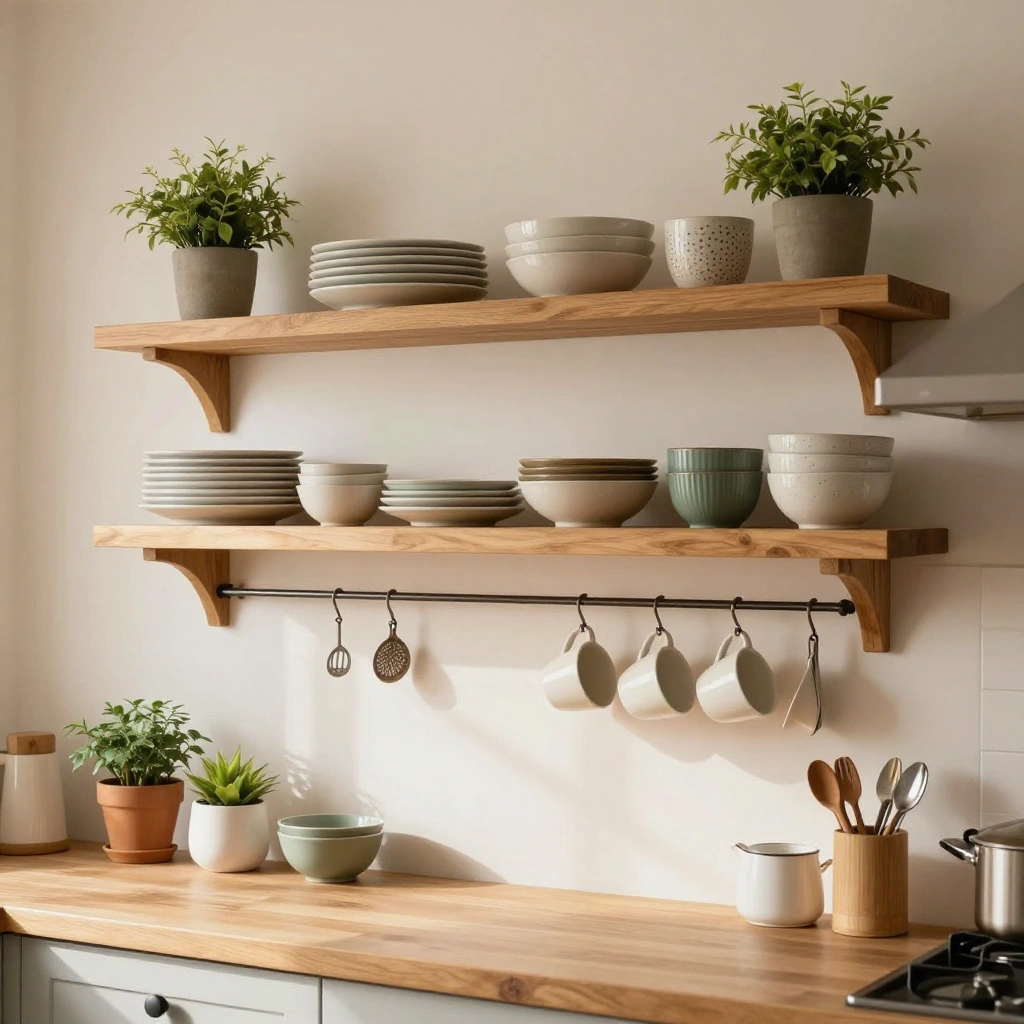
Open shelves keep everyday dishes, mugs, and bowls within easy reach while adding a warm, curated look to your kitchen. This idea works especially well for families who want quick access to dishware during busy mornings and dinner rushes.
How to Style It:
- Install floating wood or painted shelves above the counter
- Stack plates and bowls by size, with mugs hung on small hooks
- Mix in a few plants or a stack of cookbooks for visual interest
- Keep the color palette simple so the shelf feels tidy, not cluttered
Where to Use It: Above the counter near the sink, or in place of upper cabinet doors.
Pro Tip: Only display dishware you use weekly. Store fragile or special-occasion pieces in a closed cabinet to keep the open shelf looking neat.
Common Mistakes to Avoid
- Buying organizers before measuring. Always measure your drawers, cabinets, and shelves first to avoid bins or dividers that don’t fit.
- Organizing without decluttering first. Sort through expired pantry items and duplicate tools before adding new storage systems.
- Choosing mismatched containers. Uniform bins and jars instantly make any space look more organized, even without extra effort.
- Forgetting kid-height access. Keep everyday snacks, cups, and plates within a child’s reach to encourage independence.
- Overcrowding shelves. Leave a little breathing room so items are easy to see and pull out without creating a new mess.
Frequently Asked Questions
1. Where should I start when organizing a cluttered kitchen? Begin with one zone at a time, such as the pantry or a single drawer. Declutter first, then add bins, dividers, or labels to keep the space organized long-term.
2. What is the most budget-friendly kitchen organization idea? Drawer dividers and labeled spice jars are inexpensive and make an immediate visual and functional difference without a full remodel.
3. How can I keep my kitchen organized with kids around? Create a designated kids’ zone with low, reachable storage for snacks and dishware, and use a family command center to keep schedules and chores visible.
4. How often should I reorganize my pantry or cabinets? A quick refresh every few months works well, with a deeper declutter once or twice a year to remove expired or unused items.
5. Do clear containers really make a difference? Yes. Clear containers let you see exactly what you have, reduce food waste, and create a clean, cohesive look throughout your kitchen.
Conclusion
A well-organized kitchen doesn’t have to mean a full renovation. With a few thoughtful changes, like clear pantry bins, a labeled spice drawer, or a dedicated kids’ snack station, you can create a space that is both beautiful and functional for the whole family. Start with one or two ideas from this list, and watch how much smoother your daily routine becomes.