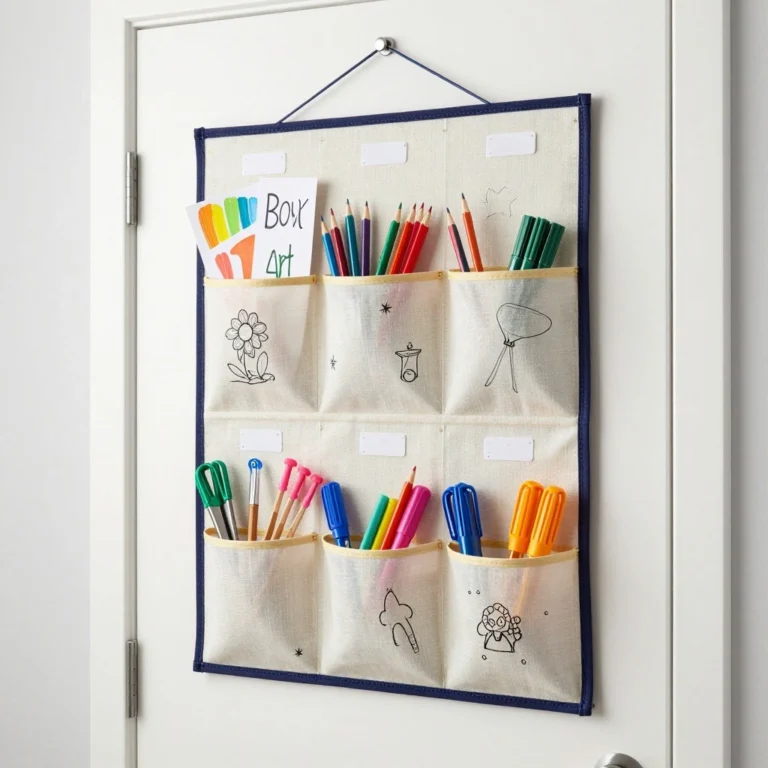
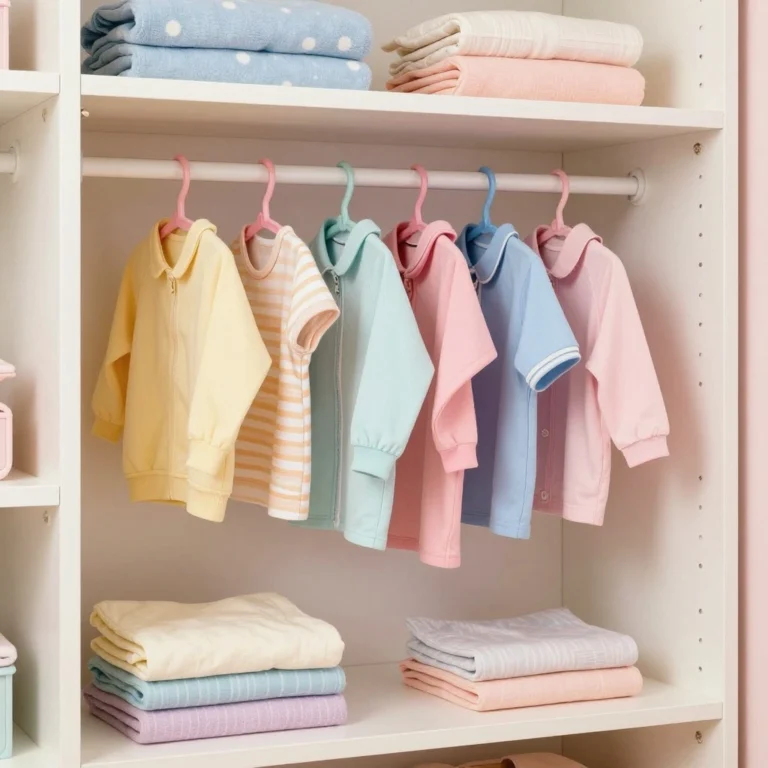
10 Cute Kids Closet Organization Ideas Every Parent Will Love
If your kid’s closet looks like a tornado passed through it every single morning, you are not alone. Between tiny hangers, mismatched socks, and toys that somehow migrate from the playroom, closets can get overwhelming fast. The good news? A few smart organization tweaks can turn chaos into calm — and even help your child get dressed all by themselves.
In this guide, we’re sharing 10 practical and adorable kids closet organization ideas, from color-coded hanging systems to fun labeled bins. Each one is designed to grow with your child, save you time, and make daily routines so much easier for the whole family.
1. Color-Coded Hanging System
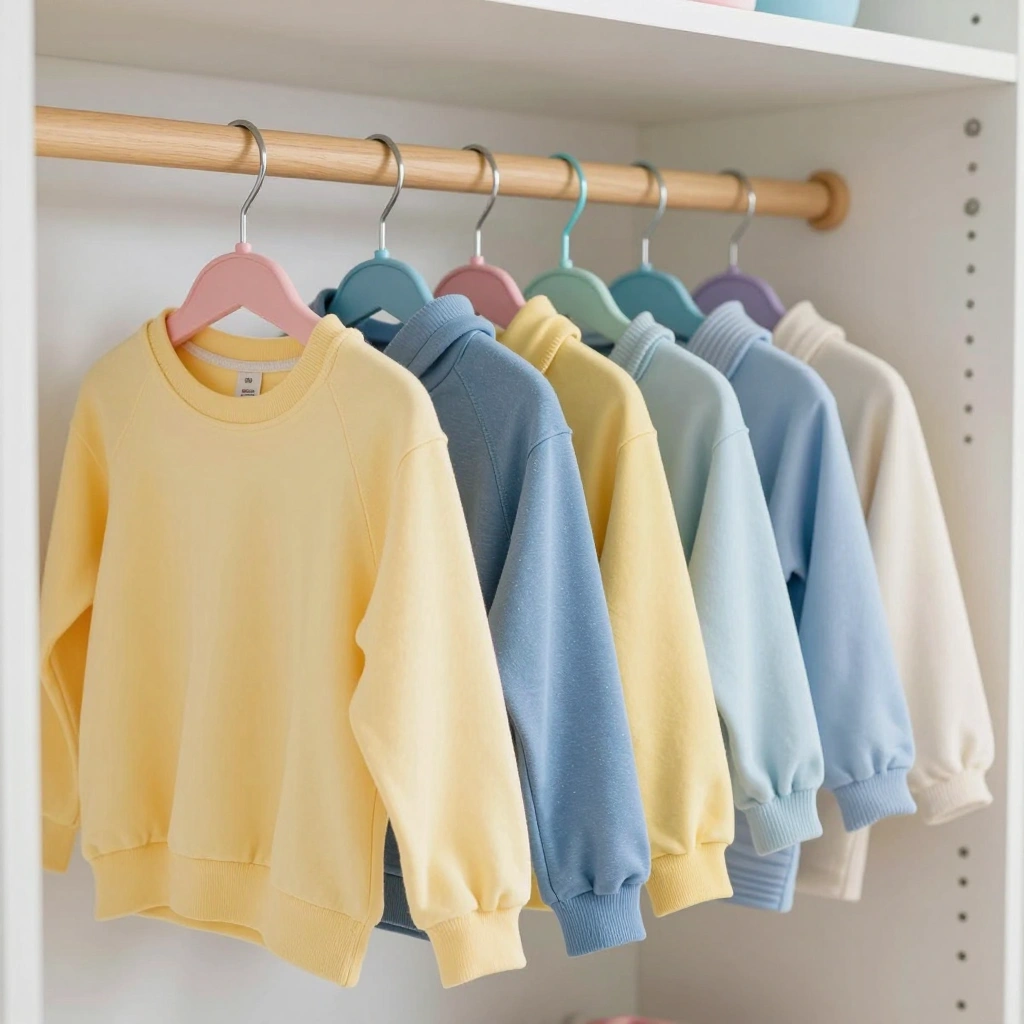
Sort clothes by color instead of type. It’s visually simple enough for toddlers to understand, and it makes outfit-picking a breeze for older kids too.
How to Style It:
- Use matching pastel or rainbow-colored hangers for each clothing category
- Group by color left to right (light to dark) for a clean, magazine-like look
- Add small fabric flags or ribbon tags to mark sections (tops, bottoms, dresses)
Where to Use It: Best for closets with a single hanging rod and kids ages 4 and up who are starting to pick their own outfits.
Pro Tip: Keep everyday basics (t-shirts, leggings) at the front and special-occasion outfits toward the back so mornings stay fast and stress-free.
2. Bin and Basket Labeling Station
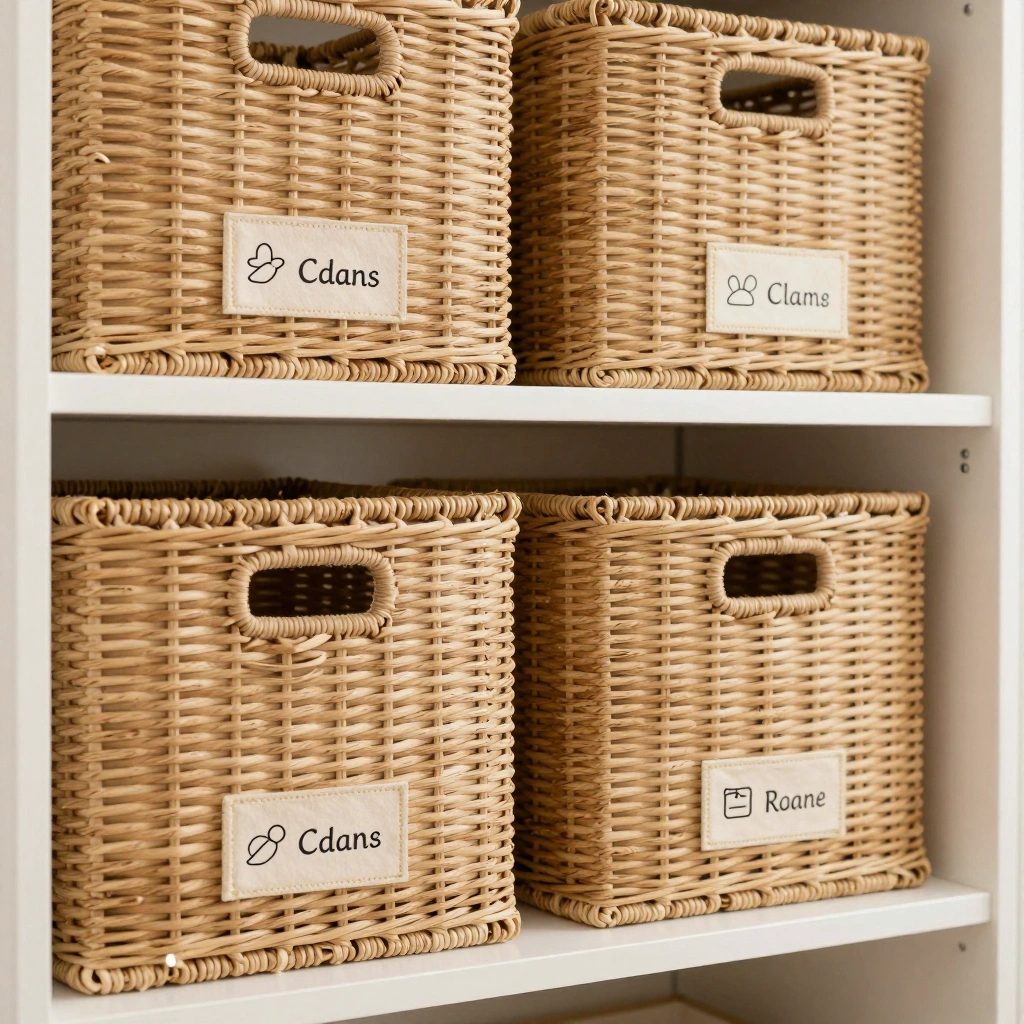
Woven baskets or clear bins with picture-and-word labels help even non-readers put things back in the right spot.
How to Style It:
- Choose matching baskets in 2-3 coordinating colors or natural woven textures
- Add labels with both a simple icon (sock, shirt, hat) and the word
- Stack smaller bins on a shelf, larger ones on the floor
Where to Use It: Ideal for closet shelving or the floor space below hanging clothes — great for socks, accessories, and off-season items.
Pro Tip: Laminate the labels so they survive sticky fingers and the occasional juice spill.
3. Low Hanging Rod for Little Helpers
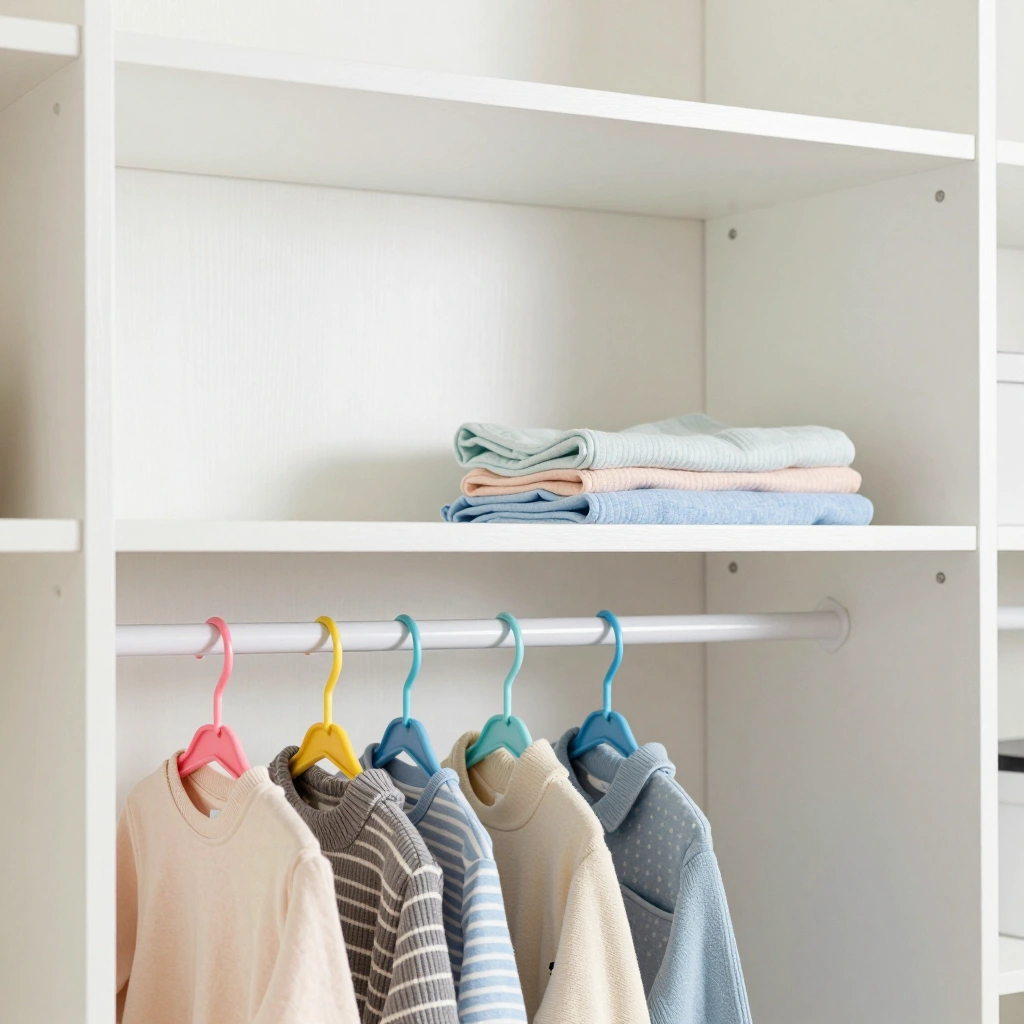
Installing a second rod at a child-friendly height encourages independence — your kids can hang up their own clothes without asking for help.
How to Style It:
- Mount a slim rod 2-3 feet from the floor, sized to your child’s height
- Use lightweight, easy-grip hangers designed for small hands
- Reserve the lower rod for daily-wear items like school clothes
Where to Use It: Works in any closet with enough vertical space to add a second tier — perfect for kids ages 3-8.
Pro Tip: Adjust the rod height every year as your child grows, so it never feels “too babyish” or out of reach.
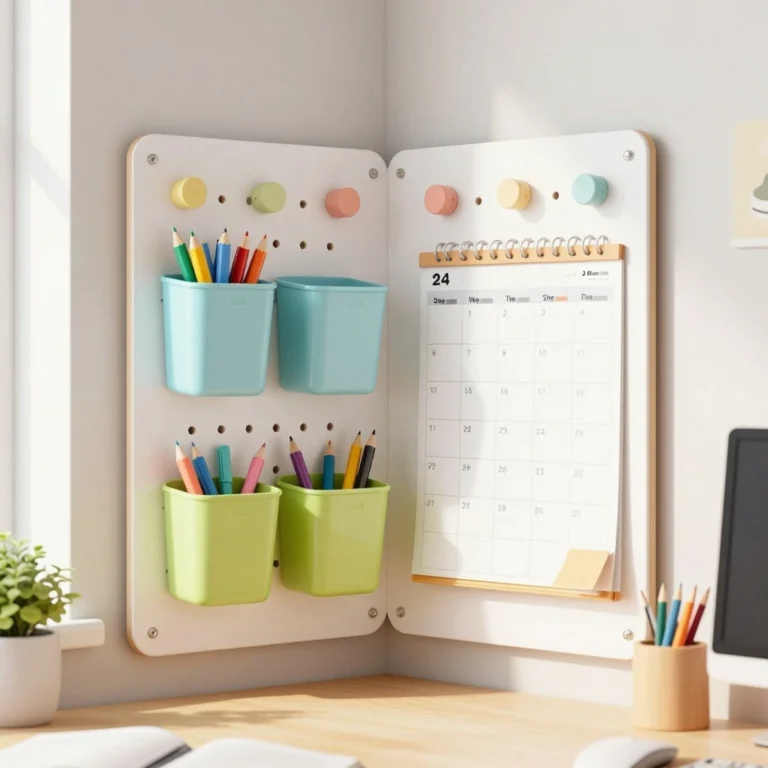
4. Pegboard Wall for Accessories
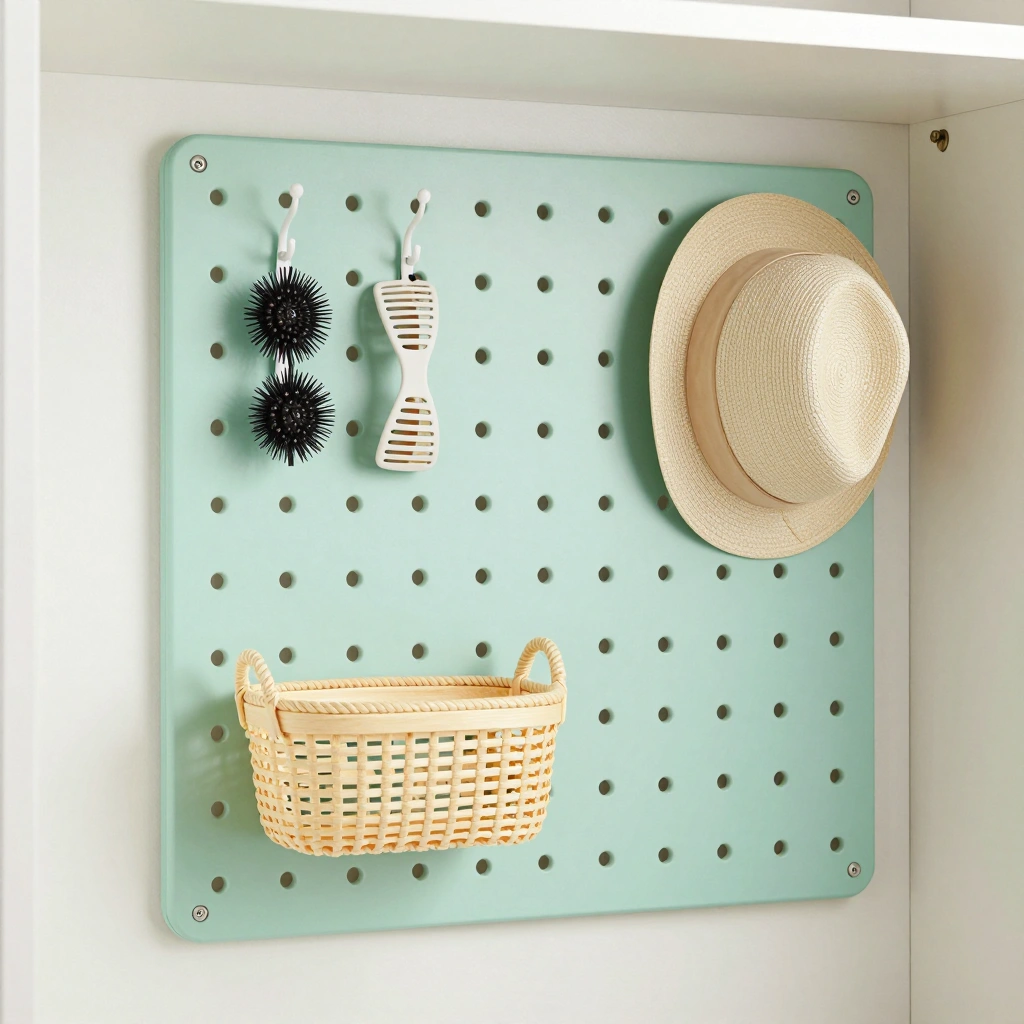
A pegboard turns a blank closet wall into a functional, ever-changing display for hats, bags, hair accessories, and belts.
How to Style It:
- Paint the pegboard a soft, cheerful color to match the room
- Add hooks, small shelves, and baskets in varying sizes
- Rotate items seasonally so the board never feels cluttered
Where to Use It: Great for closets with unused wall space or a shallow closet where shelving alone won’t fit.
Pro Tip: Let your child help rearrange the pegboard occasionally — it builds ownership and keeps them motivated to keep it neat.
5. Shoe Cubby Ladder
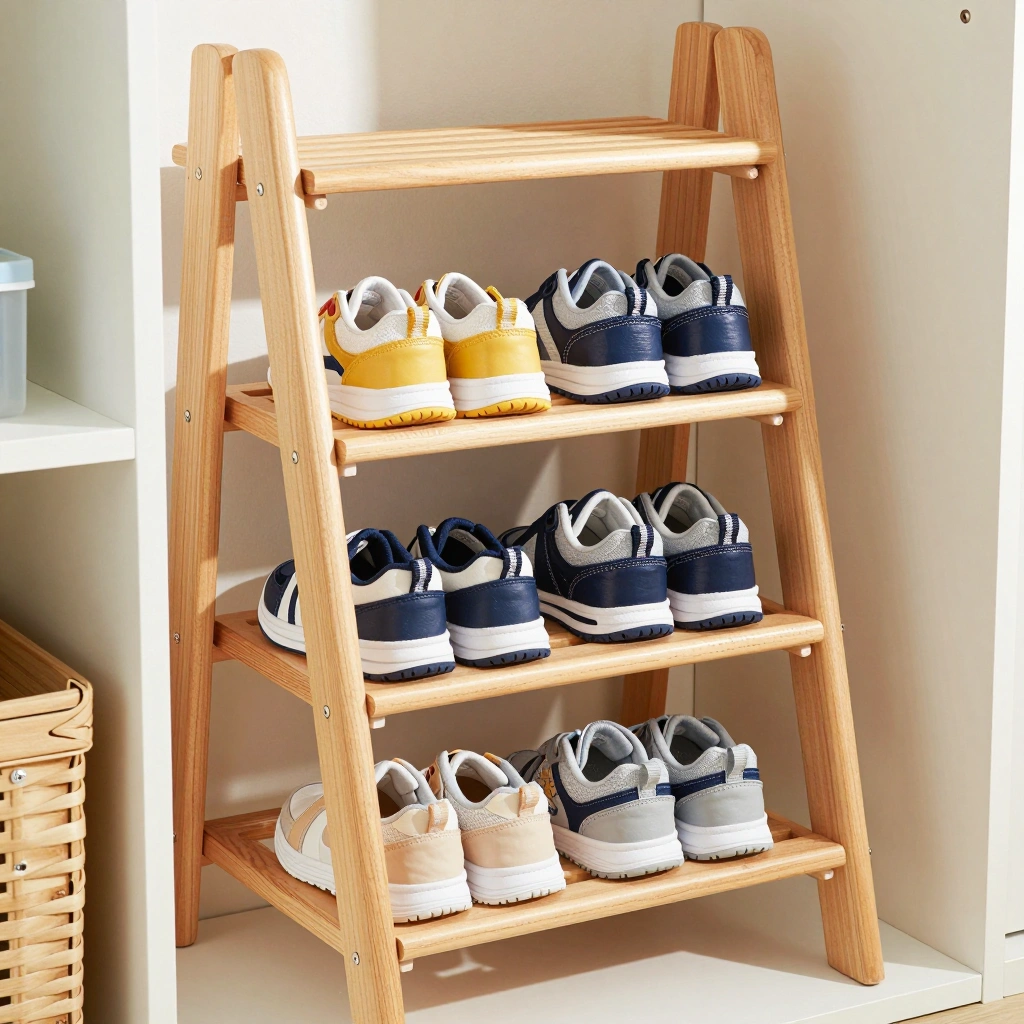
A slanted or ladder-style shoe cubby keeps sneakers, sandals, and boots visible and easy to grab — no more digging through a shoe pile.
How to Style It:
- Choose a slim ladder-style rack that leans against the closet wall or fits inside
- Angle the cubbies slightly so shoes slide forward and stay visible
- Add a small chalkboard label above each row for shoe “types” (school, play, dress)
Where to Use It: Perfect for the closet floor or just inside the door where floor space is limited.
Pro Tip: Keep only in-season shoes here — store outgrown or off-season pairs in a labeled bin up top.
6. Fold-Out Step Stool Station
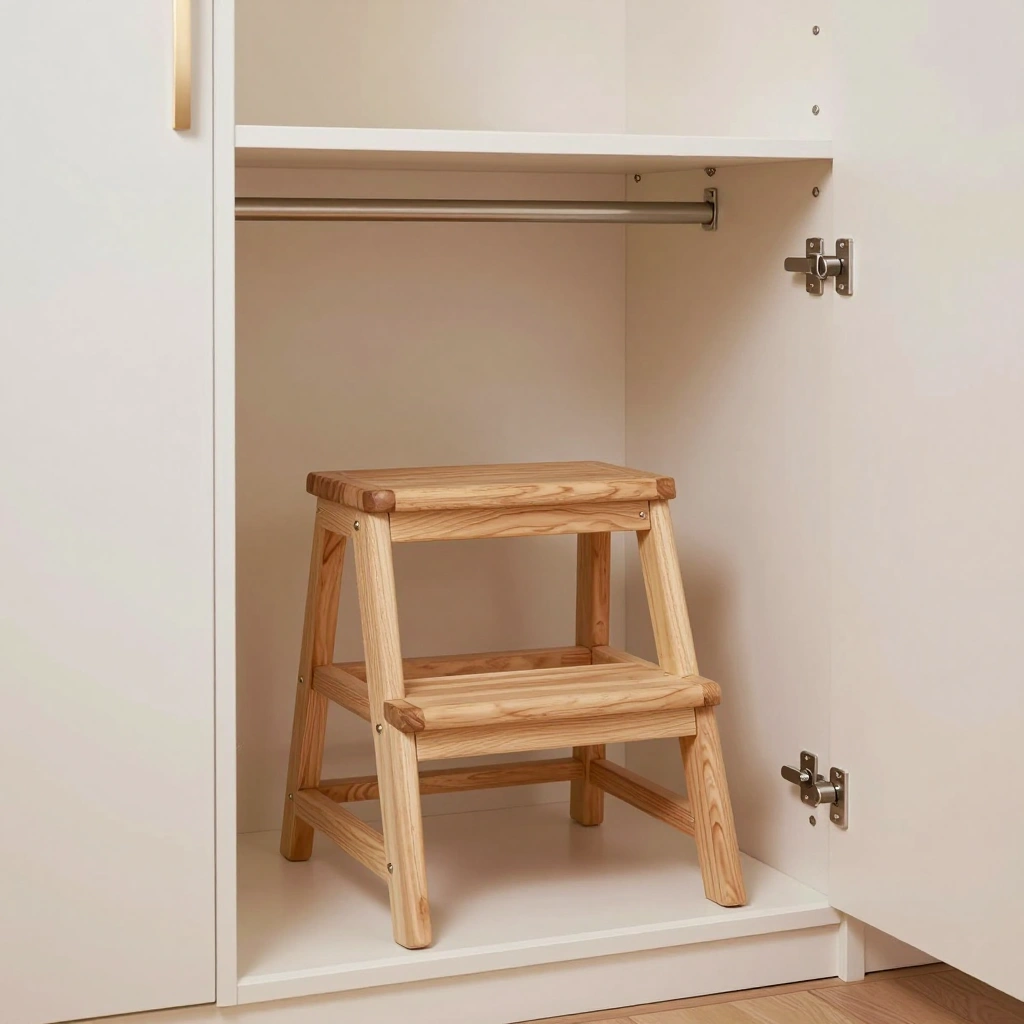
A built-in or fold-out step stool gives kids safe, independent access to higher shelves — encouraging them to put things away themselves.
How to Style It:
- Install a small fold-down step or keep a lightweight stool tucked in a corner
- Add non-slip grip strips for safety
- Pair with a low shelf just above stepping height for “big kid” items
Where to Use It: Best for closets with taller shelving that young kids can’t reach without help.
Pro Tip: Paint the stool to match the closet color scheme so it blends in as part of the design, not just a tool.
7. Chalkboard or Whiteboard Door Labels
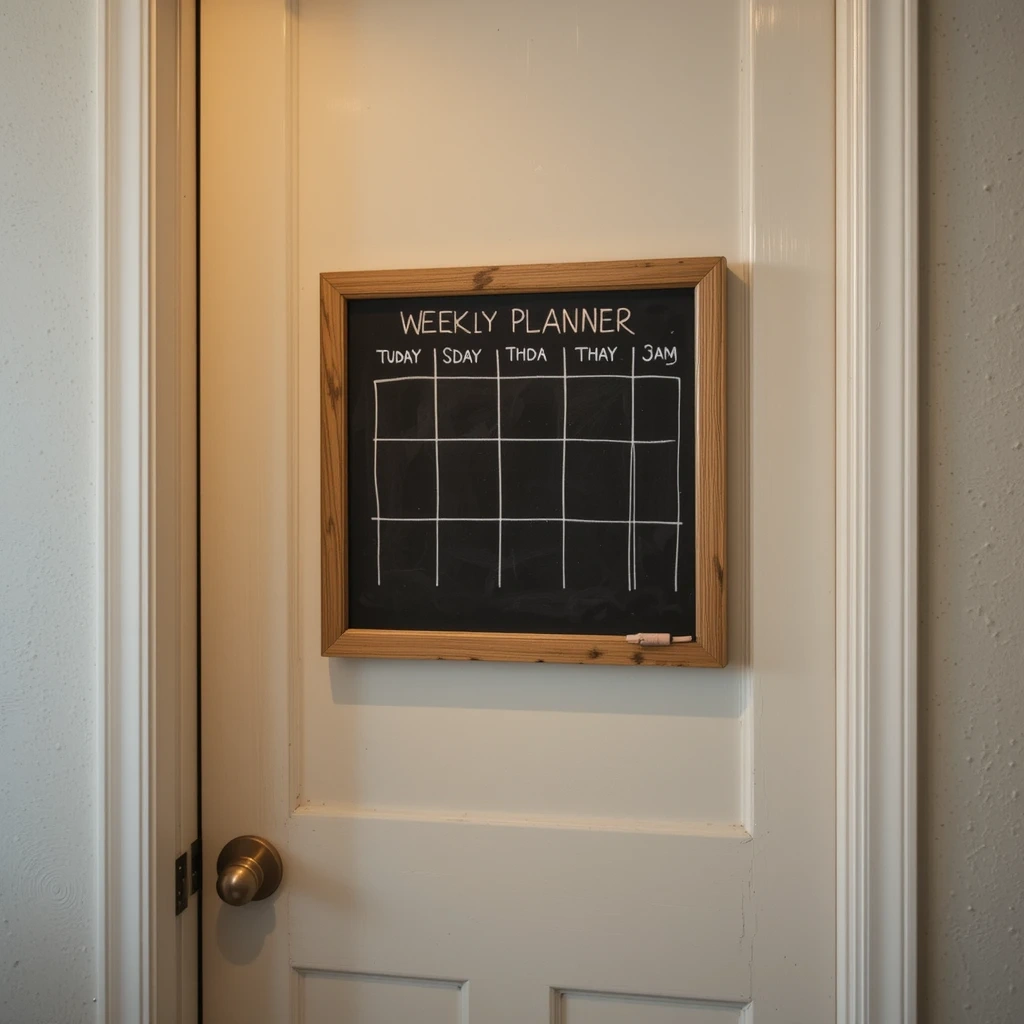
Turn the closet door itself into a fun, functional space with a chalkboard panel for daily reminders, chore charts, or outfit planning.
How to Style It:
- Attach a framed chalkboard or whiteboard panel to the inside of the closet door
- Add a small chalk holder or marker caddy nearby
- Use it for a simple weekly outfit planner or a “ready for school” checklist
Where to Use It: Works on any flat closet door — a great addition for kids ages 5 and up.
Pro Tip: Keep the chalkboard message simple and rotate it weekly so it stays a helpful habit, not just decoration.
8. Seasonal Rotation Bins (Top Shelf)
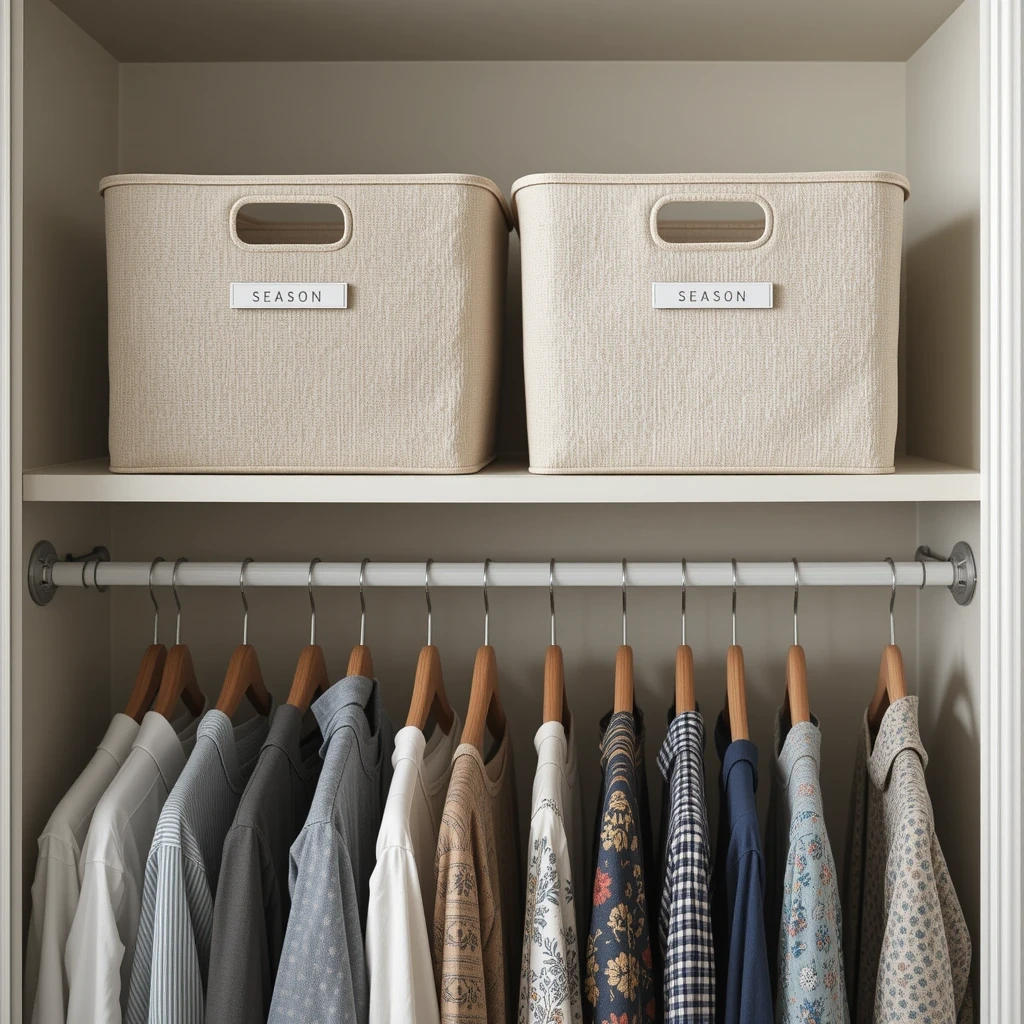
Keep the closet from overflowing by storing out-of-season clothing in labeled bins up top, swapping them in and out every few months.
How to Style It:
- Use uniform, stackable bins labeled “Summer,” “Winter,” “Fall,” “Spring”
- Store the current season’s overflow at eye level, everything else higher up
- Add a small calendar reminder to rotate bins each season
Where to Use It: Best for the highest closet shelf, out of a young child’s reach.
Pro Tip: Involve your kids in the seasonal swap — it’s a great way to teach them to sort and appreciate their clothes.
9. Backpack and Bag Hook Rail
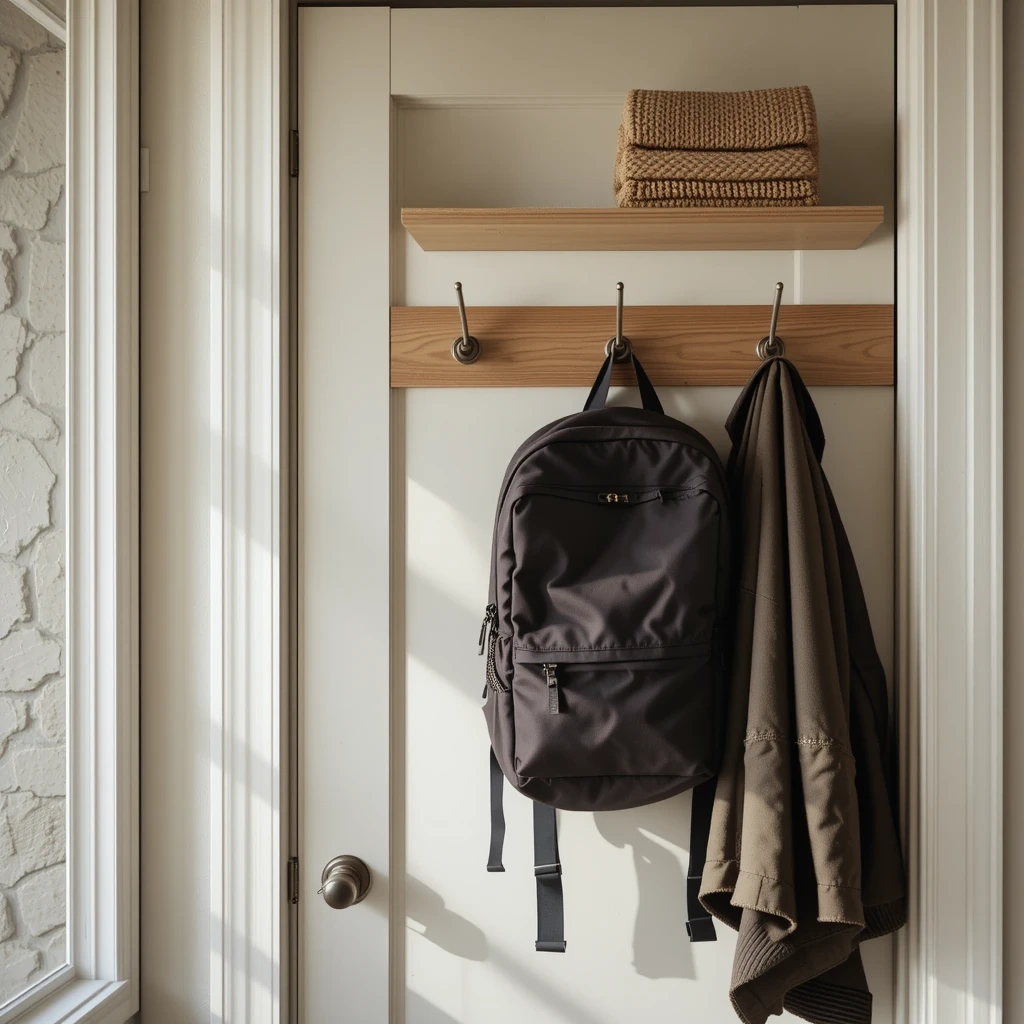
A simple hook rail by the closet entrance keeps backpacks, sports bags, and jackets off the floor and ready to grab.
How to Style It:
- Mount a row of 3-5 sturdy hooks at child height
- Use colorful or wooden hooks that match the closet’s overall theme
- Add a small shelf above for hats or gloves
Where to Use It: Perfect just inside or beside the closet door, especially for school-aged kids.
Pro Tip: Label each hook with a name or icon if the closet is shared between siblings — it avoids the “whose backpack is this” debate.
10. Themed Closet Nook
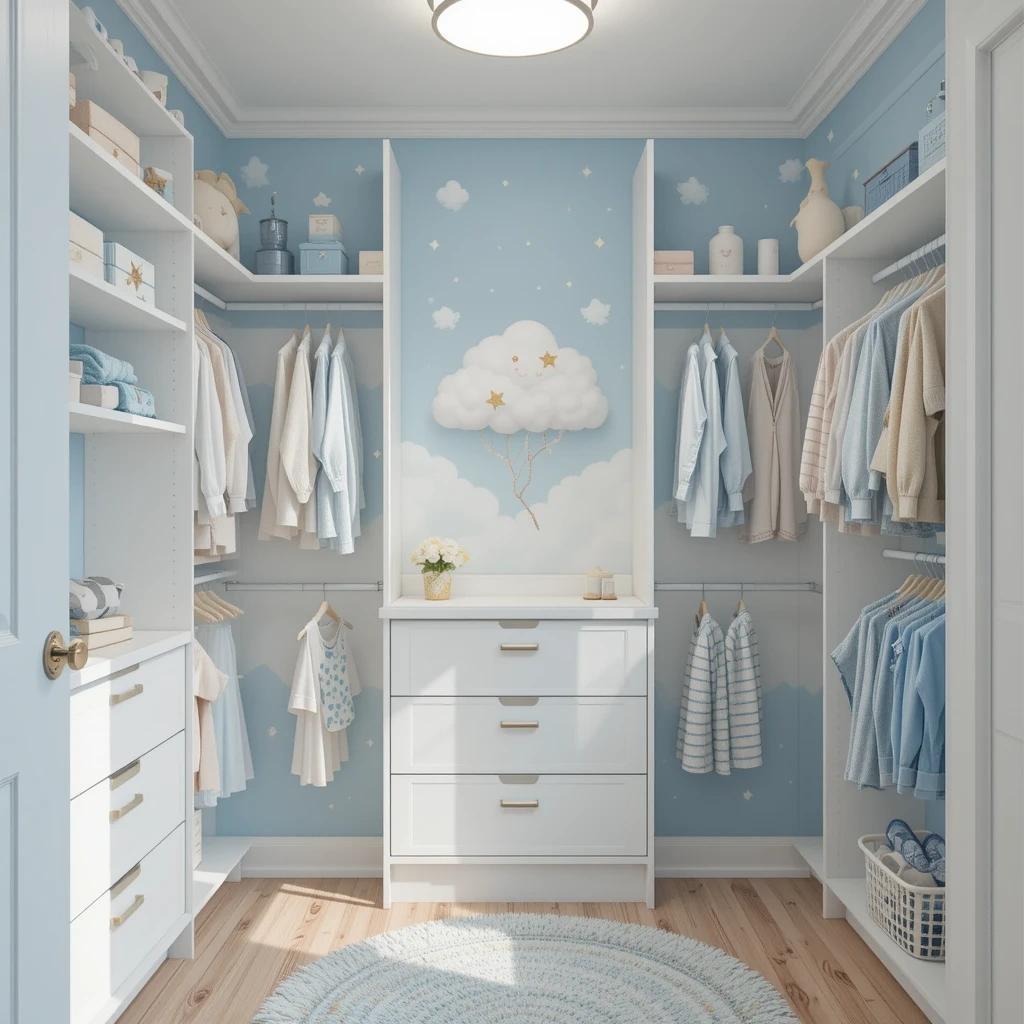
Give the closet a little personality with a cohesive theme — stars, rainbows, clouds, or nature motifs — using paint, wallpaper, or decals.
How to Style It:
- Pick one simple theme and repeat it in small doses (a decal here, a label there)
- Stick to soft patterns like stars, clouds, or florals rather than busy prints
- Use theme-matching baskets, labels, and a small rug for a cohesive feel
Where to Use It: Great for nurseries or younger kids’ rooms where the closet is part of the overall room design.
Pro Tip: Keep the theme subtle and easy to update — kids’ favorite colors and interests change fast, and a simple palette is easier to refresh later.
Common Mistakes to Avoid
- Organizing above your child’s reach: If they can’t reach it, they can’t maintain it. Keep everyday items at kid height.
- Too many categories: Overcomplicating the sorting system leads to clothes ending up in the wrong bin — keep it simple.
- Ignoring growth spurts: A system that fits a 3-year-old won’t work for a 7-year-old. Revisit the setup every year.
- Skipping labels: Even simple picture labels make a huge difference for non-readers and toddlers.
- Overfilling bins and shelves: A packed closet is hard to keep neat — leave a little breathing room for new items.
Frequently Asked Questions Kids Closet Organization ideas
Q: What age can kids start organizing their own closet? A: Most kids can start with simple sorting (like matching colors or picture labels) around age 3-4, and can manage a full routine independently by age 6-7.
Q: How often should I reorganize my child’s closet? A: A seasonal check-in (every 3-4 months) works well to remove outgrown clothes and rotate items in and out.
Q: What’s the most budget-friendly way to organize a kids closet? A: Labeled bins and a low hanging rod are the most affordable and highest-impact upgrades — both can be added without any major renovation.
Q: Should siblings share one closet organization system? A: Yes, as long as each child has their own labeled zone (hooks, bins, or shelves) to avoid mix-ups and encourage individual responsibility.
Conclusion
A well-organized kids closet isn’t just about tidiness — it’s about giving your children the tools to be independent, confident, and a little more responsible every day. Start with one or two ideas from this list, involve your kids in the process, and watch how quickly “clean up time” becomes a lot less of a battle.